Arkansas Roofing Guidance
Commercial Roofing in Arkansas
Discuss commercial roof leaks, repairs, replacement planning, drainage, penetrations, and access with an independent roofing contractor.
Arkansas Roofing Guidance
Discuss commercial roof leaks, repairs, replacement planning, drainage, penetrations, and access with an independent roofing contractor.
A roof issue at a commercial property can affect tenants, inventory, equipment, and daily operations. A recurring leak, ponding water, damaged roof edge, or concern around rooftop equipment deserves a clear assessment that considers the building and how people use it. Owners and property managers can gather observations and request help without assuming that every roofing system or contractor is available in every location.
All Arkansas Roofing connects property owners with independent roofing contractors. Contractors provide estimates and perform the work. The business supports inquiries from commercial property owners and managers across Arkansas.
Water inside a building may come from a roof leak, but the visible stain does not always identify the entry point. Roof slope, drainage paths, assembly, and the details where materials meet can affect how water moves. Useful information includes when a leak appears, which rooms or units are affected, whether it follows weather, and any known prior roof or equipment work. Photos from safe interior areas and a simple floor-plan note can help describe the issue.
Before selecting a repair, an assessment should investigate the underlying condition and likely water path. Depending on the roof system, leak concerns may involve seams, flashing, penetrations for equipment or piping, transitions, roof edges, drains, or scuppers. Water may travel before it becomes visible indoors, so a patch at the stain or apparent entry point alone may not address the cause.
Repair history, the condition of adjacent materials, and compatibility between existing and proposed materials can affect the scope. Ask which areas and details were examined, what evidence supports the proposed repair, and what remains uncertain. If the same leak returns, share the earlier repair information rather than assuming that the same treatment will work again.
A leak or an older roof does not by itself mean the whole roof needs replacement. Replacement may be worth comparing when deterioration is widespread, moisture findings or recurring failures affect larger areas, or the existing assembly no longer supports a practical localized repair. The assessment and written scope should explain the observed condition, moisture findings where available, existing roof assembly, insulation and decking assumptions, drainage details, and what may remain unknown until materials are opened.
For occupied buildings, clarify work areas, access, protection of people and property, sequencing, and any operating or tenant-coordination assumptions. Ask how concealed conditions will be documented and how any scope changes will be reviewed.
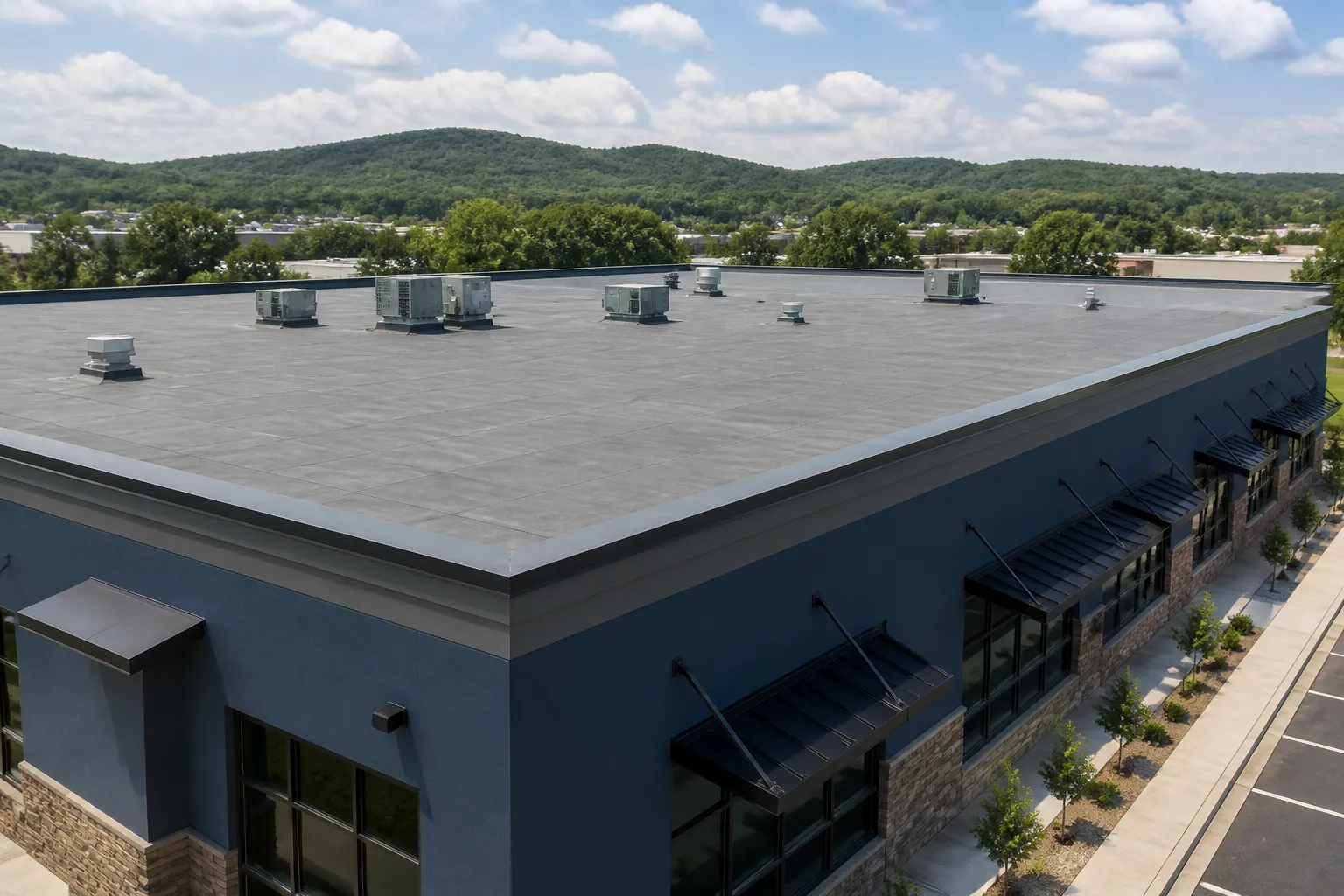
Commercial properties may have metal roofing or low-slope systems, and the right assessment depends on the actual assembly. Metal systems can include standing seam panels or exposed-fastener panels. Standing seam systems generally use raised seams with concealed attachment at the panel field, while exposed-fastener systems use visible fasteners and washers. Their details at seams, edges, penetrations, and transitions differ.
Flat and low-slope roofing systems may include membranes such as TPO or EPDM, among other assemblies. A contractor can identify visible membrane, seam, flashing, and drainage concerns where accessible. Mention the system if known, but do not assume a specific contractor or repair method is available for every roof type.
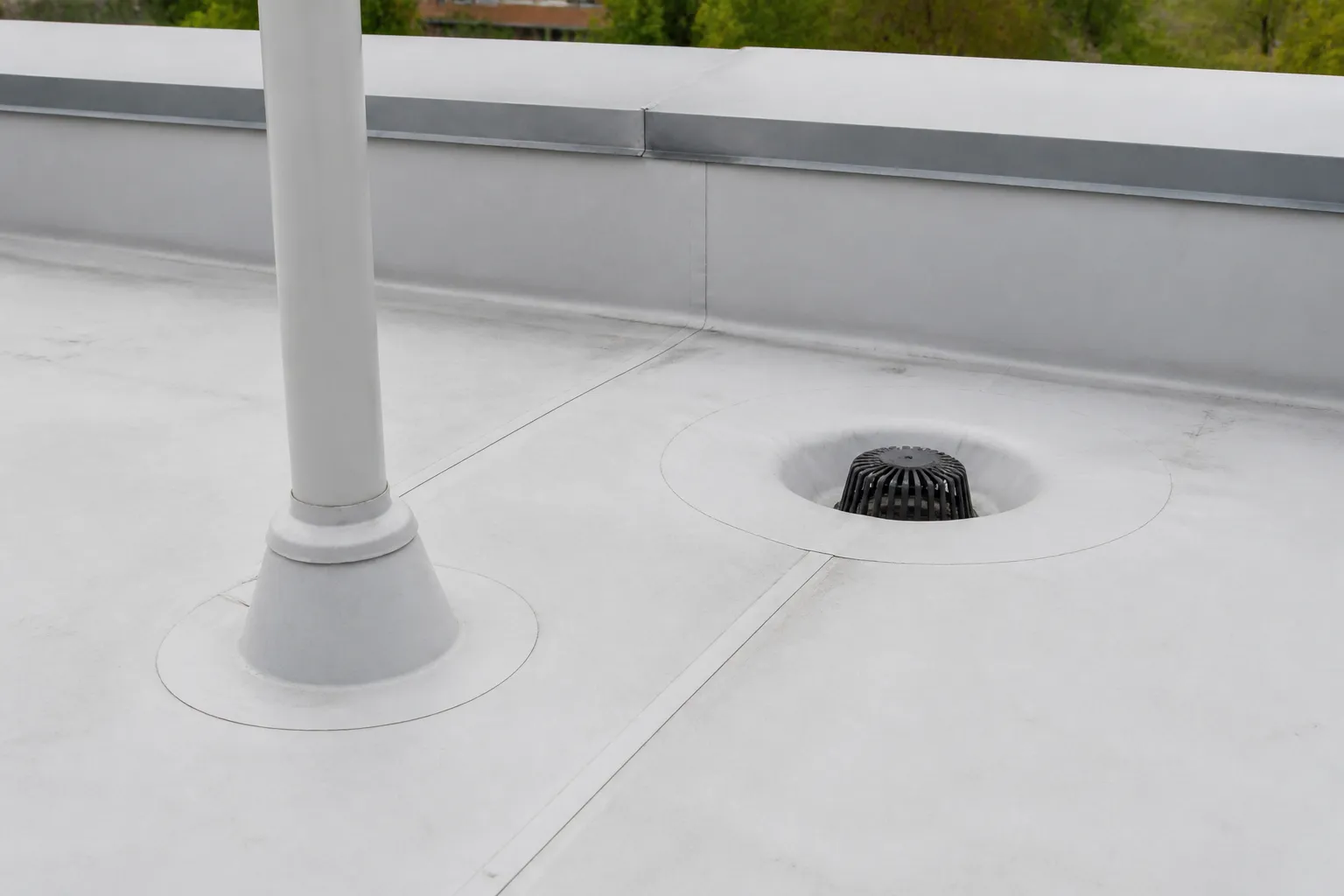
Drains, scuppers, gutters, downspouts, and roof slopes affect how water leaves the building. An assessment may consider blocked or damaged drainage components, areas where water collects, and details around drains or roof edges. Roof openings and equipment curbs also deserve attention because they interrupt the roof surface.
Moisture inside a building can have more than one cause. In some situations, ventilation or condensation conditions may be relevant, particularly near roof assemblies and mechanical systems. An assessment should distinguish observed roof concerns from other possible sources rather than assuming every interior moisture mark is a roof leak.
Before a visit, identify a site contact, operating hours, security procedures, roof access points, and any restrictions around tenants or equipment. Share whether a lift, escort, key, or scheduled shutdown may be needed, without assuming a particular access request can be accommodated. Let the assessor know about sensitive areas, active operations, and any known roof plans or prior reports.
For an estimate, ask which building areas and system details are included, how access will be handled, what preparation is expected, and how repair or replacement alternatives differ. Contractor availability and system experience vary by location and project.
Share the building location, affected rooms or units, timing, any known weather pattern, visible interior signs, prior repairs, and safe photos. Note roof access or site procedures before arranging an assessment.
Systems and availability vary. Identify whether the roof appears to be standing seam metal, exposed-fastener metal, TPO, EPDM, or another system if known, then ask whether an assessment can be arranged.
That depends on the roof condition, extent of affected areas, and assessment findings. Ask for the evidence behind the recommendation, the repair scope considered, and any assumptions about concealed materials.
Discuss the work area, access, site contact, operating hours, tenant coordination, equipment restrictions, and any escort or shutdown assumptions. Confirm which areas the proposed scope includes.
What To Expect
Share your ZIP code, the service you are considering, and what you have noticed about the roof.
Discuss the observed condition, repair or replacement options, and proposed scope with the independent roofer, subject to local availability.
Review materials, work details, cleanup, exclusions, and any additional repairs before deciding how to proceed.
A Few Common Questions
Tell us where the property is and what your roof needs.
Roofing Estimate
Share the property ZIP code and the roofing service you need. The form uses the existing inquiry system.