Arkansas Roofing Guidance
Commercial Roofing in Pine Bluff, AR
Explore commercial roofing in Pine Bluff, AR, with guidance on roof assessment, leaks, drainage, penetrations, maintenance, repair, and replacement planning.
Arkansas Roofing Guidance
Explore commercial roofing in Pine Bluff, AR, with guidance on roof assessment, leaks, drainage, penetrations, maintenance, repair, and replacement planning.
A leak over a work area, water near a roof drain, or a recurring stain can disrupt a commercial property and raise questions about what needs attention first. A useful roof assessment considers the visible symptom alongside the roof assembly, drainage paths, penetrations, and building use. The interior mark may not sit directly below the roof opening, so the first step is to identify the likely source rather than assume a broad repair is needed.
For a Pine Bluff business, property manager, or building owner, the next conversation is more productive when it includes the affected area, when water appears, known roof history, and access or operating constraints. Written findings and a defined scope make it easier to compare repair, maintenance, and replacement options without assuming one roofing system fits every building.
Start with information already available about the property and the concern. Do not climb onto the roof or try to measure it; note the roof-access process so the appropriate arrangements can be discussed.
When reviewing a proposal, check that it identifies the roof sections and observed conditions, the proposed work sequence, protection and cleanup, exclusions, and how concealed conditions or scope changes would be documented and approved.
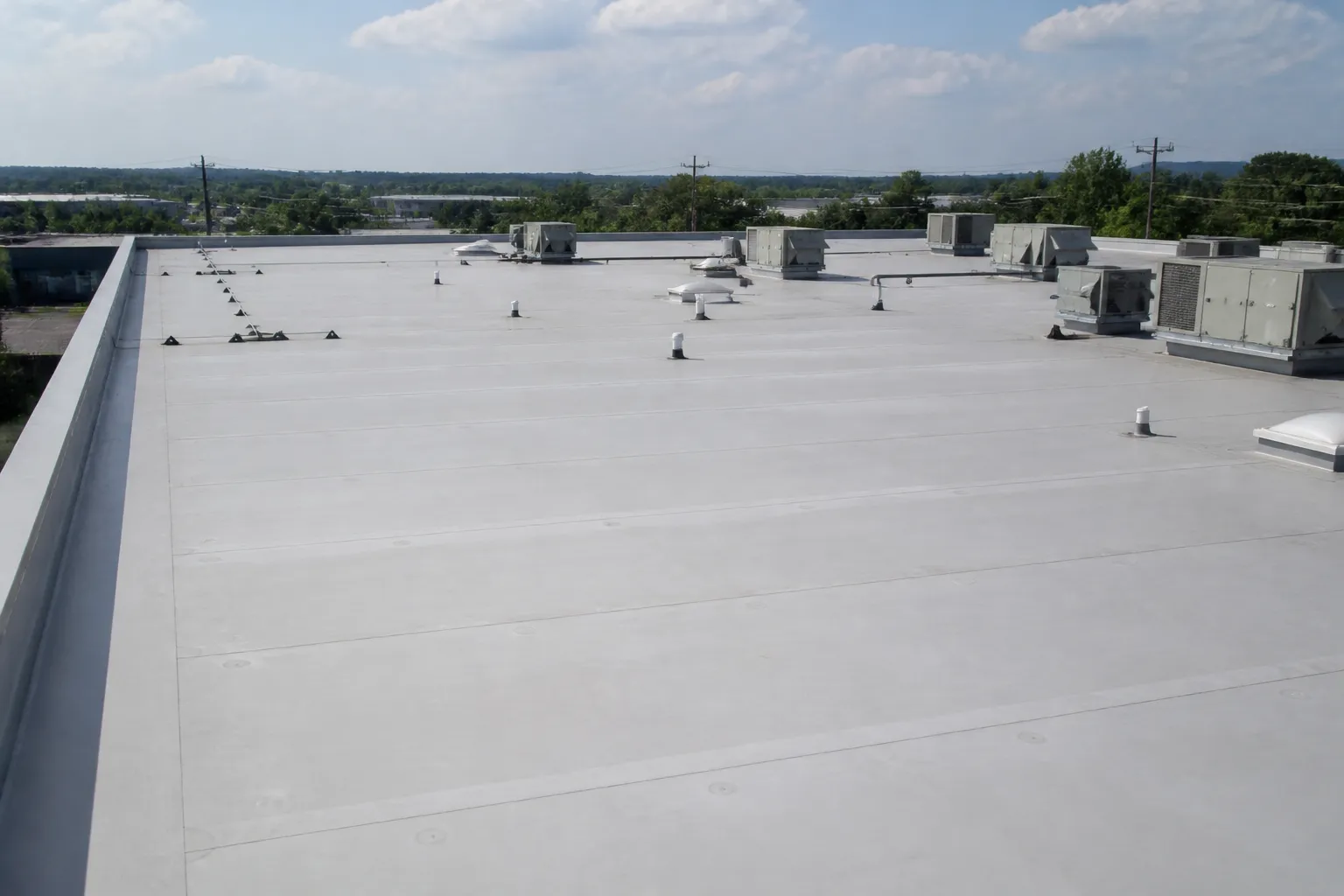
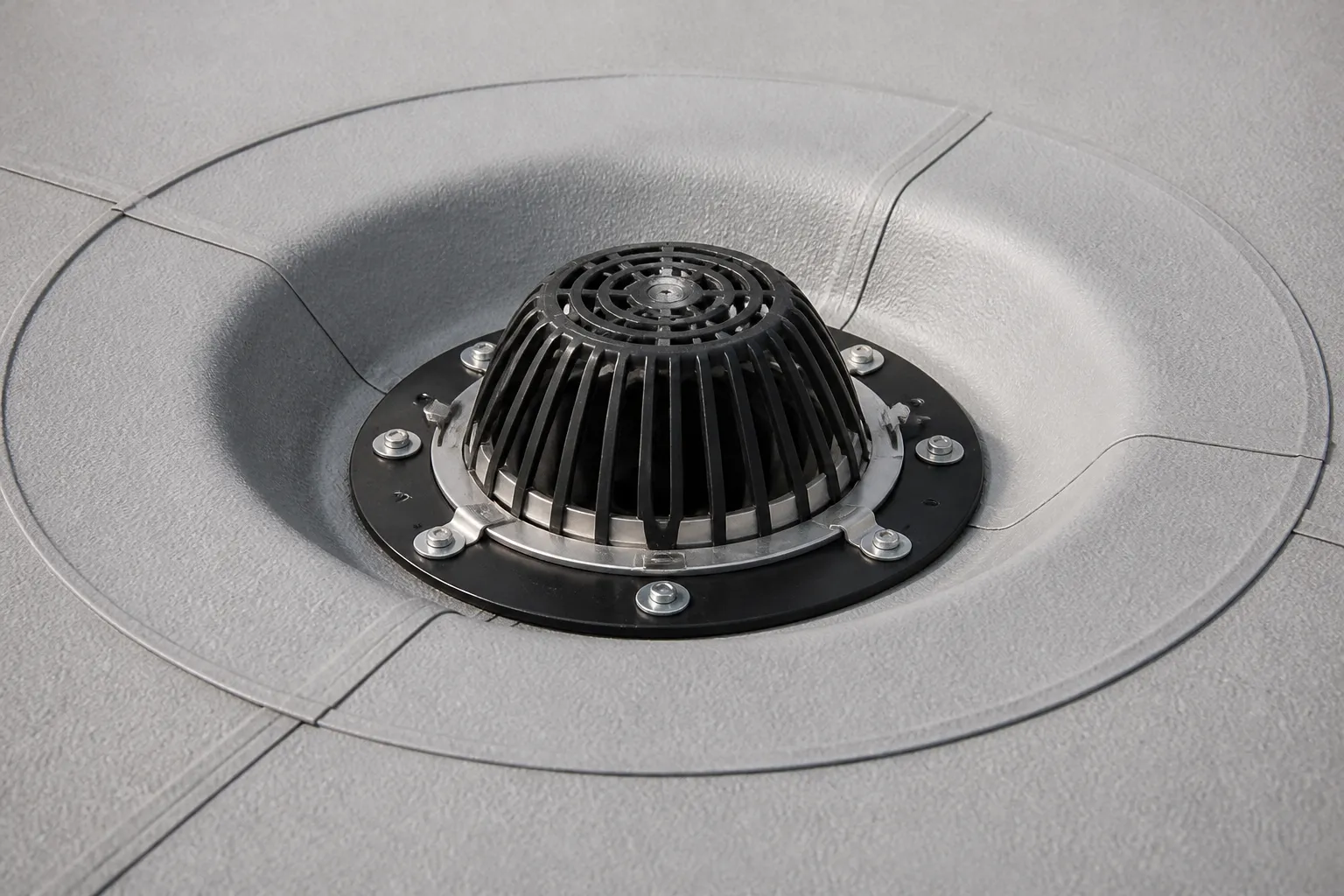
Drains, scuppers, gutters, downspouts, slopes, and edges all affect how water leaves the roof. Debris, damaged components, or low areas can complicate drainage, but a visible puddle alone does not establish the cause or correct repair. Roof penetrations and equipment curbs also deserve attention because each opening interrupts the roof surface and relies on compatible flashing and careful detailing.
When discussing a repair, ask which drain or penetration details were inspected, what condition was observed, and how the proposed scope addresses the water path. A drain detail may require different attention from a seam, roof edge, or equipment curb, so ask that relevant findings be identified clearly.
A repair may be worth considering when a leak or damaged detail is limited, surrounding materials remain serviceable, and the source can be addressed with a defined scope. Recurring leaks, widespread deterioration, repairs in separate areas, or concerns involving multiple roof sections may justify comparing replacement planning with continued repairs. The decision should follow observed conditions and building requirements, not a general rule based only on roof age.
Maintenance discussions may include documenting visible conditions, checking drainage paths and roof details, and identifying areas for follow-up. Maintenance does not guarantee that leaks will not occur. Ask for findings in writing, including which areas were accessible and what could not be evaluated.
Membrane and metal systems are both used on commercial buildings, but suitability depends on roof slope, the existing assembly, building use, structural and access considerations, and project requirements. Membranes may be considered for some low-slope assemblies; metal panels may suit certain roof forms. Confirm appropriate system selection and availability for the specific property rather than assuming from a broad service label.
Coatings are not a universal fix for an aging or leaking roof. Before considering one, assess the existing surface, moisture conditions, drainage, compatibility, seams, flashing, and penetrations. A proposal should explain the problem the coating is intended to address, required preparation, and conditions that may make it unsuitable.
Compare proposals by scope, not just by system name or total. Look for included roof areas, observed concerns, materials, drainage and penetration details, preparation or removal work, property protection, cleanup, exclusions, and how unforeseen conditions will be documented. If repair and replacement are both discussed, ask each proposal to distinguish the work and assumptions.
For help organizing questions before requesting an estimate, see the roofing estimate checklist. Pine Bluff property owners can review roofing guidance for Pine Bluff, commercial roofing across Arkansas, local roof repair, and local roof replacement. For residential and suitable commercial metal-roof considerations, see metal roofing in Pine Bluff.
Describe the affected rooms or work areas, when water appears, prior repair history, and any safe interior photos. Available roof records and site access requirements may also help.
The assessment should identify the relevant detail, its observed condition, and how the proposed work addresses the water path. Drains, curbs, vents, seams, and transitions may require different scopes.
Compare options when deterioration is widespread, leaks recur in multiple areas, or repeated repairs leave broader concerns. Base the decision on documented findings and building requirements.
No. Suitability depends on the existing roof, moisture and drainage conditions, compatibility, preparation, and detail work. A coating is not a universal solution for leaks or deterioration.
For an estimate, use the estimate form.
What To Expect
Share your ZIP code, the service you are considering, and what you have noticed about the roof.
Discuss the observed condition, repair or replacement options, and proposed scope with the independent roofer, subject to local availability.
Review materials, work details, cleanup, exclusions, and any additional repairs before deciding how to proceed.
A Few Common Questions
Tell us where the property is and what your roof needs.
Roofing Estimate
Share the property ZIP code and the roofing service you need. The form uses the existing inquiry system.