Arkansas Roofing Guidance
Roof Repair in Pine Bluff, AR
Explore roof repair in Pine Bluff, AR, including leak diagnosis, damaged shingles, flashing, roof penetrations, recurring water intrusion, and when repair fits.
Arkansas Roofing Guidance
Explore roof repair in Pine Bluff, AR, including leak diagnosis, damaged shingles, flashing, roof penetrations, recurring water intrusion, and when repair fits.
Roof concerns in Pine Bluff can involve a single repairable detail or broader wear across the roof. The useful next step is to describe what has changed and have the affected area and adjacent materials considered together before settling on the scope.
A ceiling mark may show only where water became visible; moisture can move along decking or framing before reaching the room below. Flashing, roof penetrations, damaged shingles, and valleys are possible entry locations, but none can be confirmed from a stain or drip alone.
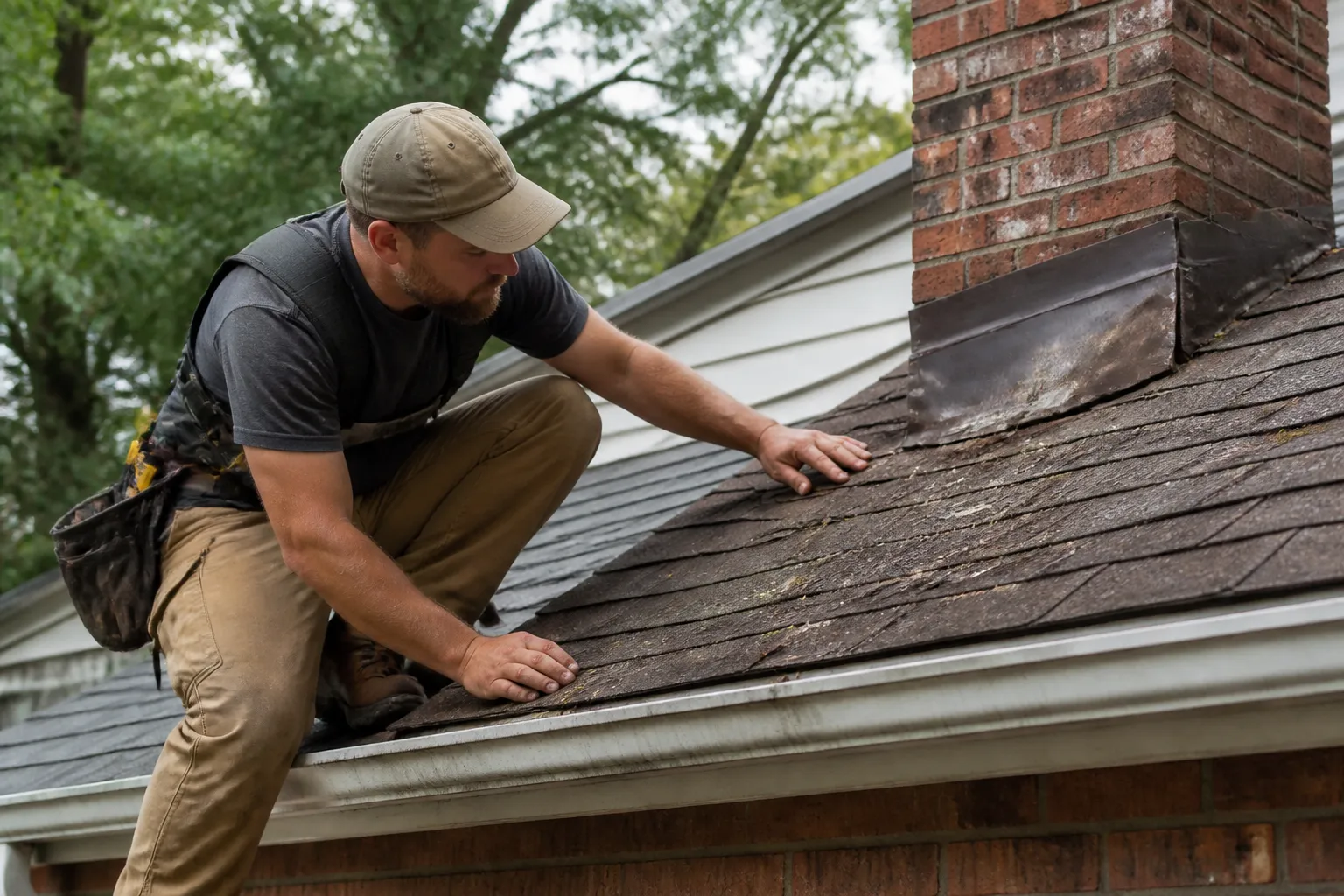
When calling, say where the water appears, when it occurs, and what visible changes you have noticed, including whether the pattern shifts after rain. Photos taken safely indoors or from ground level can document the change. Do not climb onto the roof to photograph or inspect it. Identifying the likely source before selecting a repair helps connect the proposed work to the water path instead of treating only the indoor symptom.
Cracked, displaced, or missing shingles may expose part of the roof, but the condition of adjoining materials also matters. Flashing protects transitions where roof planes meet walls or other structures, while penetrations such as vent pipes rely on properly fitted boots and seals. An assessment should name the specific roof detail it finds relevant rather than using a general label such as “patch.”
If moisture returns after previous work, provide the timing and any information about what was repaired. A new assessment can compare the earlier repair area with nearby shingles, flashing, penetrations, and any valley that may be part of the water path. Valleys guide runoff where slopes meet; their actual materials and condition should be checked rather than assumed to be the cause.
A focused repair may be practical when the source is localized and surrounding roofing remains serviceable. Replacement is a separate option to compare if damage is more extensive or wear is widespread. Extent of damage, existing roof condition, material compatibility, and other inspection findings inform the choice; one leak does not alone establish that replacement is necessary. See the roof repair versus replacement guide for questions to consider.
A written estimate can identify the roof area, likely source, method, materials, and any flashing or penetration work included. Check which related components are excluded, and ask how concealed conditions or a change in scope would be documented before additional work is considered. Compare the work described rather than relying only on the label “repair.”
For a city overview, visit roofing in Pine Bluff. The statewide Roof Repair in Arkansas page covers general considerations, while the Pine Bluff roof replacement page describes the local alternative. For estimate questions, see the roofing estimate checklist.
You can note visible changes from a safe location, but that does not establish the condition of concealed roof layers.
No. The extent of damage and overall roof condition need to be considered.
Describe when it returned and what area the earlier work addressed.
Clear details show what the proposed work addresses and what is outside its scope.
To discuss a roof concern and request an estimate, use the estimate form or the existing call-first controls.
What To Expect
Share your ZIP code, the service you are considering, and what you have noticed about the roof.
Discuss the observed condition, repair or replacement options, and proposed scope with the independent roofer, subject to local availability.
Review materials, work details, cleanup, exclusions, and any additional repairs before deciding how to proceed.
A Few Common Questions
Tell us where the property is and what your roof needs.
Roofing Estimate
Share the property ZIP code and the roofing service you need. The form uses the existing inquiry system.