Arkansas Roofing Guidance
Roof Replacement in Pine Bluff, AR
Review roof replacement in Pine Bluff, AR, including roof condition, material options, tear-off, decking, ventilation, property protection, cleanup, and estimates.
Arkansas Roofing Guidance
Review roof replacement in Pine Bluff, AR, including roof condition, material options, tear-off, decking, ventilation, property protection, cleanup, and estimates.
When shingles are aging across broad sections, leaks keep returning, or repairs reveal deteriorated materials beneath the surface, it may be time to compare roof replacement with continued patching. Pine Bluff property owners can start by reviewing the condition of the whole roof, not just the most visible leak. The roof’s age, prior repairs, slope changes, flashing, and visible wear all help frame the decision.
A replacement proposal should explain what will be removed, what materials will be installed, how the deck and ventilation will be assessed, and how the home and grounds will be protected. A written, itemized scope makes it easier to compare options and understand what may change if concealed damage is found after tear-off.
One damaged area does not automatically mean the whole roof needs replacement. A qualified assessment should distinguish localized damage from widespread shingle wear, recurring leaks, deteriorated flashing, or weak roof sections. Look for explanations that connect observations to the recommended scope, including the roof areas affected and any limits of a repair option.
Age can be useful context when known, but visible condition and repair history also matter. If stains have appeared in several rooms or separate roof areas have needed attention, ask whether the issues share a cause or reflect broader deterioration. For an overview of the decision, see the roof repair versus replacement guide.
Asphalt shingles are a familiar option for many homes. Metal roofing offers a different profile and installation system. The right choice depends on the roof’s design, structural considerations, appearance, maintenance preferences, and the details included in the proposal. Compare actual product and system specifications rather than relying on a broad material label.
Ask how the proposed material works with roof slope, valleys, edges, flashing, and penetrations. Confirm that underlayment and other components are identified, and that the installation plan follows applicable requirements and manufacturer instructions. Ventilation should also be considered as part of the roof system rather than treated as an unrelated detail.
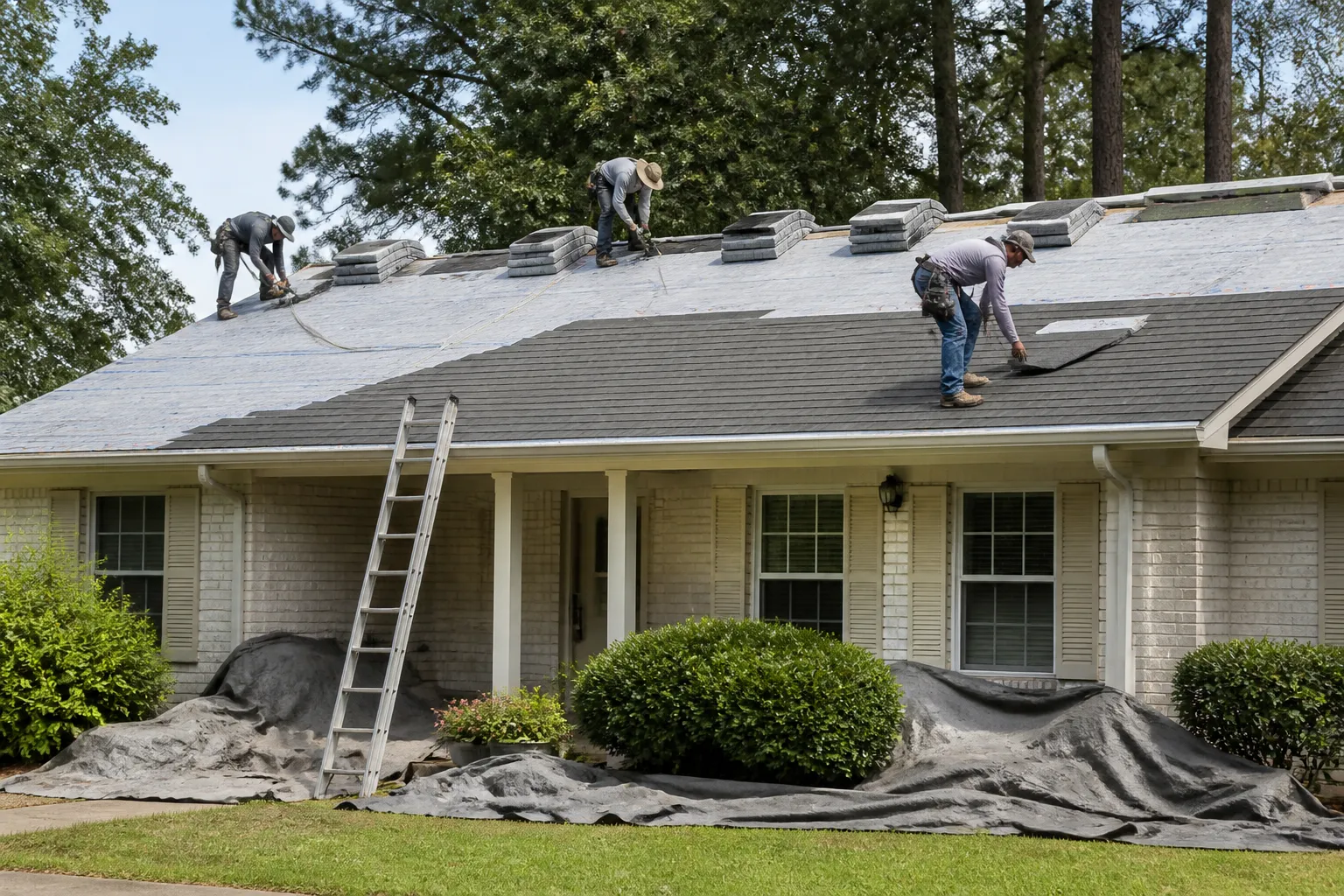
Removing existing roofing exposes the deck so its condition can be examined before new materials are installed. A written scope should state what layers will be removed and how damaged or unsuitable decking will be handled if discovered. Since concealed conditions cannot always be confirmed beforehand, ask how they will be documented, how any added work will be explained, and how approval will be obtained before the scope changes.
Proposals may differ in removal assumptions, disposal, underlayment, flashing replacement, and treatment of roof edges or valleys. Compare those details directly. A line that simply says “new roof” leaves important questions unanswered about what is included.
Ventilation affects how air moves through the roof system. During replacement, ask whether existing intake and exhaust components will remain, be adjusted, or be replaced, and what observations support the plan. The estimate should identify relevant ventilation work rather than leaving it unclear.
Access and material delivery depend on the property’s layout. Driveway space, landscaping, nearby structures, roof height, and the route for carrying materials may influence how the work area is organized. These conditions vary from one home to another, so discuss the specific property rather than assume a standard setup. The work plan should explain how vulnerable surfaces and outdoor areas will be protected while materials are removed and installed.
Ask what cleanup is included, where removed roofing will be placed, and how nails and debris will be collected from accessible areas. The proposal should identify debris handling and any limits so expectations are clear before work begins. Clarify how landscaping, walkways, vehicles, and other property concerns will be addressed based on the site.
To compare written estimates, review material and underlayment descriptions, tear-off, decking assumptions, flashing, ventilation, protection, cleanup, exclusions, and how changes are approved. The roofing estimate checklist offers additional questions for reviewing a proposal. Compare matching scopes where possible, since different inclusions can make totals difficult to evaluate fairly.
The Pine Bluff roofing hub summarizes local service options. For statewide information, see the Arkansas roof replacement page. If the roof may need a focused repair instead, review roof repair in Pine Bluff and compare both scopes against the roof’s observed condition.
Not by itself. The assessment should describe how much of the roof is affected, the condition of surrounding materials, and whether repairs remain practical. Replacement is one option to compare when deterioration is widespread or recurring.
The written proposal should explain how concealed deck damage will be documented and how added work and any scope changes will be communicated for review before proceeding.
Yes. Ask what ventilation components are present, whether changes are proposed, and why. The plan should consider intake and exhaust as part of the roof system.
Compare itemized materials, removal, decking assumptions, flashing, ventilation, property protection, cleanup, exclusions, and the process for approving changes. Different scopes should not be treated as identical just because both say roof replacement.
What To Expect
Share your ZIP code, the service you are considering, and what you have noticed about the roof.
Discuss the observed condition, repair or replacement options, and proposed scope with the independent roofer, subject to local availability.
Review materials, work details, cleanup, exclusions, and any additional repairs before deciding how to proceed.
A Few Common Questions
Tell us where the property is and what your roof needs.
Roofing Estimate
Share the property ZIP code and the roofing service you need. The form uses the existing inquiry system.