Arkansas Roofing Guidance
Storm Damage Roofing in Arkansas
Get help assessing missing shingles, fallen debris, storm-related leaks, and other roof concerns after wind or hail.
Arkansas Roofing Guidance
Get help assessing missing shingles, fallen debris, storm-related leaks, and other roof concerns after wind or hail.
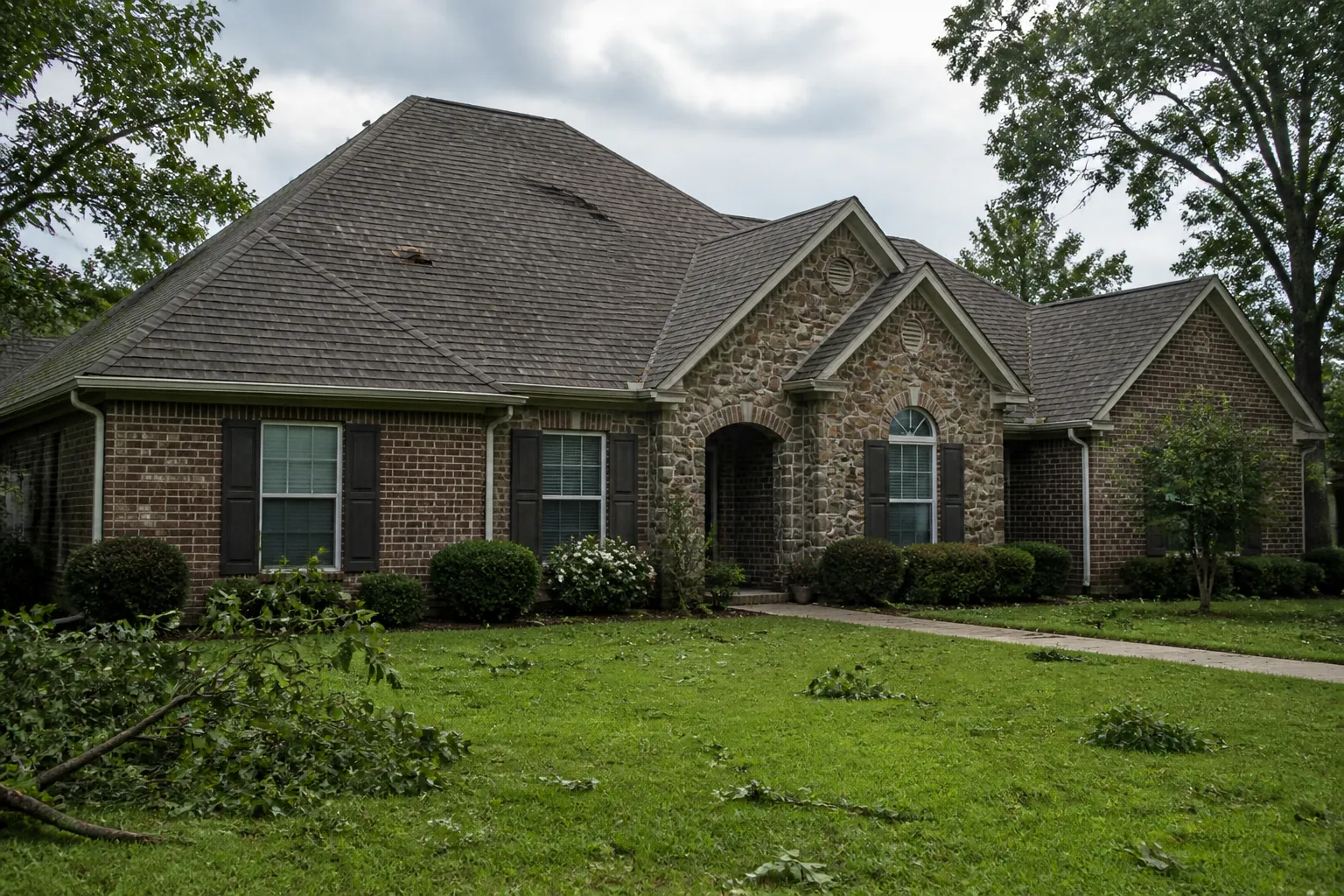
Wind and hail can affect a roof in ways that are not always visible from the ground. If water appears indoors after a storm, see what to do when a roof leaks after a storm. Photograph concerns from indoors or ground level; do not climb onto the roof.
All Arkansas Roofing connects property owners with independent roofing contractors. Contractors provide estimates and perform the work. Property owners in El Dorado, Camden, Magnolia, and nearby Arkansas communities can share the location and describe what happened to help determine whether an assessment is appropriate.
Hail can affect roofing differently depending on the material, its condition before the storm, and the force and pattern of impact. Surface marks or dents may be visible, but appearance alone does not establish the extent of damage or show that replacement is necessary. An assessment considers the roofing material and surrounding details, with attention to whether observed changes affect the roof’s function.
Useful documentation includes the approximate storm date, safe photos from the ground, and indoor signs such as new stains or drips. A professional assessment can explain observed conditions and possible repair scope; photographs and visible marks are not a substitute for evaluating the roof.
Wind may lift, crease, displace, or remove roofing components, and flashing at edges, valleys, vents, or other transitions can also be vulnerable. A missing piece does not by itself mean the whole roof needs replacement. Hidden damage, the condition of nearby materials, and whether compatible materials are available can all affect the appropriate repair scope.
From a safe indoor or ground-level location, note where damage is visible and whether water appears inside. Do not climb onto the roof or disturb loose materials. An assessment can look beyond the most obvious spot to understand related conditions.
From indoors, photograph new stains, drips, damaged ceiling finishes, or water near belongings. From the ground, use camera zoom for visible changes such as displaced materials or fallen branches. Keep the original files and note the date, approximate time, affected rooms, and any changes you observed. Avoid wet floors, sagging ceilings, active leaks near electrical fixtures, ladders, and damaged or debris-covered areas. Move belongings or catch drips only when it is safe to do so.
When requesting an assessment, describe where water appears, when it happens, what changed after the storm, and any access limitations. Photos can help communicate concerns but may not show the full roof condition.
The choice depends on the extent and location of damage, the existing roof’s condition, compatibility with surrounding materials, and other findings from an assessment. A limited repair may be suitable when nearby materials remain serviceable; broader damage or widespread deterioration may lead to a replacement discussion. A storm alone does not determine the right option, so ask what was observed and which conditions inform the proposed scope.
Include the property ZIP code, approximate storm date, visible changes, any leak, safe photos, and access limitations in the estimate request. Independent contractor availability and the work offered may vary by location.
Note when the storm occurred, where water appears and when, and what visible changes you can photograph safely from indoors or the ground. Do not climb onto the roof to investigate.
Not by themselves. The roofing material, its prior condition, impact, and surrounding roof details all matter, so visible marks alone cannot determine repair scope.
No. The affected area, nearby material condition, and whether a compatible repair is practical help inform the options. Other damage may also need assessment.
No. An assessment can describe observed roof conditions and possible work, but it does not guarantee an insurer’s decision or provide claim representation.
What To Expect
Share your ZIP code, the service you are considering, and what you have noticed about the roof.
Discuss the observed condition, repair or replacement options, and proposed scope with the independent roofer, subject to local availability.
Review materials, work details, cleanup, exclusions, and any additional repairs before deciding how to proceed.
A Few Common Questions
Tell us where the property is and what your roof needs.
Roofing Estimate
Share the property ZIP code and the roofing service you need. The form uses the existing inquiry system.