Arkansas Roofing Guidance
Storm Damage Roofing in Camden, AR
Learn how to document missing shingles, wind or hail concerns, debris impacts, and leaks safely before requesting a Camden roof assessment.
Arkansas Roofing Guidance
Learn how to document missing shingles, wind or hail concerns, debris impacts, and leaks safely before requesting a Camden roof assessment.
Missing shingles, fallen branches, or a new ceiling stain after a storm can leave you unsure how much damage your roof has sustained. An assessment can clarify what needs repair and whether damage extends beyond the visible roof covering.
Some storm effects are visible from the ground, while others may be difficult to identify without a closer assessment. Avoid walking on the roof or disturbing debris. Note what you can safely observe and share when and where the changes appeared.
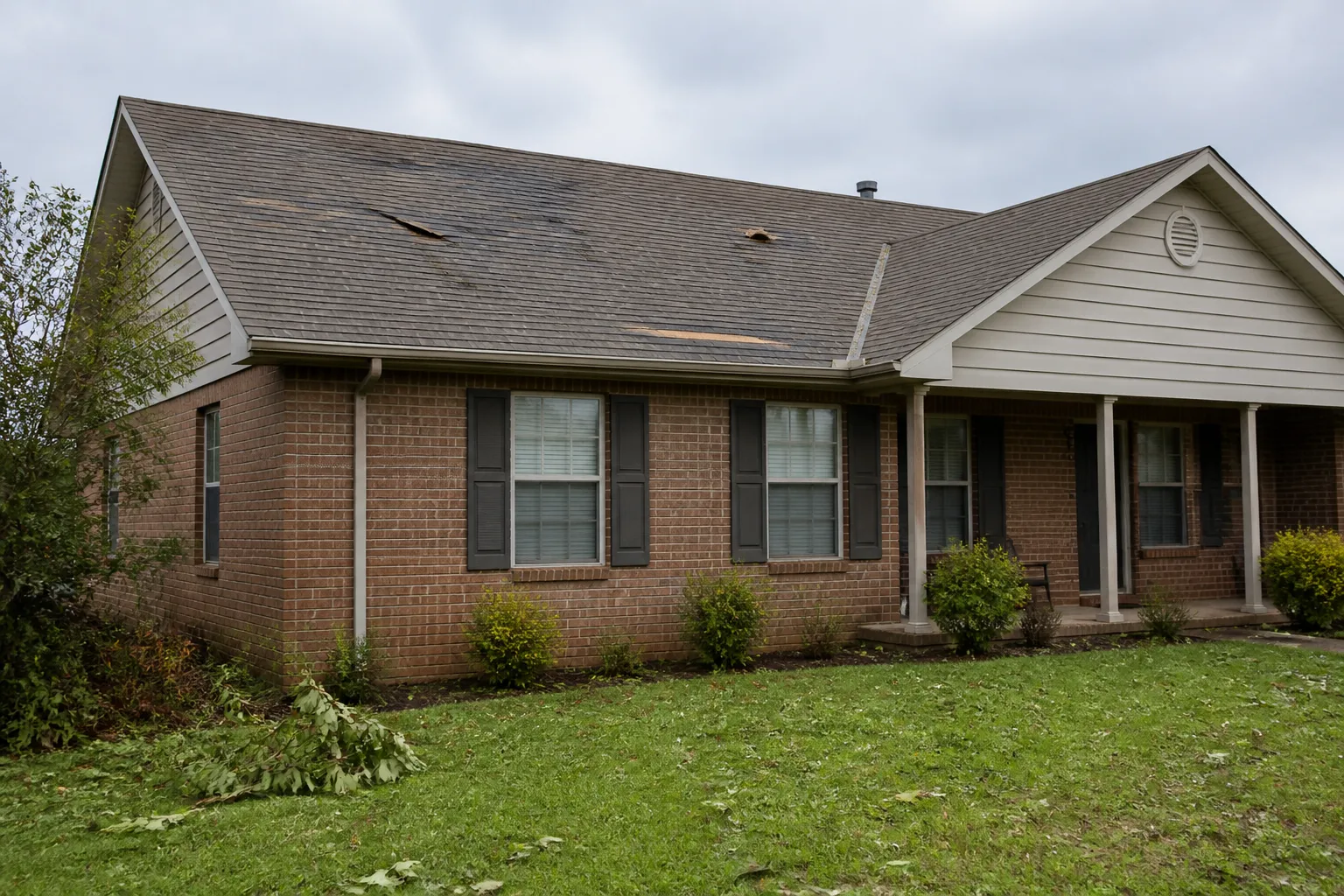
Wind can loosen, lift, or remove shingles and ridge materials, and may affect flashing or roof edges. Hail can leave impact marks that are hard to evaluate from below. A fallen branch or other debris may puncture or scrape the roof covering, damage gutters, or affect a penetration. New water stains, damp areas, or dripping indoors may indicate that water is entering somewhere, though the interior mark may not be directly beneath the opening.
Share what you noticed without assuming the cause. A contractor can assess the reported areas, roof components, and visible signs of water entry, subject to safe access and site conditions.
Do not climb onto the roof, use a ladder to inspect it, or remove branches or loose material overhead. From the ground, use a camera zoom to capture visible changes when you can do so safely. Indoors, photograph new ceiling marks, drips, or affected belongings from a stable, dry area. Note the approximate storm date, when you first observed the concern, and which rooms or sides of the building appear affected.
Photographs can help explain the concern but may not show the full condition of the roof. If damage creates an immediate safety hazard, prioritize keeping people clear and contact the appropriate local emergency services for immediate danger.
An assessment may review the visible roof covering, edges, ridge, flashing, vents, pipe boots, gutters, and areas where water may be entering. The contractor may ask what changed, when the storm occurred, and whether there are interior signs. The assessment should distinguish observed conditions from areas that could not be evaluated and explain which repairs or further work are being proposed.
Ask which roof areas were inspected, what evidence supports the recommended work, and whether any concerns remain uncertain. A written scope can help you understand the materials and tasks included without assuming that every visible mark requires the same treatment.
If the roof is exposed or water is entering, ask the contractor whether temporary protection is appropriate, what it would cover, and what limitations apply. Confirm who would provide it, how the affected area would be accessed safely, what it would or would not prevent, and whether it is separate from permanent repair work. Do not attempt to cover a roof yourself if doing so requires climbing or entering an unsafe area.
A localized repair may be considered when the damage is limited and surrounding materials remain serviceable. Replacement may be discussed if damage is widespread, the roof has broader deterioration, or multiple areas require substantial work. The storm alone does not determine which option fits; ask the contractor to explain the observed condition and compare the proposed scopes.
Review a written estimate for the affected roof areas, materials, repair or removal work, flashing or other related components, cleanup, exclusions, and how concealed damage or additional work would be discussed. If a temporary measure is proposed, ask that its purpose and limits be described separately from the permanent work.
Provide the property ZIP code, building type, approximate storm date, visible changes, any leak location, and whether temporary protection is a concern. Share safe photos and note access limitations. All Arkansas Roofing connects property owners with independent roofing contractors. Independent contractors assess the property, provide estimates, and perform agreed work. Send your details through the contact page.
For local service-area information, visit roofing in Camden. You can also read about storm damage roofing across Arkansas and related Camden services for roof repair and roof replacement.
No. Photograph visible conditions from the ground or document interior signs from a safe location. Do not climb a ladder or walk on a wet or damaged roof.
Keep clear of unsafe areas, document what is visible from a safe distance, and share the location and approximate time it occurred when requesting an assessment. Do not remove debris from the roof yourself.
Not necessarily. Water can travel before appearing indoors. Record the room and location of the stain and ask the contractor to assess the roof and reported leak.
Ask whether temporary protection is available for your situation, what it would cover, and what limitations and separate work it involves. Do not assume it is part of every estimate.
What To Expect
Share your ZIP code, the service you are considering, and what you have noticed about the roof.
Discuss the observed condition, repair or replacement options, and proposed scope with the independent roofer, subject to local availability.
Review materials, work details, cleanup, exclusions, and any additional repairs before deciding how to proceed.
A Few Common Questions
Tell us where the property is and what your roof needs.
Roofing Estimate
Share the property ZIP code and the roofing service you need. The form uses the existing inquiry system.