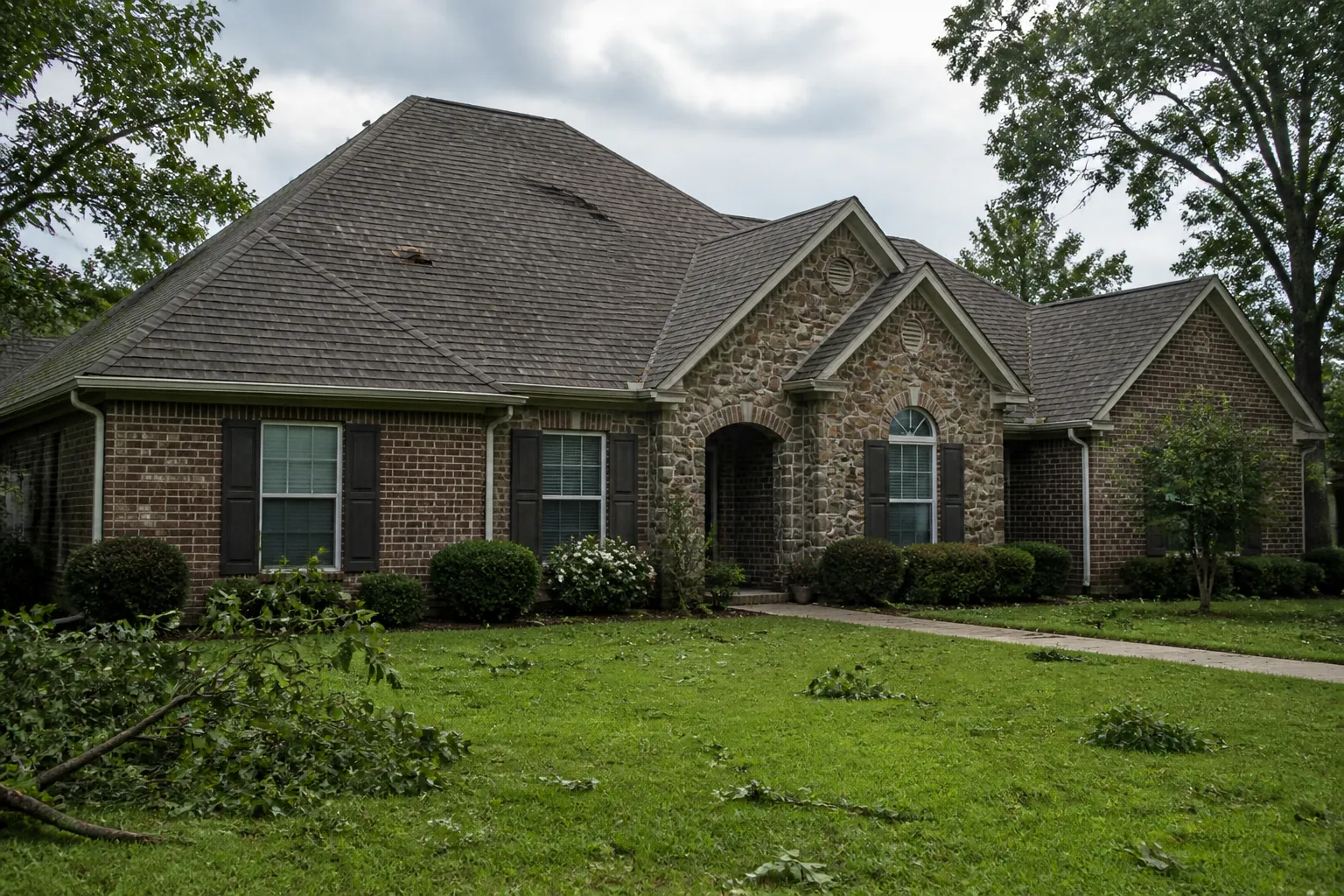
Arkansas Roofing Guidance
Storm Damage Roofing in Magnolia, AR
Learn how to document wind, hail, debris, and leak concerns safely and compare storm-damage roof repair and replacement options in Magnolia, AR.
Arkansas Roofing Guidance
Learn how to document wind, hail, debris, and leak concerns safely and compare storm-damage roof repair and replacement options in Magnolia, AR.
After a storm, missing shingles and fallen debris are easy to notice. Other roofing problems may first appear as a ceiling stain or a leak during the next rain. Learn what to document safely and what to ask during an assessment of your Magnolia roof.
Visible damage can be only part of the picture. Water may travel before it shows indoors, while some changes to roof materials are difficult to judge from the ground. All Arkansas Roofing connects property owners with independent roofing contractors. Independent contractors provide estimates and perform agreed roofing work.
Wind may lift, crease, loosen, or remove shingles and disturb ridge or edge details. Hail can leave marks on roofing or other exposed components, though a mark alone does not establish the condition of the whole roof. Branches and other debris can strike roof coverings, gutters, flashing, or penetrations. Do not climb onto a roof or use a ladder to inspect after a storm.
From the ground, use a camera zoom to document visible changes. Indoors, note new ceiling stains, drips, or damp areas that can be observed safely. Keep people clear of sagging ceilings and avoid touching wet electrical fixtures. A photo or stain can help describe the concern but does not by itself identify the roof entry point.
Record the date you noticed a change, the rooms affected, and whether water appeared during or after rain. Photograph interior signs from a safe position and visible exterior conditions from the ground. Keep the original images and note any earlier roof repairs or leaks that might help explain the history.
Describe the storm as best you can, where damage appears, when a leak began, and whether the concern has happened before. The written assessment should identify areas and components reviewed, access limitations, and which findings are directly observed versus uncertain. Depending on the roof and safe access, the review may include shingles or panels, flashing, ridges, edges, penetrations, gutters, and signs of water entry.
Ask how each recommended repair relates to the observed condition and whether nearby materials need attention. If the assessment cannot establish a leak source or a concealed condition, ask what further evaluation may be appropriate and what remains outside the current scope.
If water is entering or an area is exposed, ask the contractor whether temporary protection is appropriate, what it would cover, and what limitations it has. Confirm who would provide it, what access or preparation is needed, and whether that work is separate from permanent repairs. Temporary measures may not resolve the underlying issue or prevent all water entry, particularly when conditions change.
Do not attempt roof covering, tarp placement, debris removal, or other work at height yourself. Ask for any proposed temporary work and related scope to be clearly explained before agreeing to it.
A localized area of damage may be addressed with a repair when surrounding materials and roof details remain serviceable. Replacement may be worth discussing when damage or wear is widespread, separate areas have recurring leaks, or the overall roof condition makes isolated repairs a limited option. A storm event alone does not determine which approach fits.
Ask for the observations and recommended work to be described in writing. Clarify which roof areas are included, what materials and details are involved, what is excluded, and how newly discovered conditions would be documented and approved. For related Magnolia information, review Roof Repair in Magnolia and Roof Replacement in Magnolia.
No. Photograph visible conditions from the ground and document indoor signs from a safe location. Avoid ladders and roof surfaces, especially when they may be wet, unstable, or covered with debris.
Note when the leak appeared, which room is affected, whether it changes during rain, and any earlier repairs. Safe photos of the interior and ground-level observations can help describe the concern.
A contractor can explain observed conditions and possible scopes. The options depend on the extent of damage, surrounding roof materials, prior wear, and what can be assessed safely.
No. A roofing assessment can describe observed conditions and proposed work, but it does not guarantee an insurer’s decision or provide claim representation.
Share the property location, approximate date of the storm, visible damage, leak history, and any safe photos. Visit the Magnolia roofing hub or read regional storm-damage roofing guidance. You can contact us to discuss estimate options with an independent contractor.
What To Expect
Share your ZIP code, the service you are considering, and what you have noticed about the roof.
Discuss the observed condition, repair or replacement options, and proposed scope with the independent roofer, subject to local availability.
Review materials, work details, cleanup, exclusions, and any additional repairs before deciding how to proceed.
A Few Common Questions
Tell us where the property is and what your roof needs.
Roofing Estimate
Share the property ZIP code and the roofing service you need. The form uses the existing inquiry system.