Arkansas Roofing Guidance
Roof Repair in Magnolia, AR
Learn about roof leak assessment, shingles, flashing, pipe boots, repair limits, and replacement considerations for Magnolia, AR properties.
Arkansas Roofing Guidance
Learn about roof leak assessment, shingles, flashing, pipe boots, repair limits, and replacement considerations for Magnolia, AR properties.
A roof leak doesn’t always mean you need a full replacement. Damaged shingles, worn flashing, or a failed pipe boot may call for a targeted repair. Start with an assessment that identifies the source and explains the proposed fix for your Magnolia property.
A ceiling stain is a clue, not a diagnosis. Share when it appeared, where it shows, and whether previous patches were attempted. All Arkansas Roofing connects property owners with independent roofing contractors; contractors provide estimates and perform agreed work.
Water may travel along framing or other surfaces before showing indoors, so the stain may not be directly below the roof entry point. Depending on the system and what can be safely assessed, a contractor may investigate shingles, flashing, roof penetrations, valleys, edges, and nearby areas. A stain or drip by itself cannot diagnose the source.
When calling, share the room and approximate location, when the issue began, whether it changes after rain, and any visible changes. Mention previous repairs and whether the leak returned. Indoor or ground-level photos taken from a safe place can help describe the concern; do not use a ladder or climb onto the roof. Finding the likely source and checking surrounding materials helps determine whether a localized repair fits and what its scope should include.
For more local information, visit the Magnolia roofing hub or read regional roof repair guidance.
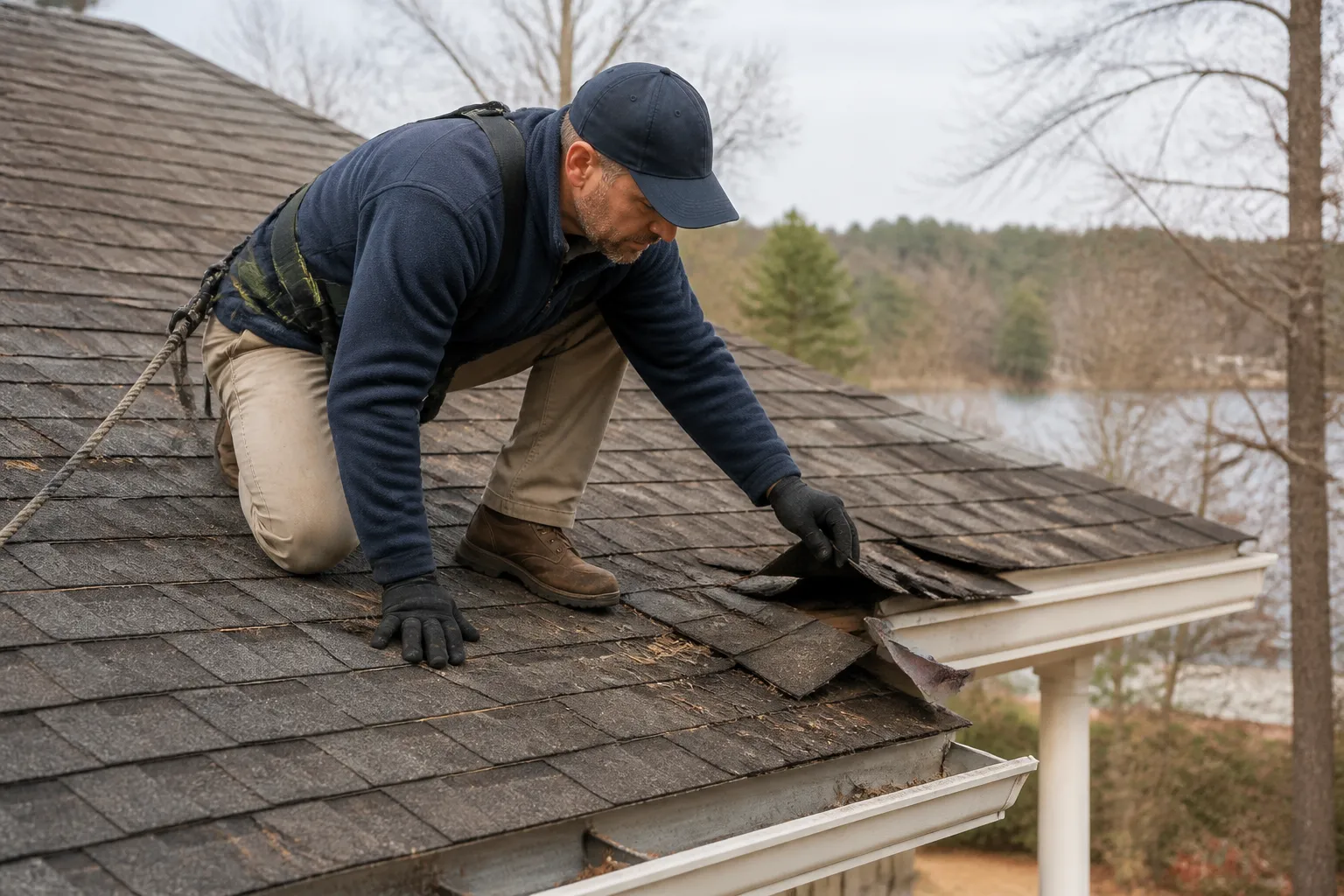
Shingles can crack, lift, or become displaced. Ask which area can be repaired and whether nearby roofing remains serviceable. Flashing directs water around edges, valleys, walls, and other transitions; loose or damaged flashing may need work beyond the visible spot. Pipe boots and seals around plumbing vents can also split, wear, or shift.
The estimate should identify the affected component and describe the repair steps. Clarify which related materials are included and what remains outside the proposed work. A leak should not automatically be treated as a shingle issue when flashing or a penetration could be involved.
Tell the contractor what earlier patches were made and when, if known. A patch may have addressed a symptom without resolving its source, or it may have deteriorated. Ask whether old material will be removed or changed, how the area will be prepared, and what nearby roof conditions remain outside the repair.
A targeted repair is limited to the agreed scope. It may not address moisture from another location, broader wear, or concealed damage that is not visible beforehand. Ask what the repair is intended to correct, what it cannot confirm, and how newly observed conditions would be documented before the estimate or scope changes.
Repair may fit an isolated problem when surrounding materials remain serviceable. Replacement may be worth comparing if damage or wear is widespread, leaks recur in multiple areas, or earlier repairs have not resolved the underlying concern. Ask the contractor to explain the observed condition and the reasons for each option instead of deciding from a ceiling stain alone.
Review the scope, exclusions, and assumptions for either option. For replacement questions, see regional roof replacement guidance or the Magnolia roof replacement page. A written explanation can help you understand what a repair would address and what conditions would remain.
Explain access needs and any entrances or work areas that must remain clear. Ask how tools and materials will be arranged, what preparation is expected, and how changes to the estimate would be approved.
If you manage a shop near Magnolia’s courthouse square, mention customer entrances and delivery access when requesting roof repairs. Ask how ladders, materials, and the work area will be arranged while the business is open.
From a safe indoor location, note the room, approximate stain or drip location, and date. Photograph changes from the floor if it is safe. Never touch wet electrical fixtures or equipment. Keep people away from sagging ceilings or unsafe areas, and mention those concerns when requesting an assessment. Do not use a ladder or climb onto the roof to investigate.
Move belongings only if doing so is safe. Your notes and photos can describe what is happening, but an assessment is needed to identify the source and suitable repair scope.
No. Water can travel before appearing indoors. Share the stain location and when it changes so the source can be assessed.
No. A localized issue may be repairable if nearby roofing is serviceable. Ask what the repair includes and excludes.
Note the room and date, and take photos indoors or from the ground. Avoid ladders, roof access, wet electrical equipment, and unsafe ceilings.
Ask for a comparison when damage is widespread, leaks recur in different areas, or patches have not resolved the concern. It should reflect the roof’s assessed condition.
When you reach out, share the property location, where water appears, when it began, and any known history of shingles, flashing, pipe boots, or earlier patches. Contact us to discuss the next step with an independent contractor.
What To Expect
Share your ZIP code, the service you are considering, and what you have noticed about the roof.
Discuss the observed condition, repair or replacement options, and proposed scope with the independent roofer, subject to local availability.
Review materials, work details, cleanup, exclusions, and any additional repairs before deciding how to proceed.
A Few Common Questions
Tell us where the property is and what your roof needs.
Roofing Estimate
Share the property ZIP code and the roofing service you need. The form uses the existing inquiry system.