Arkansas Roofing Guidance
Storm Damage Roofing in El Dorado, AR
Learn about storm damage roofing in El Dorado, AR, including wind and hail concerns, safe documentation, contractor assessments, and temporary protection questions.
Arkansas Roofing Guidance
Learn about storm damage roofing in El Dorado, AR, including wind and hail concerns, safe documentation, contractor assessments, and temporary protection questions.
Wind and hail can loosen roof materials, damage flashing, move debris, or lead to a leak that appears after the weather clears. Some signs are visible from the ground, while others require a contractor to assess the roof safely. If you notice missing shingles, a new ceiling stain, or debris impact, record what you can observe without climbing onto the building.
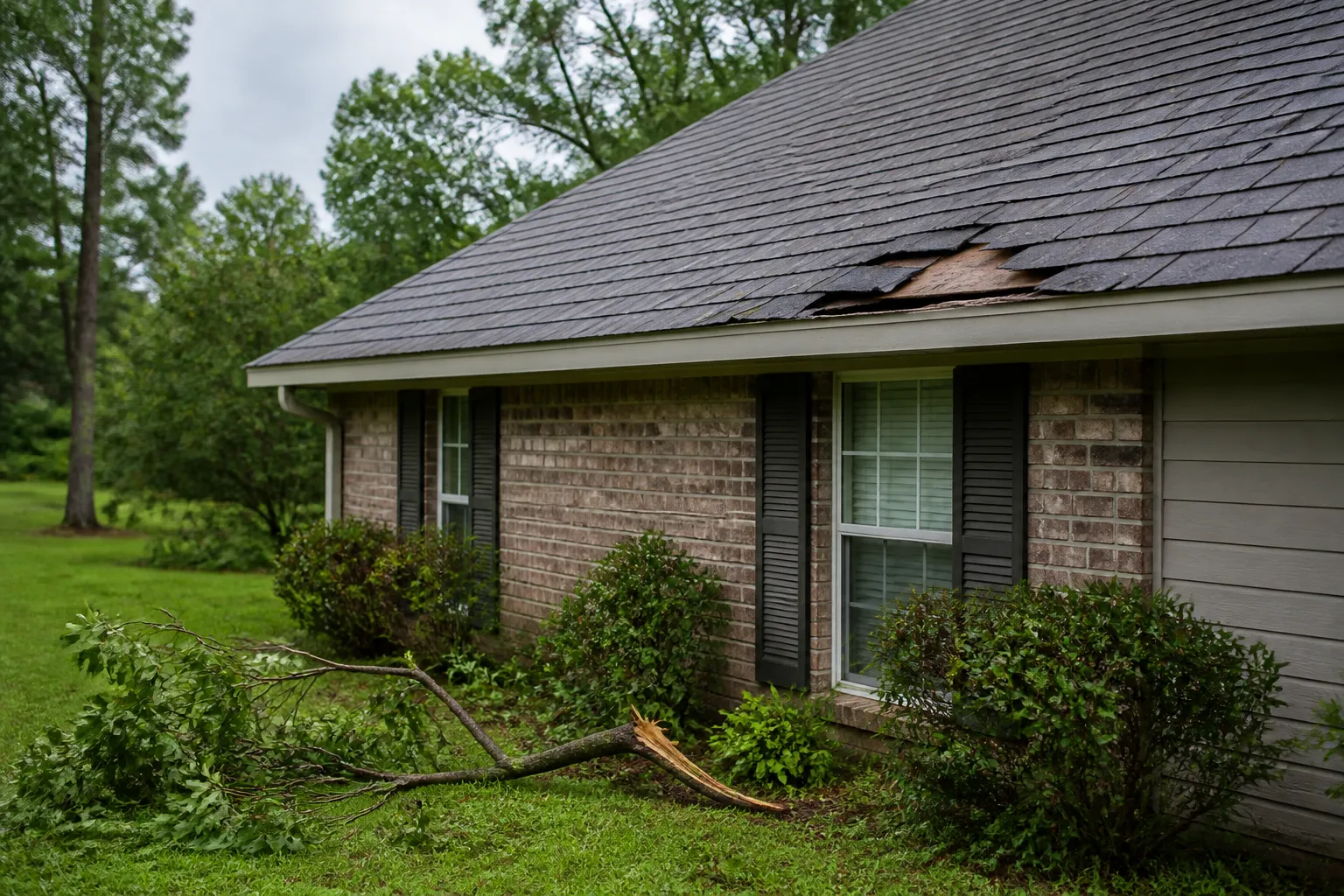
All Arkansas Roofing connects property owners with independent roofing contractors. Contractors assess properties, provide estimates, and perform any agreed work. Availability varies by location and project. The featured image is illustrative and does not show completed work by All Arkansas Roofing.
Wind may lift or remove shingles, disturb ridge or edge materials, and affect flashing around roof openings. Hail can leave dents or marks that may not be easy to evaluate from a distance. Branches or other debris can strike a roof, gutters, vents, or exposed equipment. A visible change is a useful observation to report, but it does not by itself show how extensive the damage is or what work is appropriate.
For the El Dorado property, note when you first observed a concern and which part of the building may be affected. The assessment should consider the reported conditions and any safe access available.
Missing or displaced shingles can expose materials beneath them. After a storm, look from a safe place on the ground for irregular areas, roofing pieces in the yard, bent flashing, or debris resting near the roof. Do not climb a ladder or walk on a roof to check a suspected area.
A leak may show up as a new stain, damp finish, or drip inside the building. Water can travel before it appears, so the indoor mark may not be directly below the point where water entered. Record the room and approximate location, when the sign appeared, and whether you noticed it after a particular weather event. Keep away from sagging ceilings and water near electrical equipment; do not enter or touch an area that seems unsafe.
Useful documentation does not require roof access. Take clear photos of interior signs from a dry, stable location. From the ground, use a camera zoom to capture visible changes without standing beneath unstable materials. Keep original photos and make a brief note of the date, approximate time, and areas involved.
Photos can help explain what you observed, but they do not replace an assessment and may not show the full roof condition.
An independent contractor may ask about the storm, when symptoms began, the location of visible damage, and any interior water signs. Depending on conditions and access, the assessment may consider the roof covering, ridge and edge details, flashing, penetrations, gutters, and visible impact areas. The contractor can describe what they observed and outline repair or replacement options if appropriate.
Ask which roof areas were assessed, what visible conditions support the proposed scope, and whether any parts of the roof could not be evaluated. An assessment is not a promise of insurance approval or claim representation. Discuss any insurance process directly with the relevant insurer and ask contractors only about their own observations and estimate scope.
If water is entering, ask the contractor whether temporary protection is appropriate for the reported conditions, what it would involve, and whether it can be provided for your property. Availability, safe access, and the condition of the roof can affect what is possible. Do not assume temporary work is available or attempt a roof covering yourself. If the affected area is unsafe, keep people away and explain the condition when you contact a contractor.
A repair may be considered when damage is localized and surrounding materials remain serviceable. Wider damage, repeated leaks, or existing deterioration may lead a contractor to discuss replacement as another option. The storm alone does not determine the right scope. Ask what the proposed work addresses, what remains outside it, and what conditions could change the estimate once the roof is assessed.
For related options, visit the El Dorado roofing overview, read about regional storm damage roofing, El Dorado metal roofing, El Dorado roof repair, and El Dorado roof replacement.
No. Stay indoors or on the ground, use a camera zoom if appropriate, and avoid ladders, loose debris, and wet or damaged roof surfaces.
Share when you noticed it, which room or area is affected, any visible roof changes you can safely see, and whether you have photos taken from a safe location.
A contractor can assess visible roof conditions and explain their observations. A single mark or photograph may not establish its cause, so ask what was evaluated and what remains uncertain.
Ask the independent contractor whether temporary protection is appropriate and available for the property. It depends on conditions and safe access; do not assume it can be arranged or try to work on the roof yourself.
Share the property ZIP code, when you noticed the concern, the visible symptoms, and any safe photos or access details. All Arkansas Roofing may connect you with an independent contractor if available for the request. Contractors provide estimates and perform the work.
What To Expect
Share your ZIP code, the service you are considering, and what you have noticed about the roof.
Discuss the observed condition, repair or replacement options, and proposed scope with the independent roofer, subject to local availability.
Review materials, work details, cleanup, exclusions, and any additional repairs before deciding how to proceed.
A Few Common Questions
Tell us where the property is and what your roof needs.
Roofing Estimate
Share the property ZIP code and the roofing service you need. The form uses the existing inquiry system.