A new ceiling stain or drip after a storm can be unsettling. Start with people’s safety, limit damage only if it is safe to do so, and document what you can see from indoors or the ground. A visible stain is a useful clue, but it does not necessarily show where water entered the roof.
Make safety the first priority
Stay away from sagging ceilings, wet electrical fixtures, and fallen power lines. Do not climb onto a wet or damaged roof. A roof can be slippery, unstable, or damaged in ways that are hard to see. OSHA identifies wet roofing surfaces and rain as fall hazards; its roofing safety guidance and residential re-roofing safety PDF are intended for trained workers, not as a homeowner repair guide.
Do not enter an unsafe attic or puncture a bulging ceiling. Water may be collecting above it, and the ceiling or nearby electrical components may be compromised. If an area appears unsafe, leave it. When there is immediate danger, such as a structural threat, fire, or an electrical hazard, contact emergency services. The FEMA post-storm cleanup page and related FEMA cleanup guidance PDF advise checking for power-line and structural hazards and watching for sagging ceilings before entering or cleaning.
Keep clear of fallen power lines and anything touching them. Treat every downed line as energized and contact 911 from a safe location. The Electrical Safety Foundation International explains these precautions in its downed power line safety guidance.
Limit interior damage only when it is safe
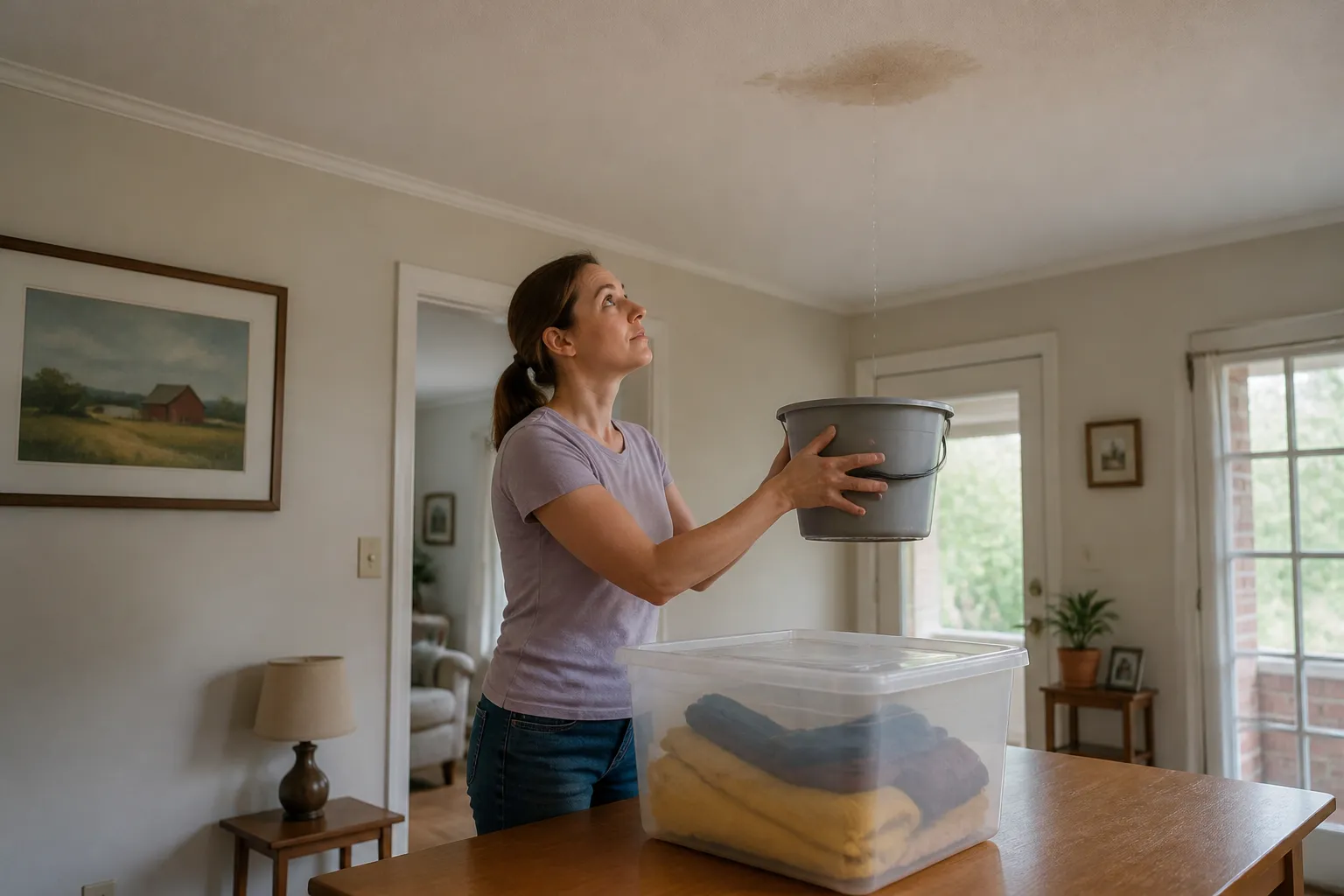
If the affected room is safe to enter, move people, pets, and belongings away from the leak. Place a container under a drip only if you can do so without standing beneath a bulging ceiling, touching wet electrical equipment, or reaching into an unsafe area. Move furniture and valuables only when doing so does not put anyone at risk. Do not use a wet light switch or fixture.
If the leak is near wiring, an electrical panel, a light, or an outlet, keep away and seek qualified help. Do not enter an attic to trace the water or try to block it from above. Avoid household cleanup where there is active electrical danger, unstable ceiling material, or another hazard.
Document visible damage from a safe position
Take photos or short videos from indoors or from a safe ground-level location. Include an overview of the room and closer views of visible staining, dripping, damaged belongings, or exterior debris that can be seen without approaching a hazard. Note the date, approximate time, room, and whether the water appeared during or after the storm. Keep original files where possible.
Do not step into standing water near electrical equipment or approach a downed line for a better picture. FEMA recommends documenting visible damage and keeping repair receipts; its damage documentation guidance and photo documentation guidance also advise checking for structural safety before cleanup. Follow your own insurer’s instructions for the records it needs.
A ceiling stain may not mark the roof opening
Water can travel along roof components or framing before it appears inside, so the drip or stain may be offset from the roof entry point. A storm leak can also involve flashing, a roof penetration, a damaged covering, or another building component. The National Roofing Contractors Association explains that the point where water appears indoors may not be directly below the entry location and that a careful investigation is needed to verify the cause. Read its roof leak investigation guidance.
Share the location and timing of each stain, but avoid treating a visible mark as a diagnosis. A roof assessment may need to consider the surrounding roof area and related details, rather than just the spot directly above the ceiling stain.
Ask about temporary protection and assessment
When speaking with a roofing service provider, ask whether temporary protection is appropriate, who would perform it, what area it would cover, and what approval is needed before work begins. Ask how and when the roof can be assessed safely, what visible or concealed conditions will be reviewed, and how findings will be documented. Do not assume immediate dispatch or a particular inspection timeframe.
If you have property insurance, check your policy and contact your insurer about documentation, claim procedures, and any applicable deadlines. Requirements depend on the policy and circumstances; this guide does not interpret coverage or establish a claim deadline. Keep copies of messages and documents related to the damage.
Consider repair versus replacement
A localized, clearly identified area of damage may be considered for repair when the surrounding roof and related components can support that approach. A broader assessment may discuss replacement if damage is widespread, problems recur, multiple roof areas are affected, or the overall roof condition makes an isolated repair unsuitable. The right scope depends on the actual roof, not the ceiling stain alone.
Ask what condition was observed, what work is proposed, what is excluded, and why the recommendation fits the findings. Before approving any additional work, request an explanation of the newly discovered condition, the added scope, any price or schedule change, and the approval process in writing. For more context, read Roof Repair or Replacement? How to Compare Your Options and What Should a Roofing Estimate Include?.
Keep a simple damage and work timeline
Save photos, estimates, inspection notes, invoices, receipts, and messages together. Make a short timeline with the storm date, when the leak was first noticed, when photos were taken, whom you contacted, what temporary steps were discussed, and when any work was approved or completed. A clear record helps you compare observations and follow up with the insurer or service provider.
What to tell the roofer
- When the storm occurred and when the leak first appeared.
- Which rooms or ceiling areas show staining or dripping.
- Whether the leak is active, intermittent, or has stopped.
- Any visible changes from a safe indoor or ground-level position.
- Previous leaks, patches, or roof work you know about.
- Whether there are safety concerns, such as wet fixtures or a sagging ceiling.
- What documentation you have and whether the insurer has been contacted.
Roof leak after a storm FAQs
Should I go on the roof to look for storm damage?
No. Do not climb onto a wet or damaged roof. Photograph only what is visible from a safe indoor or ground-level position and ask about a safe roof assessment.
Can I put a hole in a bulging ceiling to drain water?
No. Do not puncture a bulging ceiling or enter an unsafe attic. Leave the area and seek appropriate help, especially if the ceiling is sagging or electrical equipment is wet.
Does the ceiling stain show exactly where the roof is leaking?
Not necessarily. Water can travel before it appears indoors. The leak source should be assessed rather than assumed from the stain’s location.
What should I do about an insurance claim?
Check your policy and contact your insurer about how to document the damage and any applicable deadlines. Keep photos, estimates, invoices, and a timeline. Coverage and requirements depend on your policy and situation.
Related roofing information
For service details, see Roof Repair in Arkansas and Storm Damage Roofing in Arkansas.