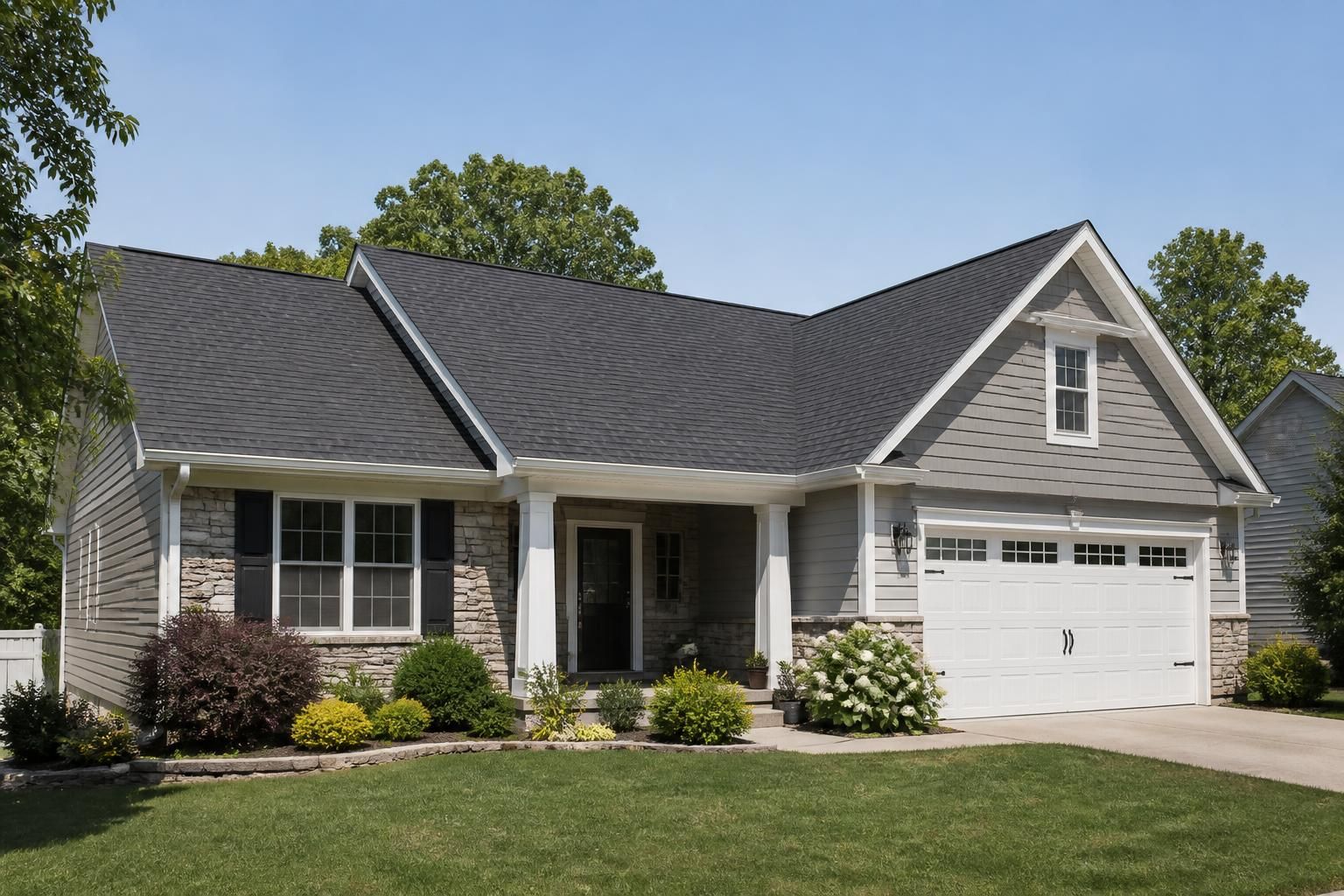
A roof problem can look small from inside or from the ground, while the condition around it may tell a different story. Comparing repair and replacement starts with the affected area, the surrounding materials, and whether previous work has held up. This guide helps organize questions for an in-person assessment; it cannot diagnose a roof from a checklist or photograph.
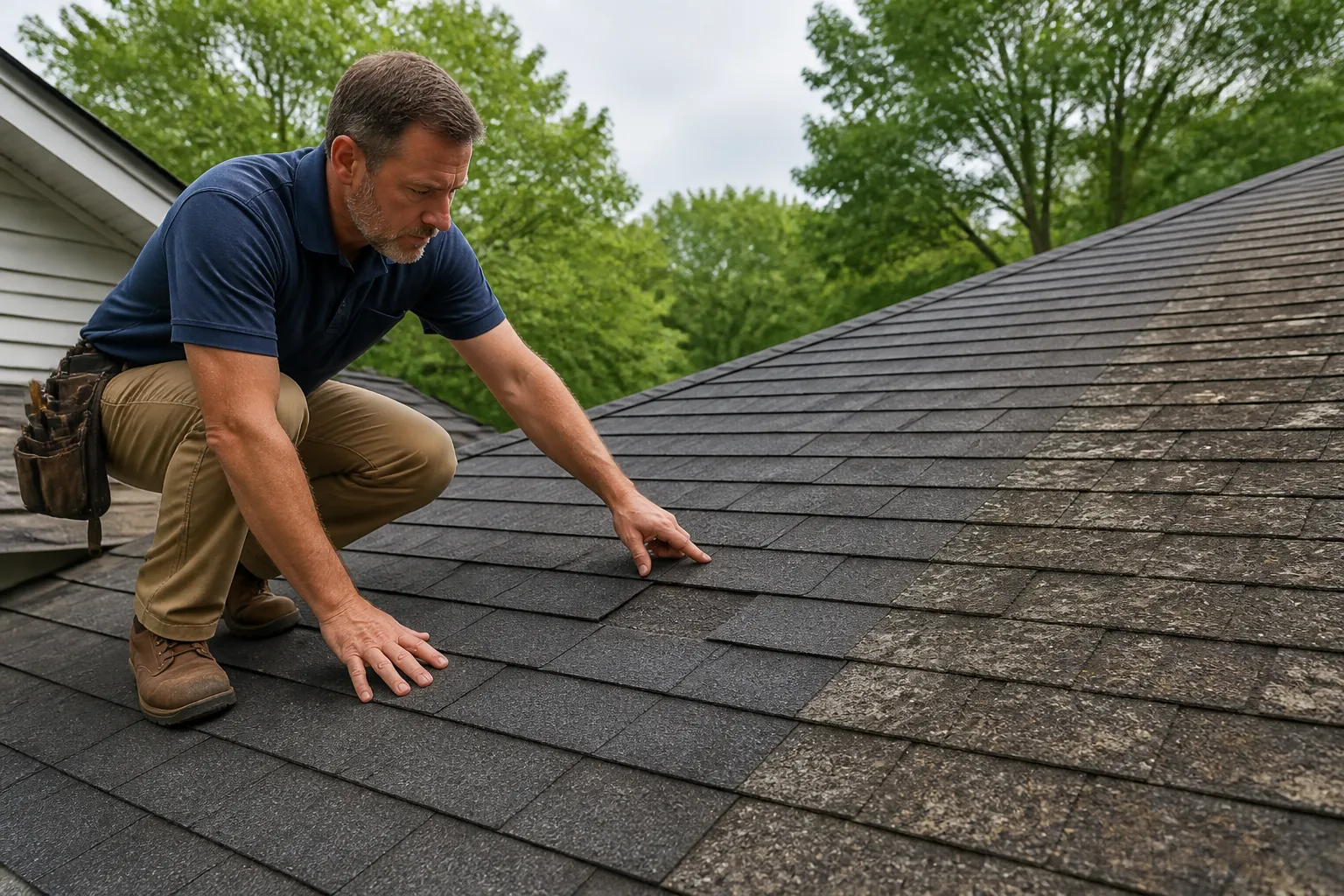
Localized damage and widespread deterioration are different questions
A small area of missing or lifted shingles, a damaged flashing detail, or a worn pipe boot may point to a focused repair if nearby materials remain in serviceable condition. The visible symptom does not prove that the source is directly below it. Water can travel along roof components or framing before it appears indoors, so the assessment should trace the likely path and check surrounding details.
Broader wear across several roof slopes, multiple damaged areas, brittle or displaced materials, or problems at several transitions may call for a wider review. A replacement discussion becomes more relevant when a repair would leave substantial deteriorated material in place, or when repeated isolated fixes are not resolving the underlying pattern. Neither a stain nor a single damaged shingle, by itself, settles the decision.
Recurring leaks and previous repairs deserve context
Ask what was repaired before, where the work was done, and whether the same symptom returned. A repeat leak could mean the first repair missed the entry point, a nearby flashing or penetration is involved, or another roof area has a separate issue. A patch can also deteriorate or interact with adjacent materials. The history helps guide inspection, but recurrence alone does not automatically mean the whole roof should be replaced.
From indoors, note the room and approximate location of stains or drips and take dated photos from a safe place. If safe, photograph visible exterior concerns from the ground. Do not climb onto a roof or touch wet electrical fixtures. Keep people clear of sagging ceilings or other unsafe areas, and share those observations when asking for an assessment.
Roof age is useful background, not a verdict
Age can help explain the maintenance history, but it is only one part of the picture. Material type, installation details, ventilation, exposure, upkeep, past repairs, and the condition of the roof deck can all affect what an inspection finds. Two roofs of similar age may have different conditions, and a newer roof can still have a localized installation or storm-related problem. Avoid deciding from a generic lifespan number; ask what is present on this particular roof.
Look beyond the outer covering
Shingles or other roof covering are only one part of a roof assembly. A useful assessment considers the deck, underlayment, flashing at walls and roof intersections, seals around plumbing pipes and other penetrations, and ventilation. Soft or deteriorated decking may need attention before new covering can be installed. Damaged or poorly integrated flashing can remain a leak path even after nearby shingles are changed. Ventilation and moisture conditions may also affect the roof system. The Asphalt Roofing Manufacturers Association guide to asphalt shingle roof systems explains how components such as underlayment and ventilation work alongside shingles. Product-specific installation instructions should govern the materials proposed for a particular job.
Compare the actual scope, not just the recommendation
When reviewing a repair proposal, identify the roof area, suspected cause, materials to be replaced, flashing or penetrations included, and what is excluded. Ask how the proposed work addresses the likely source and what conditions might require a revised scope. For replacement, compare tear-off or overlay assumptions, underlayment, flashing, ventilation, decking allowances, cleanup, and material specifications. A lower total may cover less work, use different materials, or handle hidden damage differently.
| Consideration | A focused repair may fit when… | Discuss broader replacement when… |
|---|---|---|
| Damage pattern | The problem appears limited and surrounding materials remain serviceable. | Wear or damage is spread across multiple areas or roof components. |
| Leak history | The likely source is identifiable and a specific repair can address it. | Leaks recur in different places or earlier repairs have not resolved the pattern. |
| Underlying system | The deck and adjacent details appear suitable to retain. | Inspection identifies broad deterioration or multiple connected components needing work. |
| Written scope | The proposal names the area, repair materials, and limits. | A replacement proposal clearly covers removal, system components, allowances, and cleanup. |
Questions when recommendations differ
Different recommendations may reflect different observations or assumptions. Ask each estimator to identify the exact areas inspected and show or describe the evidence behind the recommendation. Clarify whether the proposal assumes a repair, partial replacement, or full tear-off; what conditions could change the work; and how additional decking or flashing work would be priced and approved. Request comparable written scopes before comparing totals. The National Roofing Contractors Association consumer resources likewise emphasize clear written proposals describing scope, materials, removal, flashing, ventilation, timing, payment procedures, and warranty coverage.
- What specific condition is the work intended to address?
- Which roof areas and components were inspected?
- What evidence suggests a repair is sufficient, or that replacement should be considered?
- What is included, excluded, and allowed for concealed damage?
- How will a change in scope be explained and approved before additional work?
A practical discussion checklist
- Record where and when leaks or visible changes occur.
- Gather previous estimates, repair notes, and safe indoor photos if available.
- Ask for the proposed work area and roof components to be named in writing.
- Compare material details, removal assumptions, decking allowances, flashing, ventilation, cleanup, and exclusions.
- Ask how unexpected conditions, revised costs, schedule changes, and approvals will be handled.
This checklist is for organizing a conversation, not diagnosing roof condition. A qualified in-person assessment is needed to evaluate the actual roof and determine what work is appropriate.
Related roofing guides and services
Return to Roofing Resources, or read What Should a Roofing Estimate Include? for a proposal review checklist. For Arkansas service information, see Roof Repair and Roof Replacement.