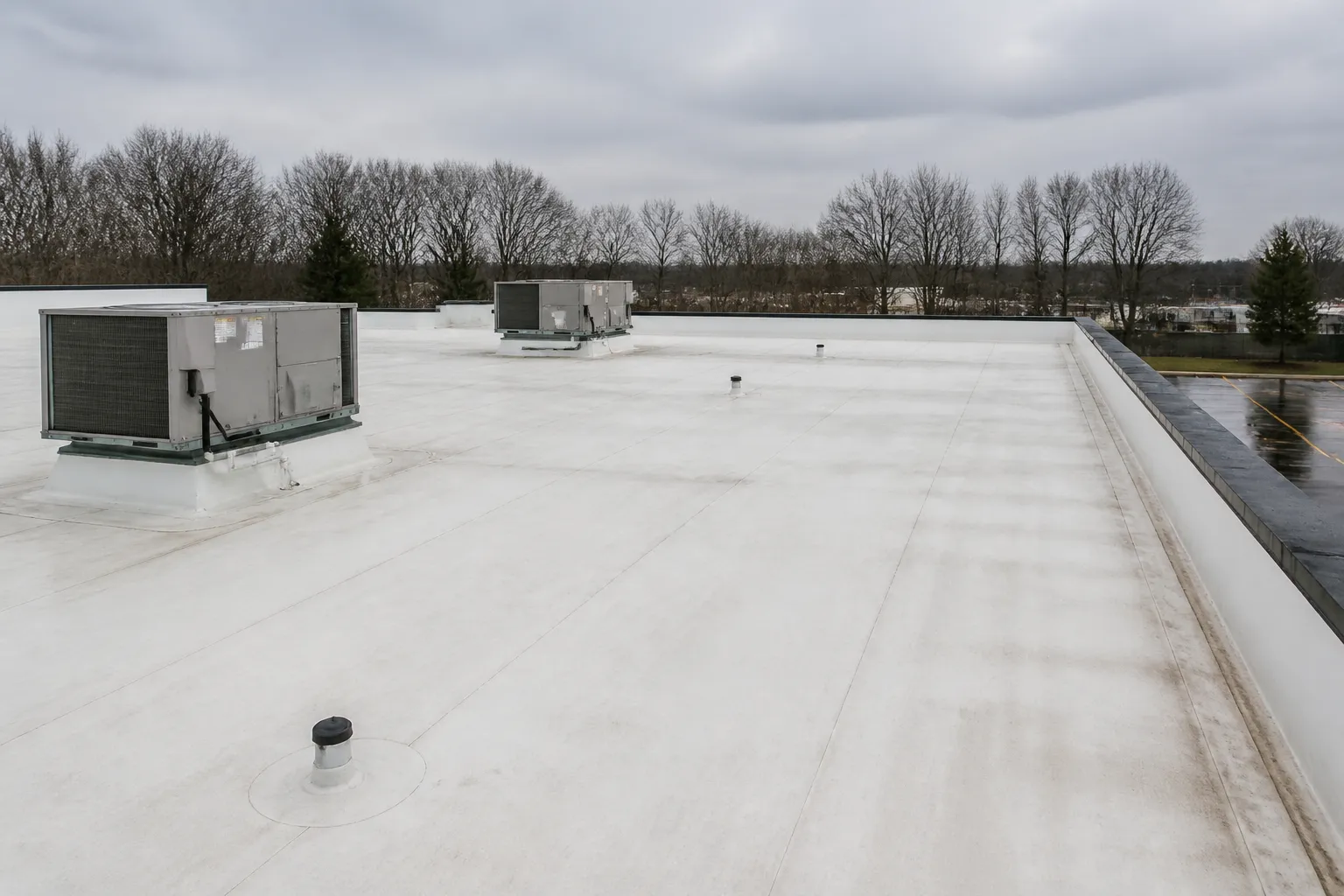
Water at a West Memphis commercial property can interrupt work, affect stored materials, or raise concerns near electrical equipment and occupied spaces. A useful first step is to document when moisture appears, which rooms or areas are affected, and whether the problem returns after earlier repairs. The visible stain may be distant from the roof opening, so the assessment should follow the building’s roof assembly and drainage rather than assume the nearest roof detail is the source.
All Arkansas Roofing connects property owners with roofing help for commercial buildings in West Memphis, Arkansas. Project decisions should be based on the actual address, existing roof construction, building use, and requested scope. Share available roof plans, prior repair notes, safe photos, and access requirements when asking about an assessment. For broader context, review roofing guidance for West Memphis and the statewide commercial roofing overview.
Before requesting a commercial roof assessment
Pass along what is already known; there is no need to climb onto or measure the roof. Useful details include:
- The property address, its use, and the person who can coordinate at the site.
- An approximate roof area and current system, if either is known.
- Leak locations and timing, including whether moisture returns.
- Past repairs and any available roof plans, reports, or maintenance records.
- How roof access is arranged and any site-specific entry or safety procedures.
- Roof equipment and nearby spaces or contents that may need protection.
- Occupancy patterns, normal hours, and scheduling limits.
Indoor or ground-level photos may help show visible conditions safely. An assessment should separate observed facts from assumptions and identify areas that could not be inspected.
Leaks, penetrations, and drainage
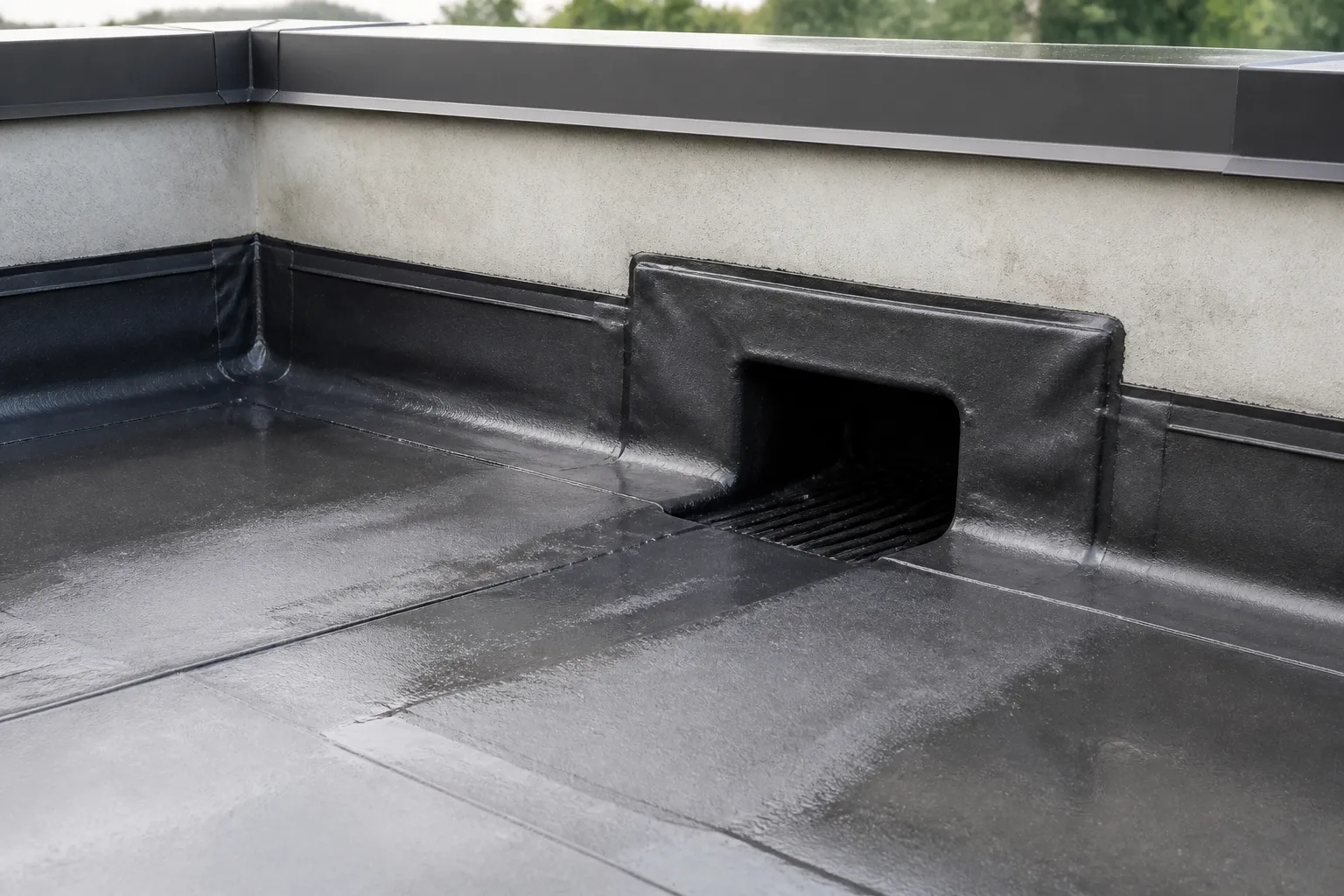
Water entry can occur at field seams, roof edges, wall transitions, drains, scuppers, equipment curbs, vents, piping, skylights, or other penetrations. A detail that was changed during mechanical work may need particular attention. Indoor stains, odors, or ceiling damage help locate symptoms, but do not prove the exact point where water entered. Record timing and weather conditions and avoid walking on a wet or damaged roof.
Drainage is part of the roof system. An assessment can consider whether drains and scuppers are clear, whether water is reaching them, whether nearby flashing is intact, and whether low areas or damaged components affect flow. Tell the assessor about recurring ponding or overflow, but do not treat a single observation as proof that the whole roof needs replacement.
Repair, maintenance, or replacement
A localized repair may fit a defined leak or damaged detail when surrounding materials and attachment remain serviceable. A written repair scope should identify the roof area, material or detail being addressed, access assumptions, and exclusions. Repeated leaks, widespread deterioration, multiple failing transitions, or recurring repair needs can make a broader assessment worthwhile.
Replacement deserves comparison when the condition extends beyond a limited area or the existing assembly no longer fits the building’s needs. Review what will be removed, how the underlying roof deck will be examined, how drainage and penetrations will be handled, and how newly discovered conditions will be documented before additional work proceeds. Maintenance can help identify visible changes and keep drains or roof details in view, but it cannot promise that leaks will never occur.
Membrane, metal, and coating considerations
Membrane systems may be considered on suitable low-slope assemblies, while metal systems may be appropriate for certain roof shapes and building uses. Availability and suitability are not assumed. The proposed system should account for slope, existing assembly, attachment or fastening method, edge conditions, penetrations, drainage, building occupancy, and the project’s performance requirements. Compare the complete assembly and details, not just the surface material.
Roof coatings also require careful assessment. Existing material, adhesion, moisture within the roof, surface preparation, drainage, penetrations, and compatibility affect whether a coating is suitable. A coating is not a universal fix for active leaks, wet insulation, structural concerns, or a roof assembly that needs broader work. Ask for the assessment findings and the exact limits of any coating scope before treating it as an alternative to repair or replacement.
Plan work around occupied buildings
After access and operating constraints are understood, the work plan should explain sequencing, work-zone boundaries, protection of entrances and sensitive areas, and how materials, noise, and debris will be managed. Consider deliveries and the continued use of the building when comparing proposed work.
For a West Memphis property, confirm permitting or other project requirements with the office responsible for the address and scope. Requirements can depend on the property and proposed work, so a blanket statement should not substitute for checking the actual project.
Compare written commercial roofing proposals
Request itemized proposals that make the alternatives understandable. Compare roof areas included, assessment findings, system components, flashing and penetration work, drainage, tear-off assumptions, decking allowances, access coordination, protection, cleanup, exclusions, and how concealed conditions will be presented for approval. For maintenance or repair, confirm what is and is not included. The roofing estimate checklist offers questions to use when comparing written scopes.
Commercial roofing options in West Memphis also include local roof repair and local roof replacement. A related local option is metal roofing in West Memphis, where the building and project requirements make it relevant.
Commercial roofing FAQ
What should be checked when a commercial roof leaks?
Review the roof covering, seams, edges, drains, scuppers, flashing, and penetrations, then compare those observations with where and when moisture appears indoors. Water can travel before it becomes visible, so the stain alone may not locate the entry point.
How is repair compared with replacement?
Compare the size and distribution of observed problems, repair history, condition of surrounding materials, and remaining concerns. Ask for the limits of a repair and the assumptions behind a replacement scope in writing.
Are roof coatings suitable for every commercial roof?
No. Suitability depends on the existing roof, surface condition, moisture, drainage, compatibility, and preparation needs. An assessment should establish whether coating is appropriate and identify conditions it would not address.
How can roofing work be coordinated at an occupied building?
Discuss entrances, deliveries, tenant activity, roof access, equipment, restricted spaces, work hours, debris control, and protection before scheduling. Ask that the work area and coordination expectations be stated clearly in the project plan.