Arkansas Roofing Guidance
Roof Replacement in West Memphis, AR
Compare roof replacement options in West Memphis, AR, including roof condition, material choices, tear-off, decking, ventilation, property protection, cleanup, and itemized proposals.
Arkansas Roofing Guidance
Compare roof replacement options in West Memphis, AR, including roof condition, material choices, tear-off, decking, ventilation, property protection, cleanup, and itemized proposals.
Roof replacement is a substantial project, so the first step is understanding what the existing roof is doing and which parts need attention. A recurring leak, widespread surface wear, or damage in several areas can justify comparing replacement with repair, but the choice should follow an assessment of the actual roof rather than a single symptom.
For a West Memphis, Arkansas property, compare proposals that identify the roof areas, materials, removal assumptions, and related details in writing. Homes and commercial buildings have different assemblies and uses; the scope should reflect the specific structure, access, drainage, and project requirements.
A useful review considers the covering, valleys, edges, flashing, roof penetrations, drainage paths, and any interior signs of moisture. On a sloped roof, widespread shingle wear or repeated problems around transitions may matter. On a low-slope assembly, seams, drains, penetrations, and areas holding water may be part of the assessment. The proposal should distinguish observed conditions from items that cannot be confirmed until existing material is removed.
Ask whether a localized repair remains a practical option and what condition makes replacement worth considering. If several roof sections are involved, the explanation should identify why the proposed scope addresses the broader condition better than another isolated repair. See the roof repair versus replacement guide for questions to use when comparing those paths.
Material selection depends on roof slope, existing assembly, building use, transitions, and project requirements. Asphalt shingles are one option for many sloped residential roofs. Metal roofing can be considered where the structure and design support a suitable system. Commercial buildings may use membrane or metal assemblies, depending on their configuration and requirements. A material name alone does not describe the complete roof system.
Ask each proposal to identify the covering and related components, including underlayment, flashing, edge details, and how penetrations will be handled. For metal or another specialized system, the details should match the roof layout and manufacturer’s installation requirements. Compare what is actually specified rather than assuming that proposals with similar headline descriptions include the same work.
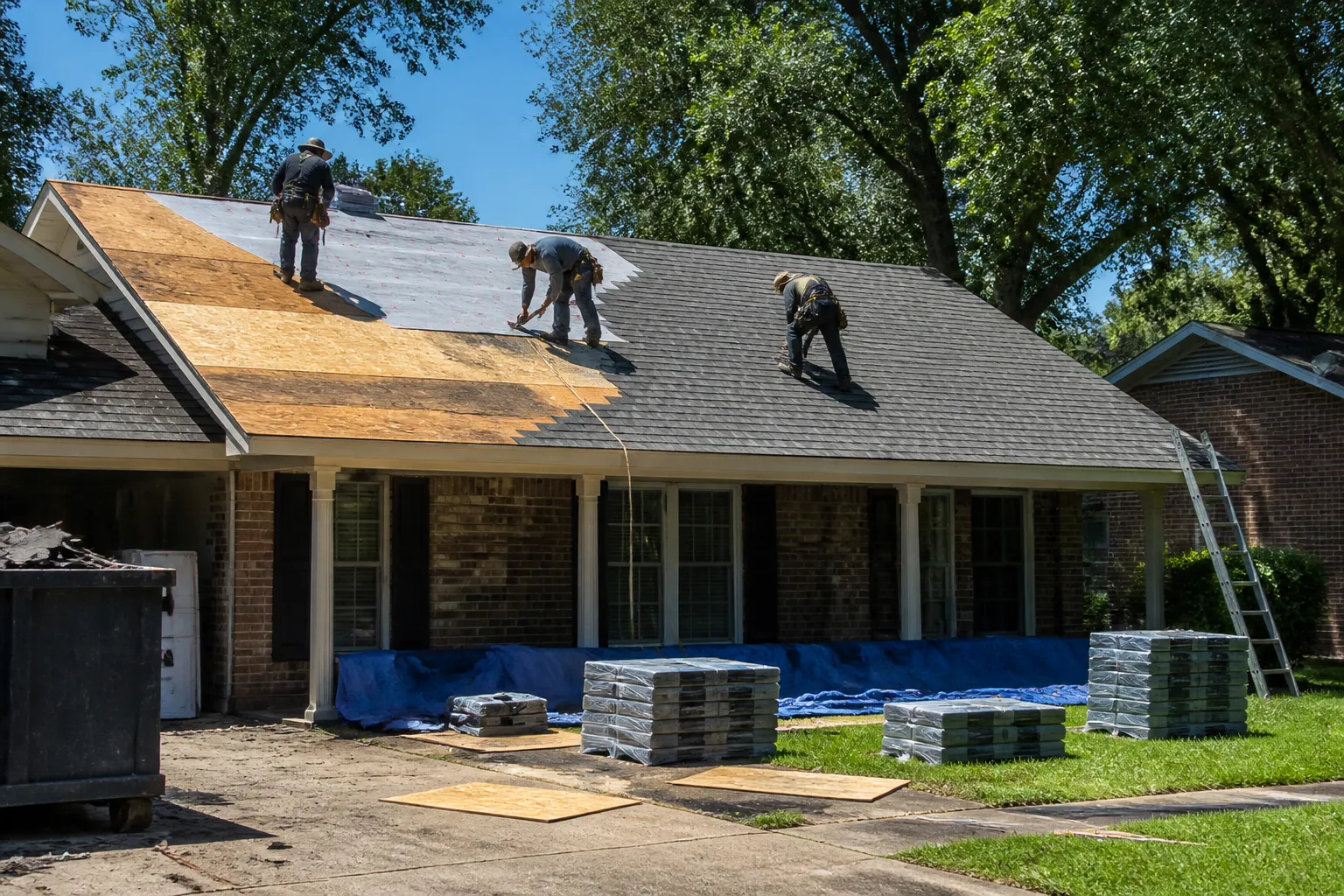
Removing existing roofing allows the underlying deck to be examined. The written scope should say what layers are expected to be removed and how concealed deterioration or damaged decking will be recorded and discussed. Ask how any additional work would be described and approved before it proceeds. This avoids treating unknown conditions as already assessed.
Decking provides the base for the new roof assembly, so the proposal should explain how the surface will be checked and what happens if a section needs attention. It should also clarify how underlayment and flashing are incorporated into the replacement, including at valleys, walls, roof edges, and penetrations.
Ventilation should be considered as part of the roof system where the building’s assembly calls for it. Ask whether existing intake and exhaust paths will be evaluated and whether the proposal includes any related work. Ventilation requirements are not identical for every roof, so the scope should connect its recommendations to the property rather than make a generic promise.
Before work begins, discuss protection for landscaping, entry routes, vehicles, outdoor equipment, and areas around the building. On occupied properties, identify access needs and any practical constraints involving household routines, tenants, staff, or customers. The plan should say how debris will be collected, how the site will be checked for leftover materials, and what cleanup is included when the work is complete.
Use proposals that describe the same roof sections and project goals. Compare line items for removal, material layers, underlayment, flashing, ventilation where applicable, decking assumptions, disposal, property protection, and cleanup. Review exclusions and ask how concealed conditions or scope changes will be documented. If two proposals use different systems, ask for the reason each system fits the roof’s slope, existing assembly, building use, and project requirements.
A clear written scope makes differences visible without relying on broad labels. The roofing estimate checklist can help organize questions about work included, materials, exclusions, and project planning.
West Memphis is on the Arkansas side of the Mississippi River. Permit questions should be directed to the office responsible for the property’s exact address and the proposed work; do not assume that one rule applies to every replacement scope. The city’s Building Inspections page provides department information. Ask whether current requirements apply to the specific roof work, especially if the project includes decking or structural changes.
For local roofing information, see the West Memphis service area page and the statewide roof replacement overview. If the assessment points to a defined repair instead, review roof repair in West Memphis. All Arkansas Roofing connects property owners with independent roofing contractors; estimates and roofing work are provided by those independent businesses.
Ask for an assessment that describes the roof’s overall condition, affected areas, and whether a focused repair remains practical. Widespread deterioration or recurring problems across sections may make replacement worth comparing, but the roof’s condition should guide the recommendation.
It should explain how the deck will be reviewed after removal, what conditions are assumed, and how concealed damage or added work will be documented and presented for approval.
Ventilation should be evaluated in relation to the building’s roof assembly. Ask what was observed, whether changes are proposed, and how those details fit the specific property rather than assuming the same solution applies to every roof.
Compare the roof areas and materials, removal, underlayment, flashing, decking assumptions, ventilation where relevant, property protection, disposal, cleanup, exclusions, and the process for handling concealed conditions.
What To Expect
Share your ZIP code, the service you are considering, and what you have noticed about the roof.
Discuss the observed condition, repair or replacement options, and proposed scope with the independent roofer, subject to local availability.
Review materials, work details, cleanup, exclusions, and any additional repairs before deciding how to proceed.
A Few Common Questions
Tell us where the property is and what your roof needs.
Roofing Estimate
Share the property ZIP code and the roofing service you need. The form uses the existing inquiry system.