Arkansas Roofing Guidance
Roof Repair in West Memphis, AR
Explore roof repair in West Memphis, AR, with practical guidance on leak diagnosis, shingles, flashing, recurring water intrusion, repair scope, and when to compare replacement.
Arkansas Roofing Guidance
Explore roof repair in West Memphis, AR, with practical guidance on leak diagnosis, shingles, flashing, recurring water intrusion, repair scope, and when to compare replacement.
Roof repair in West Memphis, Arkansas may involve a defined leak, damaged shingles, or recurring water intrusion. A useful assessment connects the reported conditions with the roof area and components involved rather than assuming the visible symptom identifies the cause.
For this property, note the affected room or area, when the water appears, and any visible changes. Safe indoor or ground-level photos can provide context; do not climb onto the roof. The leak assessment below explains why these details help identify a likely source before repair work is selected.
Water may enter through one part of the roof and travel along roof layers or framing before it appears as a stain or drip elsewhere. Flashing, roof penetrations, damaged or displaced shingles, and valleys are possible entry points to inspect, not diagnoses that can be made from symptoms alone.
When calling, describe where water appears, when it happens, and what has visibly changed, including any new or growing stain, drip, or exterior damage seen from the ground. Indoor and ground-level photographs can help show the pattern safely; stay off the roof. Finding the likely source and the extent of affected materials matters before choosing a repair, since treating only the spot where water appears may not address the path it took.
Missing, cracked, lifted, or displaced shingles can expose areas that should shed water. An assessment should consider the surrounding shingles and underlayment as well as the visible spot. If the material is brittle or damage extends across several slopes, the repair scope may differ from replacing a small number of affected pieces.
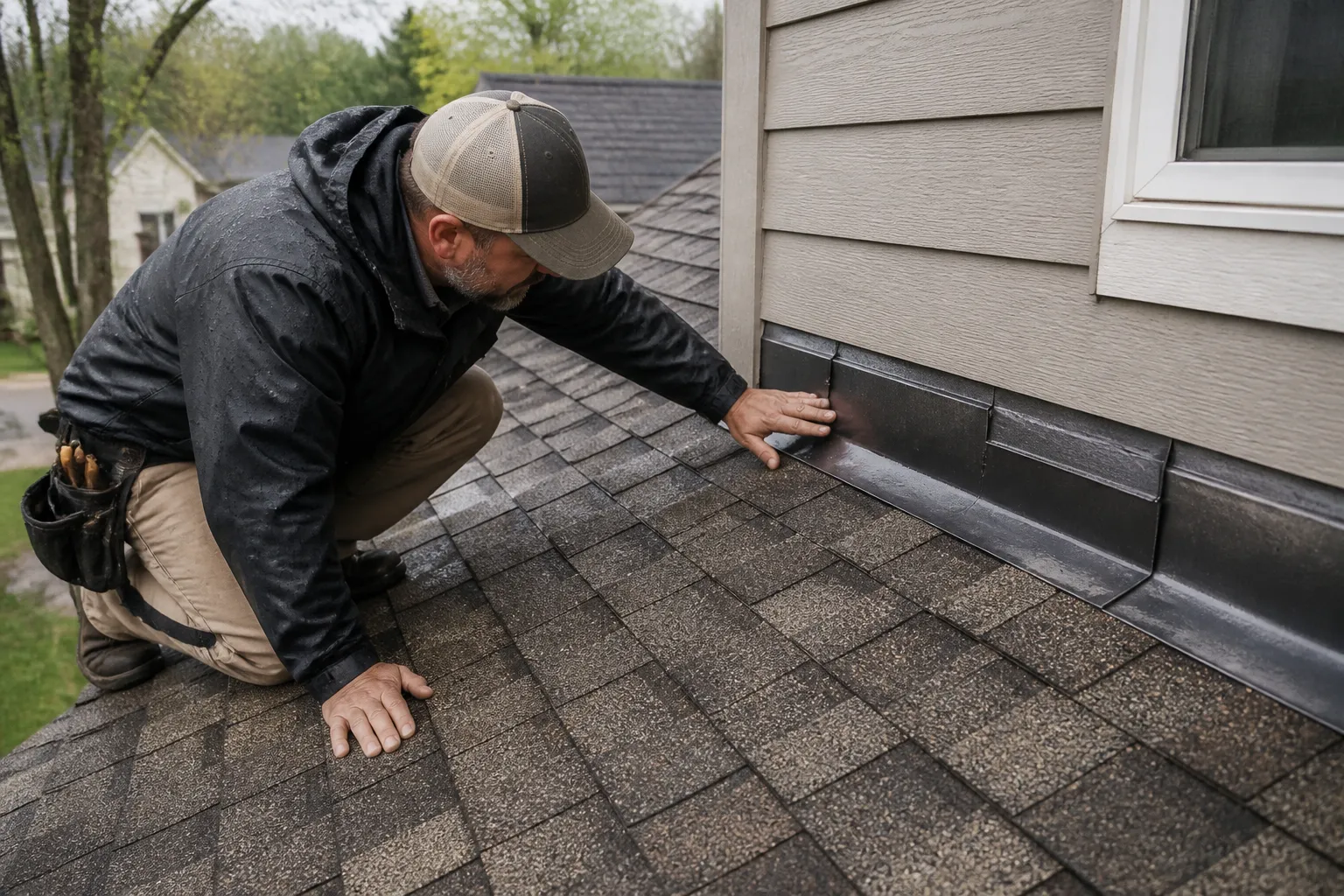
Flashing helps manage water at roof edges and transitions, including walls, chimneys, valleys, and changes in roof plane. Bent, loose, corroded, or poorly integrated flashing can contribute to recurring moisture. Vents, plumbing pipes, and equipment supports also interrupt the roof surface; their boots, seals, and flashing should be reviewed in context rather than covered with a surface patch alone.
Ask the written scope to identify the roof area and components included, the proposed repair method, and any adjacent conditions that are not part of the work. That makes it easier to understand what the repair is intended to address and what could remain a concern.
When a leak returns, compare the earlier repair location and materials with the current symptoms. A repeat leak can mean the first opening was not fully addressed, another nearby detail is involved, or water is traveling from a separate entry point. It does not automatically establish that the entire roof needs replacement. A careful review should explain what was inspected, what was observed, and what remains uncertain.
A useful repair proposal describes the affected area, materials to be removed or replaced, treatment of flashing and penetrations, and how the completed work will be checked. It should also separate included work from optional or excluded items. If concealed damage may change the scope, ask how findings will be documented and discussed before additional work proceeds.
Repair may be reasonable when a defined problem is limited and the surrounding roof remains serviceable. Replacement is worth comparing when leaks recur across different areas, visible deterioration is widespread, multiple components are failing, or repairs no longer address the overall roof condition. The decision should reflect the roof itself, not just the age of the building or one interior stain.
For a broader project, compare the roof condition and itemized written scopes for both options. A replacement proposal should describe the roofing system, tear-off assumptions, underlayment, flashing, ventilation where applicable, decking review, property protection, disposal, and cleanup. See the roof repair versus replacement guide for a practical comparison framework.
West Memphis has a city Building Inspection office that handles permitting and plan review. Its public information does not establish one blanket rule for every roof repair, so confirm current requirements for the specific Arkansas property and proposed scope with the office responsible for that address. Describe whether the work is a localized repair, broader replacement, or includes structural changes. The city’s Building Inspections page lists the department’s role and contact information.
For project planning, keep notes about access, roof surfaces affected, prior repair attempts, and any interior areas needing protection. If the property is occupied or used for business, include relevant access or scheduling constraints in the request so the proposed work can account for how the building is used.
For local details, review the West Memphis roofing hub and the statewide roof repair overview. If a broader scope is under consideration, compare it with roof replacement in West Memphis. All Arkansas Roofing connects property owners with independent roofing contractors; estimates and roofing work are provided by those independent businesses.
No. Water can move along roof layers or framing before it becomes visible. The stain helps describe the symptom, while the roof and nearby transitions need assessment to identify a likely entry point.
Review the affected shingles and adjacent materials, underlayment condition where accessible, nearby flashing, and whether the damage is limited or repeated across larger areas. The scope should state what will be repaired.
The original entry point may not have been fully resolved, another roof detail may be involved, or water may be traveling from a different area. Compare the previous work with current symptoms and ask what areas were inspected.
Compare replacement when deterioration or recurring leaks affect multiple areas or when a series of repairs no longer addresses the overall roof condition. Ask for the observed findings and written scopes for each practical option.
What To Expect
Share your ZIP code, the service you are considering, and what you have noticed about the roof.
Discuss the observed condition, repair or replacement options, and proposed scope with the independent roofer, subject to local availability.
Review materials, work details, cleanup, exclusions, and any additional repairs before deciding how to proceed.
A Few Common Questions
Tell us where the property is and what your roof needs.
Roofing Estimate
Share the property ZIP code and the roofing service you need. The form uses the existing inquiry system.