Arkansas Roofing Guidance
Commercial Roofing in Camden, AR
Explore commercial roofing in Camden, AR, including leak investigation, repair or replacement planning, metal and low-slope systems, drainage, and maintenance assessments.
Arkansas Roofing Guidance
Explore commercial roofing in Camden, AR, including leak investigation, repair or replacement planning, metal and low-slope systems, drainage, and maintenance assessments.
A leak, ponding water, or visible wear on a commercial roof can affect tenants, equipment, building operations, and visitors. Describe what is visible from inside or at ground level and whether the concern follows rainfall.
All Arkansas Roofing connects commercial property owners and managers with independent roofing contractors. Contractors provide estimates and perform the work. The appropriate scope depends on the roof system, affected area, drainage, access, and building use. Learn more about roofing support in Camden or commercial roofing across Arkansas.
An interior stain may not show where water entered. It can travel along the roof deck or framing before becoming visible indoors. An assessment may consider the roof covering, seams, flashing, edges, transitions, drains, and openings for vents, piping, or mechanical equipment. Written findings should distinguish observed conditions from items needing further access or investigation.
A localized repair may suit an identifiable problem when surrounding roofing remains serviceable. Broader deterioration, repeated leaks in separate areas, or extensive repair needs may lead to a replacement discussion. The symptom alone does not determine the right option.
Ask what condition was found, which areas each option includes, and the limits of a focused repair. If replacement is proposed, clarify preparation, removal, and how concealed conditions would be documented before the scope changes. Compare written scopes rather than brief verbal summaries.
Commercial buildings may have metal roofing or a low-slope assembly. Metal systems can include standing-seam or exposed-fastener panels. Ask how the estimate addresses seams, fasteners where present, roof edges, flashing, and transitions around walls or equipment. It should identify the system or materials under consideration.
Low-slope roofs may use TPO, EPDM, or other assemblies. If known, identify the existing system and ask how proposed work addresses membrane seams, flashing, and transitions. Suitable methods depend on the building and assessment. Read the regional commercial roofing overview.
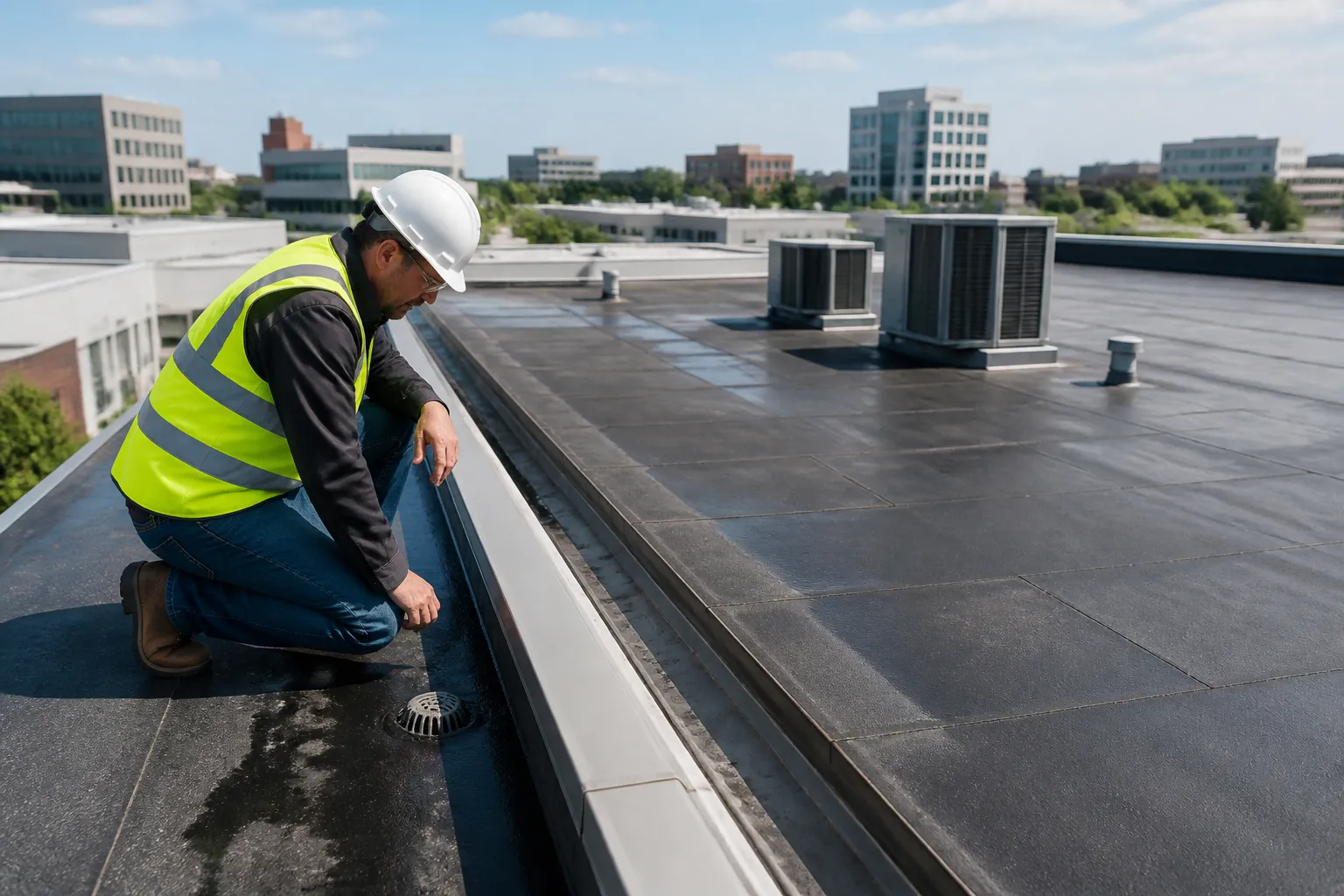
Drains, scuppers, gutters, downspouts, slopes, and roof edges influence water movement. An assessment can note visible blockages, damaged drainage parts, areas where water collects, and details around roof openings. Penetrations for vents, piping, and rooftop units interrupt the surface, so their flashing and nearby seams deserve attention.
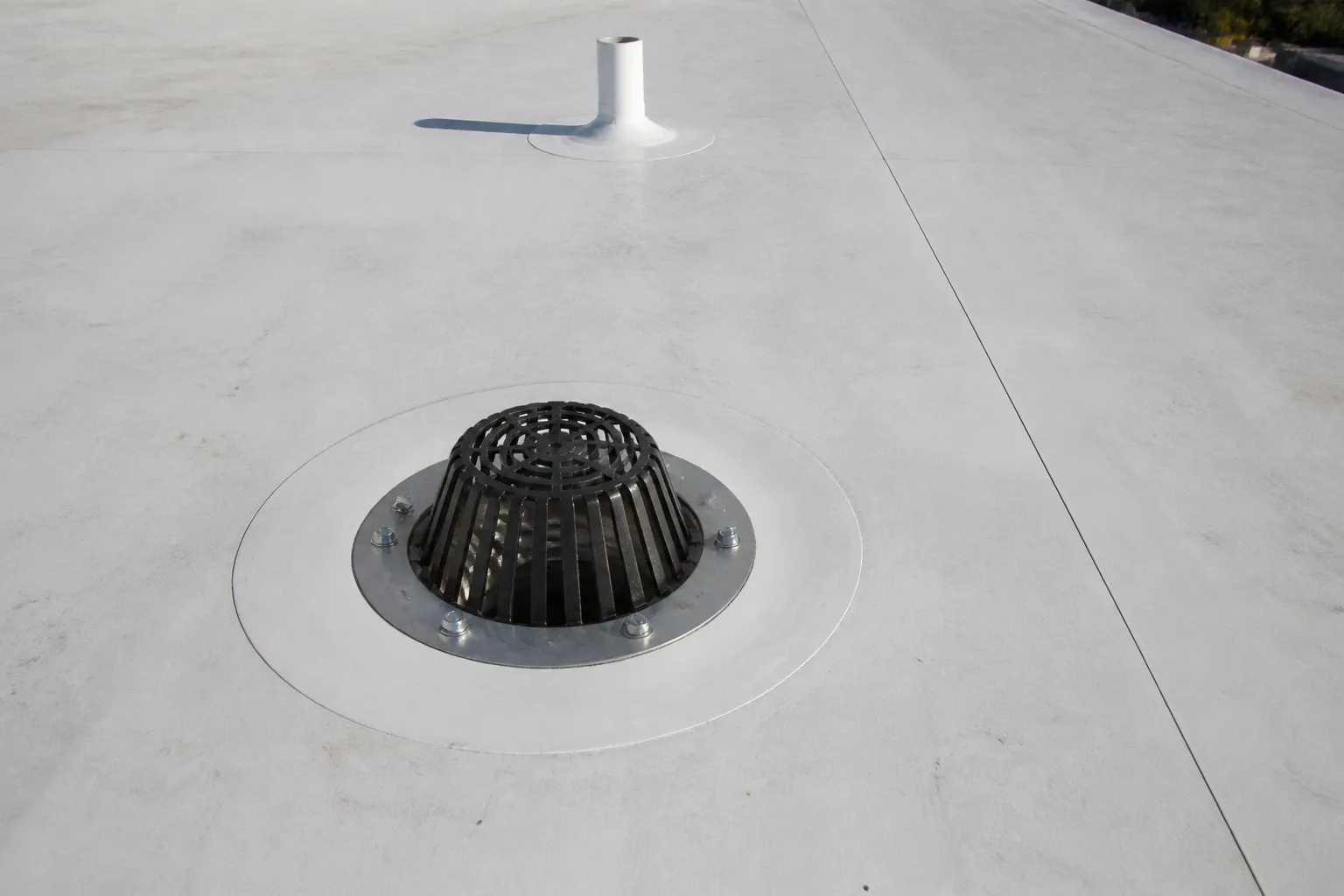
A maintenance assessment can document visible conditions and items for follow-up, but cannot promise to prevent future leaks. Ask which areas were reviewed or inaccessible and what actions are recommended.
For a business along Washington Street in downtown Camden, roof work needs to account for activity at ground level. Discuss delivery access, customer entrances, pedestrian protection, and cleanup so the proposed plan accounts for daily operations.
Use information already at hand to help plan the visit. Do not climb onto the roof or try to measure it.
Review whether a written estimate identifies the work clearly, including:
Ask about unclear terms or assumptions and compare repair and replacement scopes. Keep the assessment with the estimate so property stakeholders can review the same details.
Share available observations and use the checklist above to organize property, leak, repair, and access details. Findings should distinguish confirmed conditions from areas needing further investigation.
Ask what condition was observed, which areas are included, and why each option is proposed. Compare the written work, preparation, materials, exclusions, and handling of concealed conditions.
It should describe the known or proposed system and state which roof areas, seams, flashing, drains, penetrations, and transitions are included in the assessment or work.
They can document visible conditions and items to monitor. Ask what was reviewed, what was inaccessible, and which follow-up actions are proposed; an assessment is not a guarantee against leaks.
For other Camden roofing needs, see roof repair, roof replacement, metal roofing, and storm damage roofing. Visit the Camden service area page for local information.
What To Expect
Share your ZIP code, the service you are considering, and what you have noticed about the roof.
Discuss the observed condition, repair or replacement options, and proposed scope with the independent roofer, subject to local availability.
Review materials, work details, cleanup, exclusions, and any additional repairs before deciding how to proceed.
A Few Common Questions
Tell us where the property is and what your roof needs.
Roofing Estimate
Share the property ZIP code and the roofing service you need. The form uses the existing inquiry system.