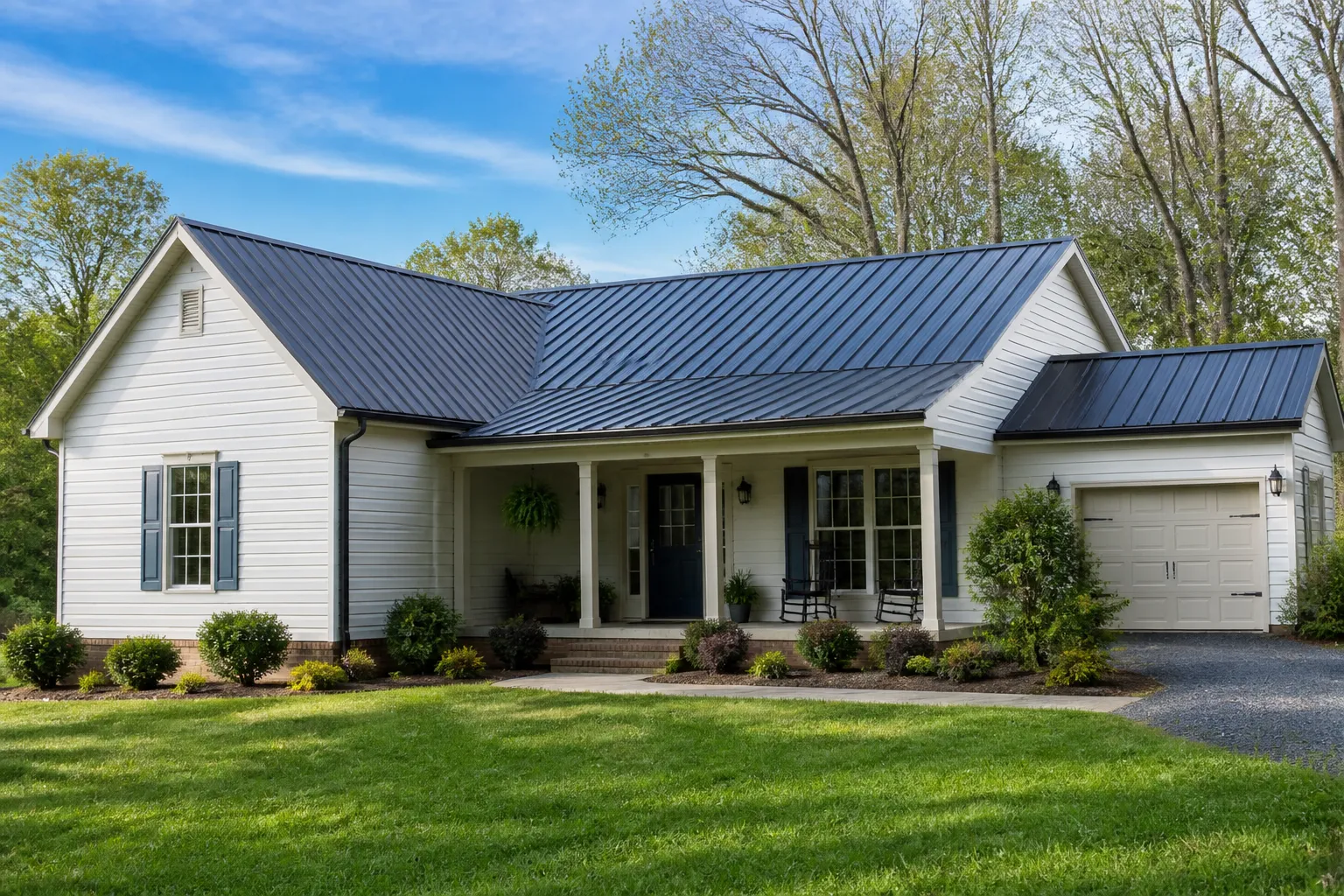
Arkansas Roofing Guidance
Metal Roofing in Camden, AR
Compare standing-seam and exposed-fastener systems, repairs, roof details, ventilation, and written estimate scopes for Camden properties.
Arkansas Roofing Guidance
Compare standing-seam and exposed-fastener systems, repairs, roof details, ventilation, and written estimate scopes for Camden properties.
Considering a metal roof for your Camden home or business? The right choice involves more than panel color. Compare roofing systems, installation details, and the condition of the existing roof before deciding what fits your property.
Metal roofing can refer to different panel profiles and attachment methods. A useful discussion starts with the roof itself: its slope, framing, current covering, penetrations, and the way water moves across the building. The estimate should identify a specific system and explain how its components fit together.
Standing-seam panels connect through raised seams, and their fasteners are generally concealed within the system. Exposed-fastener panels are attached with visible screws and washers. Each system has its own profiles, trim, fastening pattern, and installation details. Neither label alone determines whether it is suitable for a particular roof.
Ask which panel and fastening method is proposed, what substrate it requires, and how the system accommodates panel movement and sheds water. Compare product information and written scopes rather than choosing from color samples alone. For a home around Camden’s Washington Street Historic District, consider how panel profiles, trim, and color would fit the building’s appearance. Ask for product samples and an explanation of flashing details before choosing a system.
On a Camden roof, a leak concern may relate to flashing, a penetration, a seam, or fasteners, depending on the system. Standing-seam and exposed-fastener roofs need different assessment of their joints and attachment details. Panel movement, corrosion, previous repairs, and whether new materials are compatible with the existing assembly can change the repair scope. Sealant by itself may leave the cause unaddressed. Before calling, note the building address, any known roof system and repair history, and when and where moisture has appeared; share photos taken safely from inside or at ground level. Do not climb up to inspect or try a repair. The contractor can assess visible conditions and explain whether a repair is appropriate.
Repair may be reasonable when a limited issue can be identified and the surrounding metal roof remains serviceable. A repair assessment may consider panel seams, exposed fasteners, flashing, trim, and penetrations. Replacement is a broader option when damage or deterioration is extensive, the system is unsuitable for the building, or repeated repairs do not resolve the underlying concern. Ask for the reasoning and scope for each option.
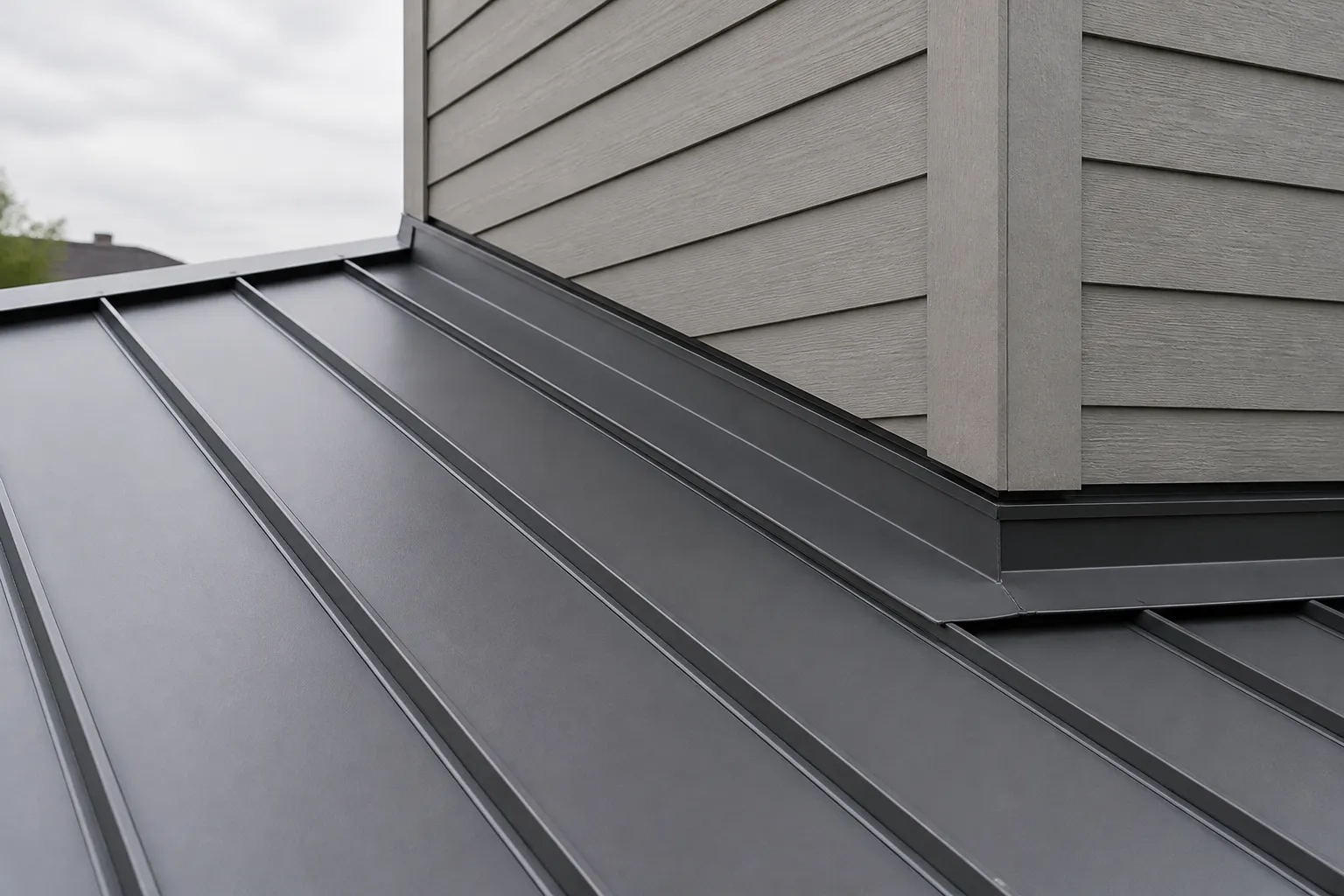
Details around eaves, ridges, valleys, walls, chimneys, plumbing vents, and other roof openings are important parts of the system. The estimate should explain what flashing and trim are included and how transitions will be finished. Ask how the proposed fasteners are selected and installed for the panel type and roof assembly, and whether the scope includes replacement or adjustment of existing flashings.
If the building has rooftop equipment or unusual access, mention it before work is planned. Clear details can help distinguish the panel material from the labor and component work needed to make a complete roof assembly.
A metal covering does not by itself prevent condensation. Moisture conditions inside the building, air movement, insulation, and the design of the roof assembly can all matter. Ask how ventilation and moisture management will be considered for your building and whether the estimate includes any changes to vents or related components. Do not assume the same ventilation plan applies to every home or commercial roof.
A written estimate should be specific enough to compare the proposed work with other options. Look for the panel type and profile, fastening approach, preparation or tear-off, underlayment if included, flashing and trim details, ventilation work, and cleanup responsibilities. It should also identify roof areas included, exclusions, and how concealed conditions or additional work would be documented and discussed before proceeding.
Request clarification of any unclear terms, product selections, or assumptions before deciding. Keep the written scope and any product information together so you can review the complete proposal.
Share the property ZIP code, building type, whether you are considering installation, replacement, or repair, and any known concerns such as leaks or interior moisture. Note the approximate age and current roofing material if known. Photos may help describe visible conditions, but take them from indoors or the ground rather than climbing onto the roof.
All Arkansas Roofing connects property owners with independent roofing contractors. Independent contractors provide estimates and perform the work. Send details through the contact page to discuss the next step. For local information, see roofing in Camden, the regional metal roofing guide, and Camden pages about roof repair and roof replacement.
The right choice depends on the building, roof design, product, and installation scope. Ask the contractor to compare the specific panel systems, attachment details, and trim proposed for your roof.
Sometimes. An assessment can examine seams, fasteners, flashings, penetrations, and nearby panels to identify the concern and explain the limits of a localized repair.
No. Condensation depends on moisture, insulation, air movement, and roof-assembly details. Ask how those conditions are considered in the proposed system.
Look for the panel and fastening system, preparation, flashing and trim, ventilation considerations, cleanup, exclusions, and a process for discussing concealed conditions or added work.
What To Expect
Share your ZIP code, the service you are considering, and what you have noticed about the roof.
Discuss the observed condition, repair or replacement options, and proposed scope with the independent roofer, subject to local availability.
Review materials, work details, cleanup, exclusions, and any additional repairs before deciding how to proceed.
A Few Common Questions
Tell us where the property is and what your roof needs.
Roofing Estimate
Share the property ZIP code and the roofing service you need. The form uses the existing inquiry system.