Arkansas Roofing Guidance
Commercial Roofing in Rogers, AR
Commercial roof assessments in Rogers for leaks, drainage, penetrations, maintenance planning, repair-versus-replacement decisions, and work coordination at occupied buildings.
Arkansas Roofing Guidance
Commercial roof assessments in Rogers for leaks, drainage, penetrations, maintenance planning, repair-versus-replacement decisions, and work coordination at occupied buildings.
A leak over an office, retail space, or other occupied building can disrupt operations before the source is clear. In Rogers, a useful commercial roof assessment connects the reported symptom to the roof assembly, drainage paths, penetrations, and nearby transitions instead of treating an interior stain as a diagnosis.
Share when moisture appears, which rooms or tenants are affected, and whether the problem returns after rain. Safe interior or ground-level photos, prior repair notes, and available roof documents can help define the question. The proposed scope should identify what was observed, which roof areas are included, and what remains outside the work.
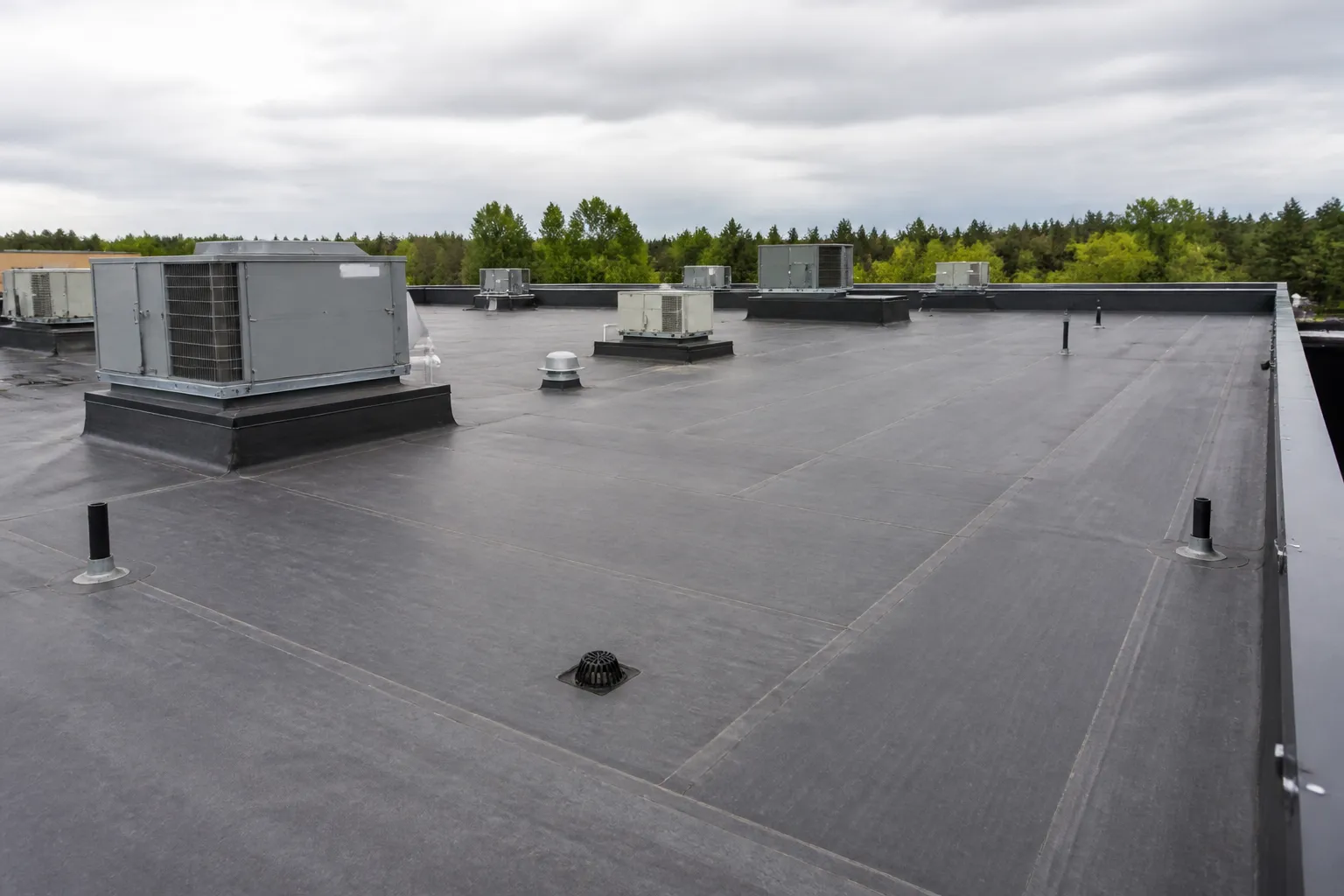
Commercial roofs may include low-slope membranes, metal panels, or multiple roof sections built at different times. Assessment depends on slope, existing assembly, building use, access, and the requirements of the project. A review may consider seams, laps, perimeter edges, wall transitions, flashing, drains, scuppers, gutters, equipment curbs, vents, and piping penetrations.
Water can travel beneath a roof covering or along framing before appearing indoors. The visible stain may be separated from the entry point, and several details may contribute to recurring intrusion. Ask for the suspected source and supporting observations to be explained, including any limits on areas that could not be accessed.
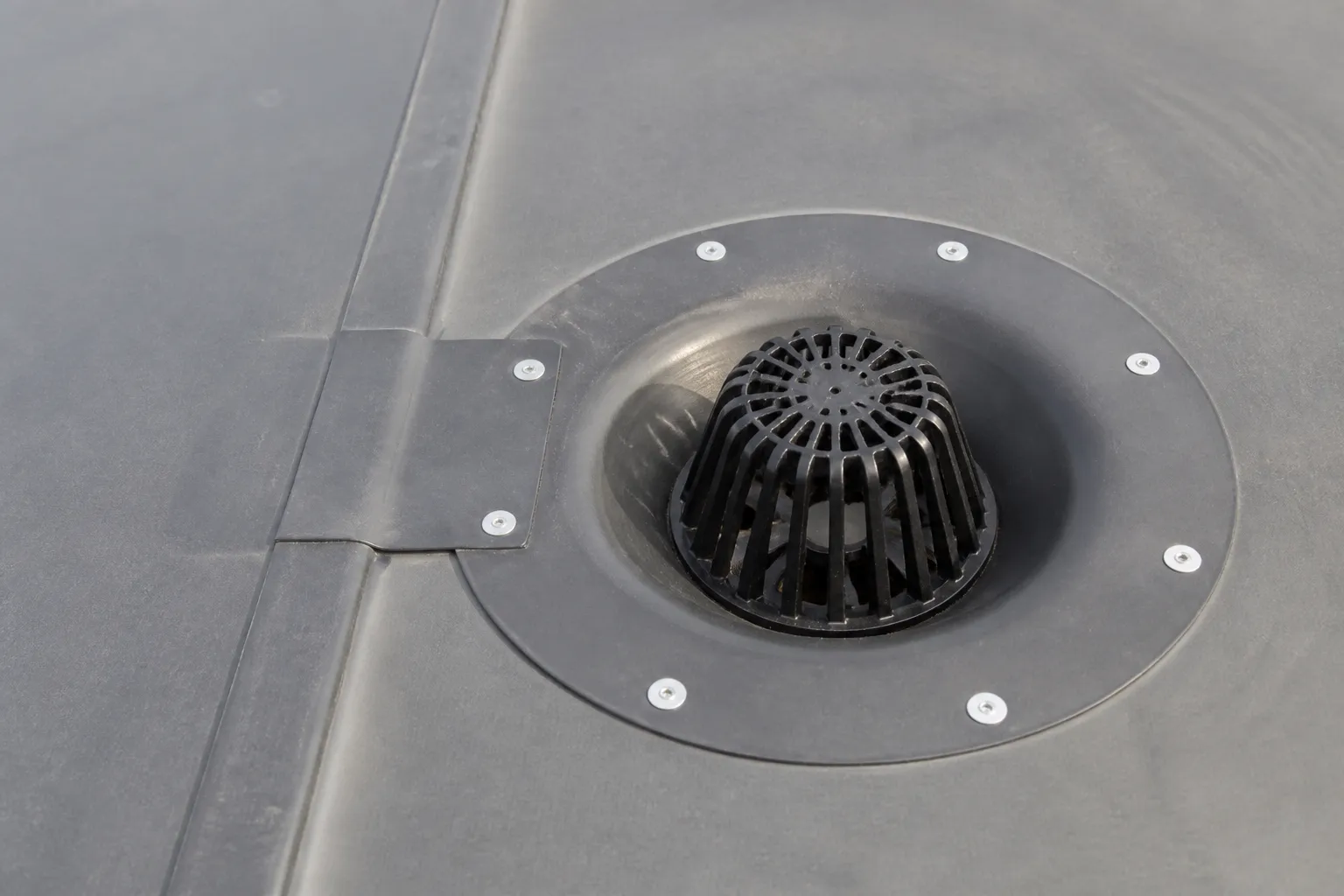
Drainage deserves attention whenever water collects or a leak occurs near a drain, scupper, gutter, or roof edge. A review can note whether drainage paths are clear, whether components appear damaged, and how the membrane or metal connects at those details. Ponding or staining should be documented, but those signs alone do not identify the underlying cause or establish a particular repair.
Mechanical equipment, vent pipes, conduit, skylights, and other openings interrupt the roof surface. Their curbs, seals, flashing, and adjacent materials should be considered together. If equipment or piping has changed, share what is known so the roof detail can be assessed in context.
A repair may be appropriate when a defect is localized and the surrounding assembly remains suitable. Replacement deserves comparison when deterioration is widespread, separate leaks recur, or repeated repairs do not address the roof’s broader condition. A recommendation should relate to observed roof areas, repair history, assembly condition, and the building’s intended use, not just a brief label.
Maintenance assessments can document visible conditions and identify details that merit follow-up. They are not a promise that leaks will be prevented. If a coating is proposed, ask what assessment supports it, how the existing surface and moisture conditions were evaluated, and what preparation and repairs are included. Coatings are not a universal fix for an unsuitable, wet, damaged, or poorly drained roof.
For low-slope buildings, membrane systems may be considered; metal may fit some roof designs and building needs. Neither system should be assumed available or appropriate without reviewing slope, existing layers, drainage, attachment, use, and project requirements. See metal roofing in Rogers for related system considerations.
When contacting All Arkansas Roofing about a Rogers property, share the street address, building use, and site contact, plus the approximate roof size and existing system if those details are already available. Note where leaks occur and when, along with previous repairs and any records on hand. Do not climb or measure the roof to fill in missing information.
Also describe the established roof-access arrangements and site procedures, rooftop equipment or nearby areas that need protection, and any occupancy, operating-hour, or scheduling limits. The assessment can clarify what else is needed after reviewing what you already know. Compare written proposals for the same roof area and symptoms, including system, flashing, penetration and drainage details, exclusions, cleanup, and handling of concealed conditions. For local context, see the Rogers roofing hub, the statewide commercial roofing overview, and local roof repair and roof replacement information. The roofing estimate checklist offers additional comparison questions. Request an estimate using the form on this page.
Note when the leak appears, the affected room or area, whether it follows rain, and any previous repair history. Safe indoor photographs and access information can help describe the concern for assessment.
Not by itself. Drainage, roof slope, existing assembly, and the condition of nearby details all matter. Ask for the observed conditions and options to be explained for the specific roof.
No. Coatings require an assessment of the existing surface, moisture, preparation needs, drainage, and project requirements. They are not a universal solution for leaks or a deteriorated assembly.
Discuss access, hours, rooftop equipment, entrances, deliveries, and pedestrian routes as part of assessment preparation. Confirm site procedures and protection needs before the scope is finalized.
What To Expect
Share your ZIP code, the service you are considering, and what you have noticed about the roof.
Discuss the observed condition, repair or replacement options, and proposed scope with the independent roofer, subject to local availability.
Review materials, work details, cleanup, exclusions, and any additional repairs before deciding how to proceed.
A Few Common Questions
Tell us where the property is and what your roof needs.
Roofing Estimate
Share the property ZIP code and the roofing service you need. The form uses the existing inquiry system.