Arkansas Roofing Guidance
Roof Replacement in Rogers, AR
Learn about roof replacement in Rogers, AR, from roof assessment and material selection to tear-off, decking, ventilation, property protection, and comparing proposals.
Arkansas Roofing Guidance
Learn about roof replacement in Rogers, AR, from roof assessment and material selection to tear-off, decking, ventilation, property protection, and comparing proposals.
When shingles are worn across broad areas, leaks return after repairs, or roof components show widespread deterioration, replacement may deserve a careful comparison with further repair. For a Rogers, Arkansas property, the decision should follow an assessment of the roof as a system: covering, flashing, underlayment, decking, ventilation, drainage, and the conditions around openings and transitions.
A clear written proposal makes it easier to understand what will be removed, what will be installed, how the property will be protected, and how concealed conditions will be handled. Compare itemized scopes rather than relying on a product name or a one-line description of the work.
Replacement is not automatically the right response to one leak or a few damaged shingles. An assessment should describe the visible condition, the extent and pattern of wear, any recurring water intrusion, and whether a localized repair remains practical. The assessment may also consider existing layers, roof transitions, drainage, penetrations, and signs of moisture affecting the deck.
Ask what observations support replacement and which roof areas are included. If repair is also reasonable, request a comparison that explains what each option addresses and what condition would remain. For a nearby project focused on localized damage, see Roof Repair in Rogers, AR.
Material choices should fit the roof shape, slope, existing assembly, building use, and project requirements. Asphalt shingles are common on many homes. Metal roofing may also be considered when the system and roof details are compatible. For an appropriate commercial building, membrane or metal systems may be evaluated according to the structure and intended use. No single material is suitable for every property.
Compare proposals for the named product or system and the components that make it work: underlayment, flashing, edge details, ridge or hip treatment, ventilation, fasteners, and integration around roof penetrations. Ask how valleys, adjoining walls, skylights, vents, and equipment will be handled. The roofing estimate checklist can help organize questions when scopes use different terminology.
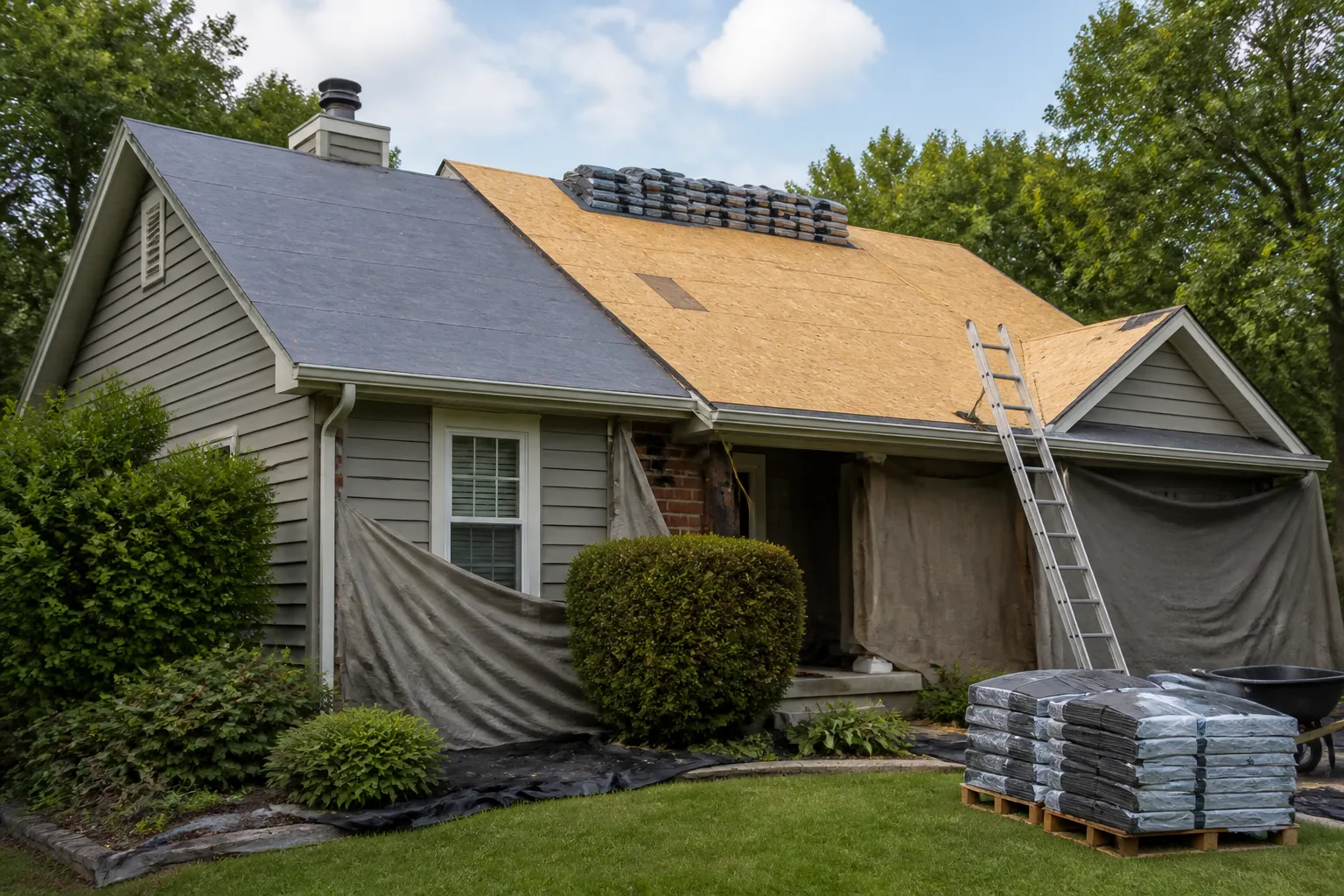
A proposal should say whether existing roofing will be removed, how many layers are included, and how debris will be collected and taken away. Tear-off exposes the roof deck for review. If damaged or unsuitable decking is uncovered, the written scope should explain how the condition will be documented, how any added work will be approved, and how related charges will be presented before work proceeds.
Clarify whether underlayment, drip edges, flashing, and other roof components are included or treated separately. Ask how the new system will meet walls and penetrations, and whether existing vents or other components are being reused or replaced. The answers help distinguish a complete scope from an estimate that leaves key transitions unclear.
Ventilation should be reviewed as part of the roof assembly, not treated as an unrelated afterthought. Ask what intake and exhaust conditions are present, whether the proposal changes ventilation components, and how the recommendation relates to the building and roof design. The plan should also account for penetrations, drainage paths, and connections between roof planes.
Before work begins, discuss protection for landscaping, walkways, vehicles, exterior equipment, and nearby entrances. Identify access routes and where materials or debris containers may be placed. For an occupied home or business, ask how people will safely enter and exit, how work areas will be managed, and what communication is expected if conditions change. Cleanup should be described, including how loose fasteners and removed materials will be collected.
To compare estimates fairly, confirm that each covers the same roof areas and states whether the work is a full replacement or a partial project. Review these details side by side:
Ask for any unclear allowance or exclusion to be explained in writing. If proposals differ, identify whether the difference is in materials, roof areas, preparation, or included details before comparing the bottom-line scope.
Share the property location, the roof concerns, any history of leaks or repairs, and whether the building will remain occupied during work. If a property is subject to a local review process, confirm requirements for the address and project scope with the office responsible for that property. Do not assume a rule from a general city page applies to every replacement.
For local roofing information, visit the Rogers service-area hub. Statewide replacement guidance is available at Roof Replacement in Arkansas. Consider the written scope, property needs, and assessment findings together before deciding what work to authorize.
Ask for an assessment that describes the roof’s overall condition, the extent of damage, recurring leaks, and what a repair would leave in place. Compare both options when the findings support either path.
The proposal should explain how concealed conditions will be documented, how the added scope will be described, and how approval will be obtained before related work proceeds. Clarify this process before scheduling.
Yes. Ask how the existing intake and exhaust arrangement relates to the roof and whether any ventilation work is included, excluded, or recommended as a separate scope.
Compare the same roof areas, removal, materials, underlayment, flashing, ventilation, decking assumptions, protection, cleanup, exclusions, and the procedure for concealed conditions. Request written clarification for differences.
What To Expect
Share your ZIP code, the service you are considering, and what you have noticed about the roof.
Discuss the observed condition, repair or replacement options, and proposed scope with the independent roofer, subject to local availability.
Review materials, work details, cleanup, exclusions, and any additional repairs before deciding how to proceed.
A Few Common Questions
Tell us where the property is and what your roof needs.
Roofing Estimate
Share the property ZIP code and the roofing service you need. The form uses the existing inquiry system.