Arkansas Roofing Guidance
Flat Roof Repair & Replacement in Arkansas
Understand flat and low-slope roof drainage, leak assessment, system options, repair versus replacement, and what to compare in a written roofing proposal across Arkansas.
Arkansas Roofing Guidance
Understand flat and low-slope roof drainage, leak assessment, system options, repair versus replacement, and what to compare in a written roofing proposal across Arkansas.
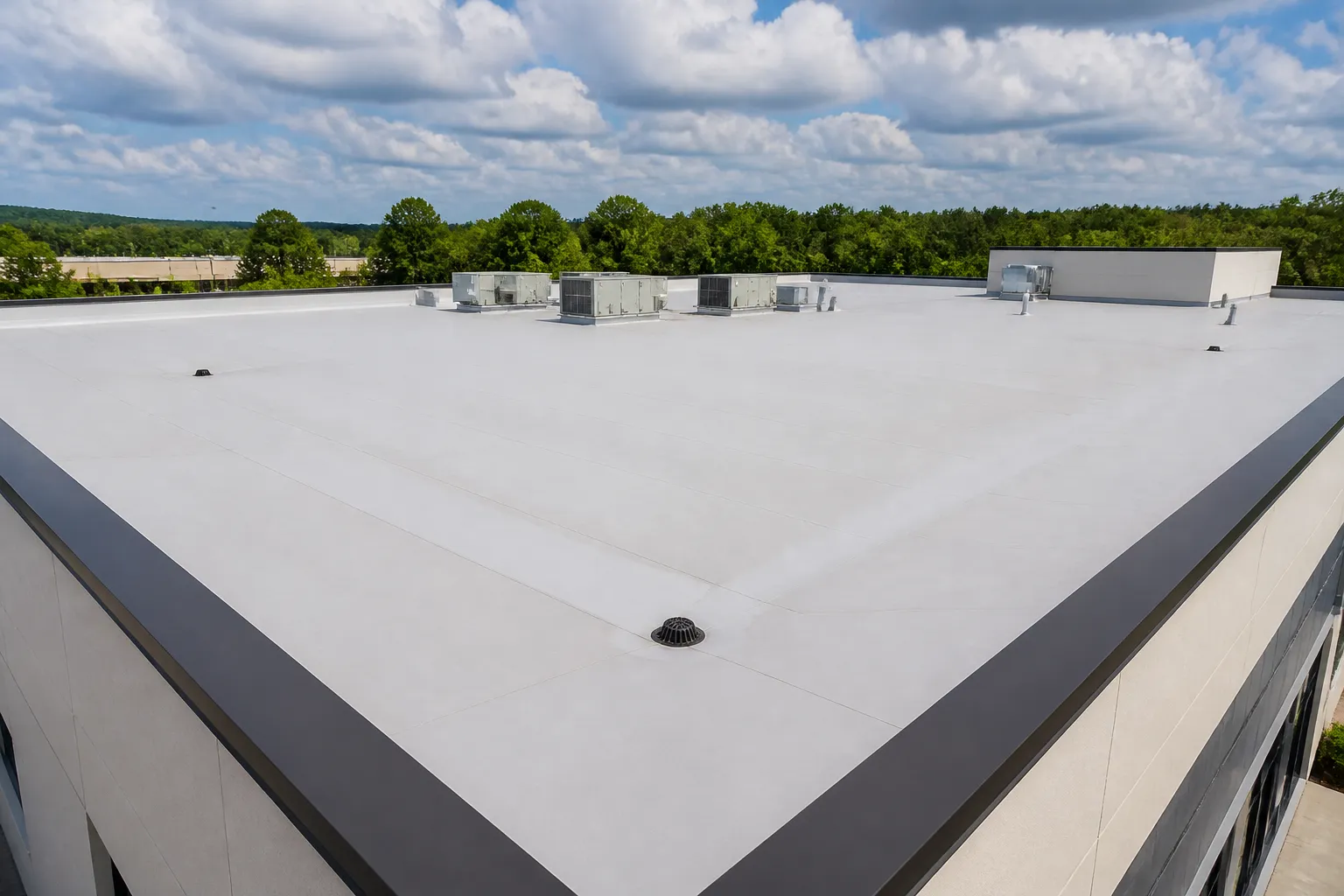
Flat and low-slope roofs are not necessarily level. Their assemblies are designed to direct water toward drains, scuppers, gutters, or roof edges, and a leak investigation should consider that drainage path as well as the point where water appears indoors. All Arkansas Roofing connects property owners with independent roofing contractors; system and project availability varies by location.
These systems are common on commercial buildings and may also be used on suitable portions of some homes. The right next step depends on the roof assembly, its current condition, and the building’s needs, rather than the word “flat” alone.
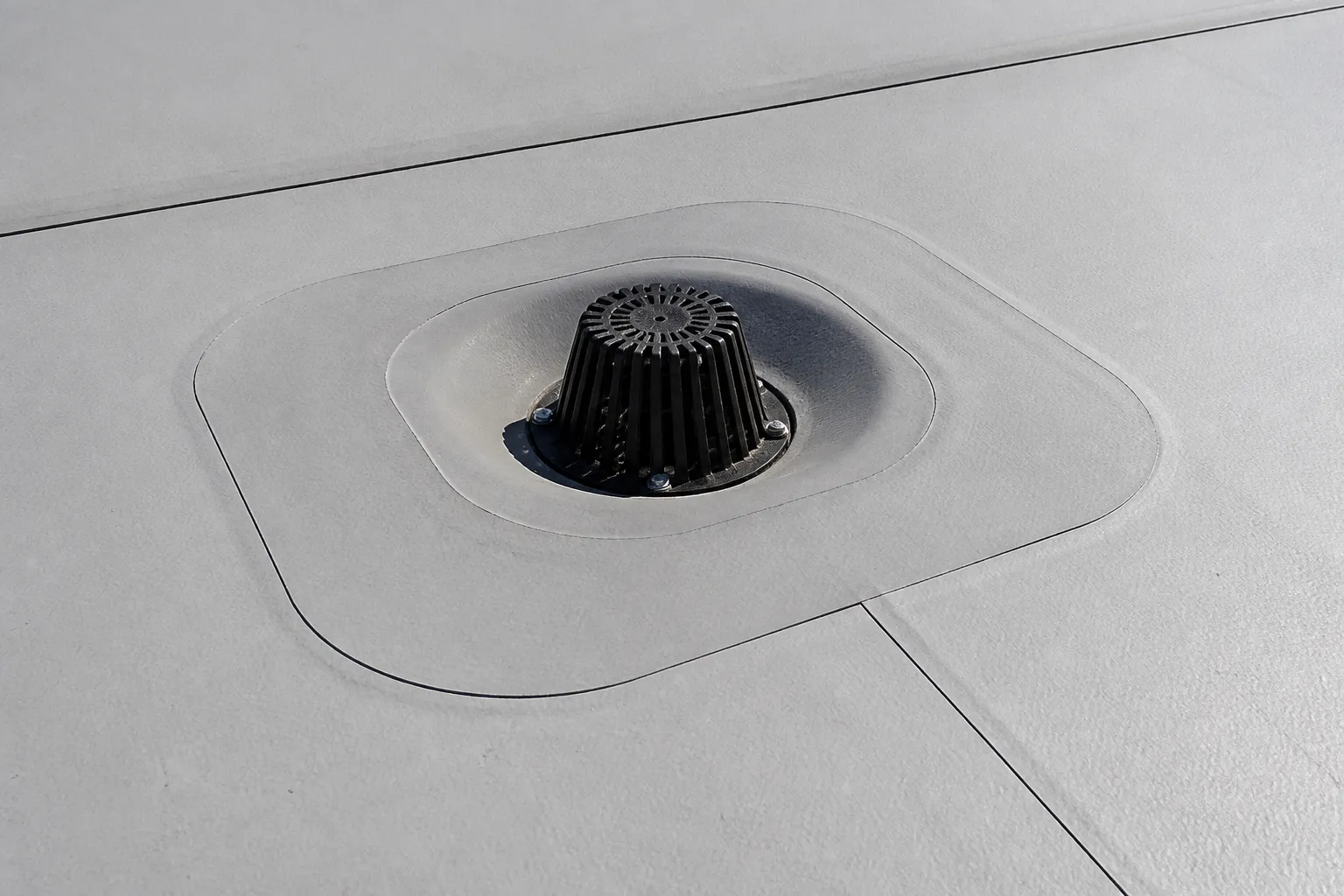
Water can travel beneath a roof surface before it becomes visible inside. An assessment may consider membrane seams, transitions, flashing at walls and curbs, penetrations for vents or equipment, roof edges, and the route toward drains or scuppers. Blocked drainage, damaged drain details, or areas where water collects can also be relevant. The visible stain is a useful clue, but does not by itself establish where water entered.
Share when the concern appears, which interior areas are affected, and whether it follows rain or has recurred after prior work. Existing roof plans, previous repair notes, and safe interior photos can help describe the issue. Do not climb onto the roof to investigate.
A focused roof repair may be considered when the affected area is limited, the surrounding assembly remains suitable, and compatible materials and details can be used. Recurring leaks, widespread deterioration, moisture within the assembly, multiple failed areas, or an extensive history of patches may prompt a broader evaluation. None of those signs alone determines the scope; findings and the condition of the roof deck and insulation matter.
Roof replacement may be discussed when repairs no longer address the condition or when moisture, compatibility, or accumulated repairs make a larger scope more appropriate. A written assessment should explain what was observed, what remains uncertain until materials are opened, and how repair and replacement alternatives differ. Re-covering an existing roof is not automatically suitable: existing layers, trapped moisture, deck condition, added assembly thickness, and system compatibility may affect whether it can be considered.
Names describe different materials and construction approaches, not interchangeable products. A proposal should identify the actual system and explain why its components fit the existing roof.
These descriptions are starting points, not a recommendation for a particular roof. Manufacturer instructions and the actual roof assembly should guide system-specific decisions.
A roof coating is not a universal substitute for repairs or replacement. Suitability can depend on the existing membrane or surface, adhesion, moisture, drainage, preparation, and the coating system’s approved substrate. Some manufacturer restoration products specify particular roof types and preparation requirements. For example, Garland identifies WeatherScreen for gravel-surfaced modified bitumen membranes and asphalt-based built-up roofs, rather than every roof assembly. A coating discussion should identify the exact product, substrate assessment, preparation, repairs, and limits of the proposed scope. See Garland’s WeatherScreen product information.
When comparing proposals, look for clear descriptions of:
The roofing estimate checklist offers additional questions for comparing written scopes. For local information, browse service areas across Arkansas. Commercial roofing guidance covers broader building and access considerations.
Not necessarily. A low-slope roof assembly is designed with drainage in mind, and its surface may direct water toward drains, scuppers, gutters, or edges.
It may be repairable, but repeated leaks call for evaluating the prior repairs, surrounding materials, seams, flashing, penetrations, drainage, and any moisture findings before deciding on scope.
No. Coating systems have substrate and preparation requirements. The existing roof’s condition, moisture, drainage, and compatibility need assessment before a coating is proposed.
It should identify removal or recover scope, preparation, insulation and decking assumptions, drainage, flashing, materials, cleanup, exclusions, and how concealed conditions are addressed.
Share the property location and known roof concerns to discuss an appropriate next step. Request an estimate without accessing the roof yourself.
What To Expect
Share your ZIP code, the service you are considering, and what you have noticed about the roof.
Discuss the observed condition, repair or replacement options, and proposed scope with the independent roofer, subject to local availability.
Review materials, work details, cleanup, exclusions, and any additional repairs before deciding how to proceed.
A Few Common Questions
Tell us where the property is and what your roof needs.
Roofing Estimate
Share the property ZIP code and the roofing service you need. The form uses the existing inquiry system.