Arkansas Roofing Guidance
Commercial Roofing in Jonesboro, AR
Commercial roof assessment, repair, replacement, drainage, membrane, metal, and project-planning guidance for Jonesboro properties.
Arkansas Roofing Guidance
Commercial roof assessment, repair, replacement, drainage, membrane, metal, and project-planning guidance for Jonesboro properties.
A leak in an occupied office, retail space, or other commercial building can disrupt daily use, affect stored materials, and raise questions about the roof system beyond the visible stain. For Jonesboro properties, record which areas are affected and whether the issue is recurring. The visible ceiling mark may not sit directly below the roof opening.
A useful commercial roof assessment connects observations to the roof covering, drainage, seams, flashing, penetrations, and building use. Written findings should identify what was inspected and distinguish a focused repair from broader replacement planning. System suitability depends on roof slope, existing assembly, building use, and project requirements, so a system name alone is not enough to decide the scope.
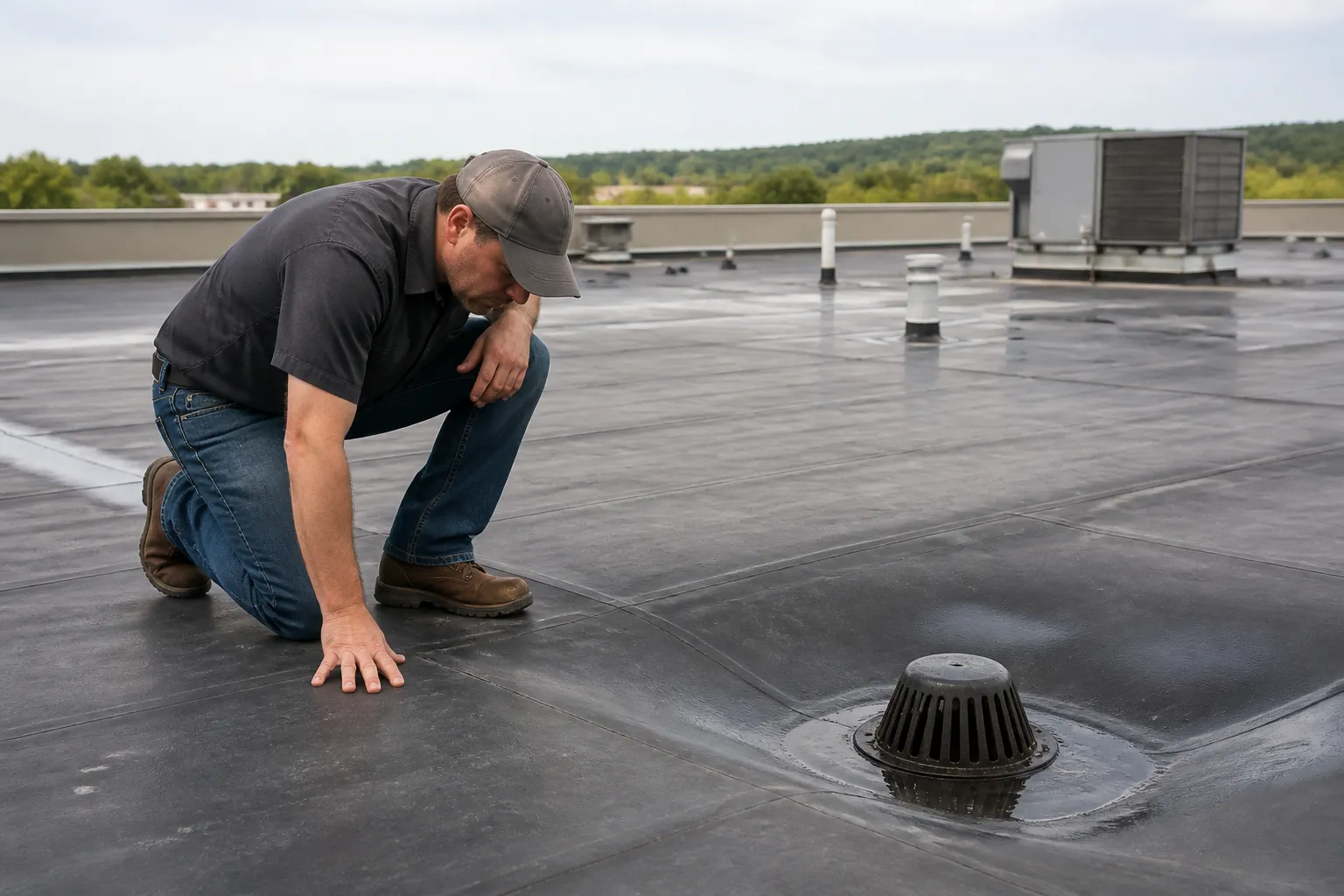
Water may enter at a roof seam, flashing transition, curb, vent, pipe, edge, or other penetration, then move through the assembly before becoming visible indoors. Note whether the symptom follows rainfall, whether it is isolated or recurring, and whether nearby areas show dampness or staining. Photos from safe interior locations and a marked floor plan can help describe the affected area.
The assessment should consider accessible roof surfaces and relevant interior symptoms. For a low-slope roof, ask how seams, membrane transitions, flashing, and drainage points were reviewed. For metal roofing, panel joints, exposed fasteners, trim, and penetrations may be relevant. A broad statement such as “roof leak” is less useful than a finding tied to a specific section or detail.
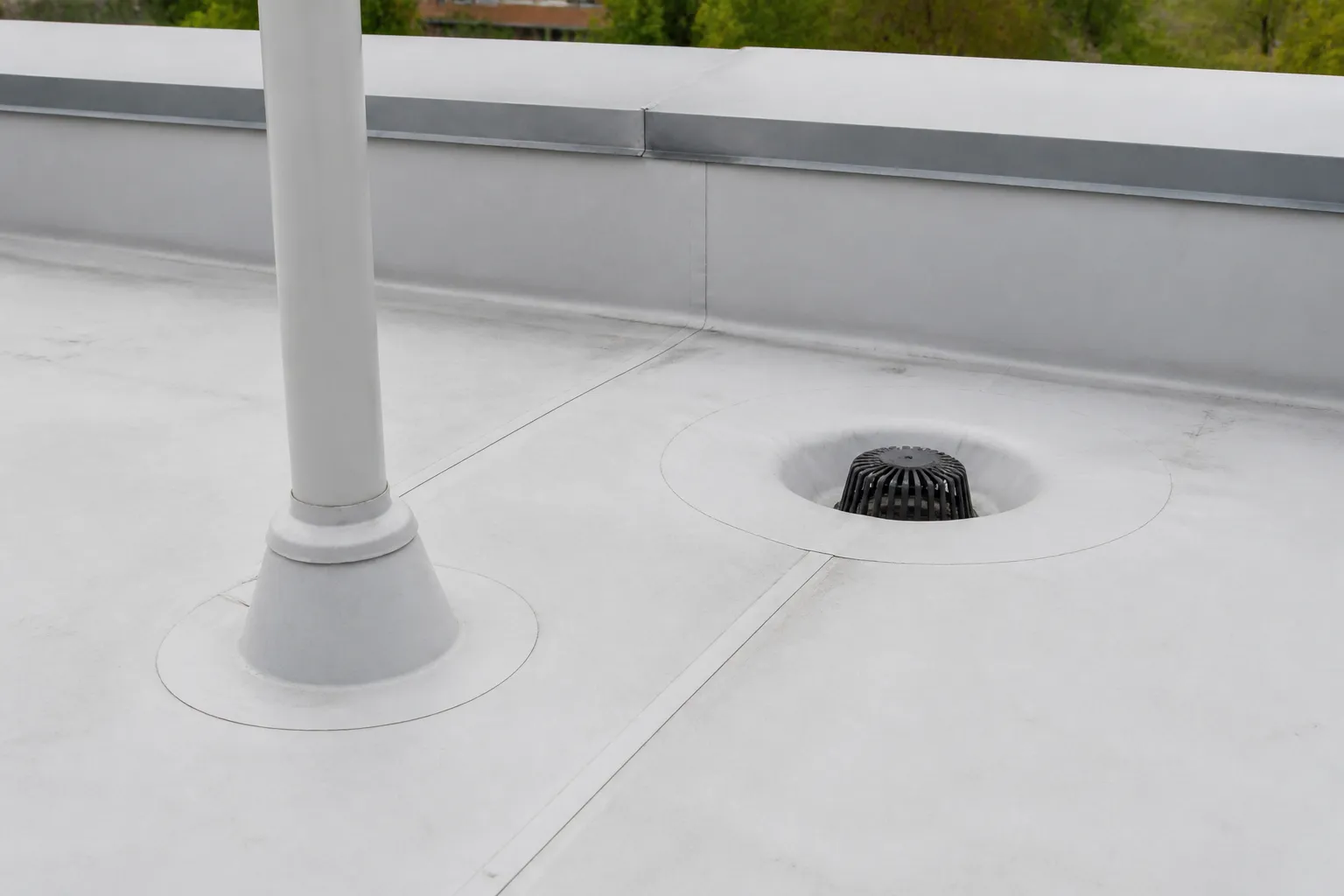
Drains, scuppers, gutters, downspouts, roof slope, and collection points affect how water leaves a building. A commercial roof review can note visible obstructions or damaged drainage components and consider whether water is collecting near seams, edges, or penetrations. Rooftop equipment, piping, exhausts, and supports interrupt the roof surface and require compatible detailing.
Maintenance observations can help establish a record of visible conditions, but they should not be framed as a guarantee against future leaks. Ask what was checked, which items need attention, and which observations are outside the assessment. If a leak returns after prior work, share the repair history and request an explanation of what the new evaluation indicates, rather than assuming another surface coating or patch will solve the cause.
Commercial roofs can include low-slope membrane assemblies and metal systems, among other configurations. Low-slope membranes such as TPO or EPDM have seams, edges, flashing, and penetrations that must be considered as part of the assembly. Commercial metal roofs may use standing-seam or exposed-fastener panels, each with its own attachment and transition details. These are examples of system types, not a promise that every system or installation option is available for every Jonesboro project.
Suitability depends on the roof's slope, existing layers and substrate, drainage design, building use, access, and project requirements. Ask for the proposed system to be described specifically, including how the assembly will meet walls, drains, edges, and rooftop equipment. Related local information is available for metal roofing in Jonesboro and statewide commercial roofing.
A localized repair may be worth considering when the observed condition is limited and the surrounding roof assembly remains serviceable. Replacement may deserve comparison when deterioration is broad, leaks recur in multiple areas, or repair history points to a wider issue. Tie the decision to documented observations, not simply to a leak, a roof's appearance from the ground, or a general rule.
Roof coatings are not a universal repair. Their suitability depends on the existing roof assembly, condition, preparation needs, drainage, compatibility, and project requirements. Ask whether a coating is appropriate for this roof and what underlying conditions would still need attention. Compare the approach with repair and replacement options, including stated limitations.
For a Jonesboro property, gather information already available; there is no need to climb onto the roof or measure it yourself. These details can help focus the assessment and account for site needs:
For a Jonesboro property, the address and project scope also help identify which local office to contact about permit or inspection guidance. Confirm requirements with the office responsible for that property rather than relying on a general assumption. During project planning, clarify site access and how concealed conditions found during work will be documented.
Commercial proposals should identify the building areas and roof sections considered, the observed condition, system proposed, work included, exclusions, access assumptions, and how changes will be documented. Look for detail on drainage, penetrations, flashing, removal or preparation, protection of equipment and occupied areas, debris handling, and cleanup. If alternatives are offered, confirm that each addresses the same areas and building needs.
The roofing estimate checklist can help organize proposal questions; commercial scopes still need building-specific details. For related local options, review Jonesboro roof repair and Jonesboro roof replacement.
Record where water appears, when it occurs, whether it returns after rain, and which rooms or operations are affected. Share safe photos, relevant roof plans, and any previous repair history so the assessment can relate interior symptoms to roof details.
No. They are different roof system approaches, and suitability depends on slope, existing assembly, drainage, building use, and project requirements. Ask for the proposed system and its transition details to be identified for the specific building.
No. Coating suitability depends on the existing assembly, condition, compatibility, preparation, drainage, and project requirements. An assessment should explain whether a coating fits the roof and what other work may still be needed.
Coordinate site access, operating hours, tenant or customer movement, equipment, sensitive areas, and spaces that need to remain usable. Ask the written plan to identify work areas, protection, and how concealed conditions will be documented.
Share the information available about the Jonesboro property and the roof concern so the review can focus on the actual assembly and needs of the occupied building.
For city-specific guidance, see the Jonesboro roofing hub. To discuss a replacement question, review commercial roof replacement considerations for Jonesboro alongside the proposed assessment scope.
What To Expect
Share your ZIP code, the service you are considering, and what you have noticed about the roof.
Discuss the observed condition, repair or replacement options, and proposed scope with the independent roofer, subject to local availability.
Review materials, work details, cleanup, exclusions, and any additional repairs before deciding how to proceed.
A Few Common Questions
Tell us where the property is and what your roof needs.
Roofing Estimate
Share the property ZIP code and the roofing service you need. The form uses the existing inquiry system.