Arkansas Roofing Guidance
Roof Repair in Jonesboro, AR
Learn how Jonesboro roof repair assessments trace leaks, evaluate shingles, flashing, and penetrations, and clarify when replacement may deserve consideration.
Arkansas Roofing Guidance
Learn how Jonesboro roof repair assessments trace leaks, evaluate shingles, flashing, and penetrations, and clarify when replacement may deserve consideration.
For a Jonesboro roof repair assessment, describe whether the concern seems confined to one roof area or affects several, and mention any earlier work. The condition of surrounding materials helps frame whether a localized repair may fit or a broader review is needed; the proposed scope should follow observed conditions.
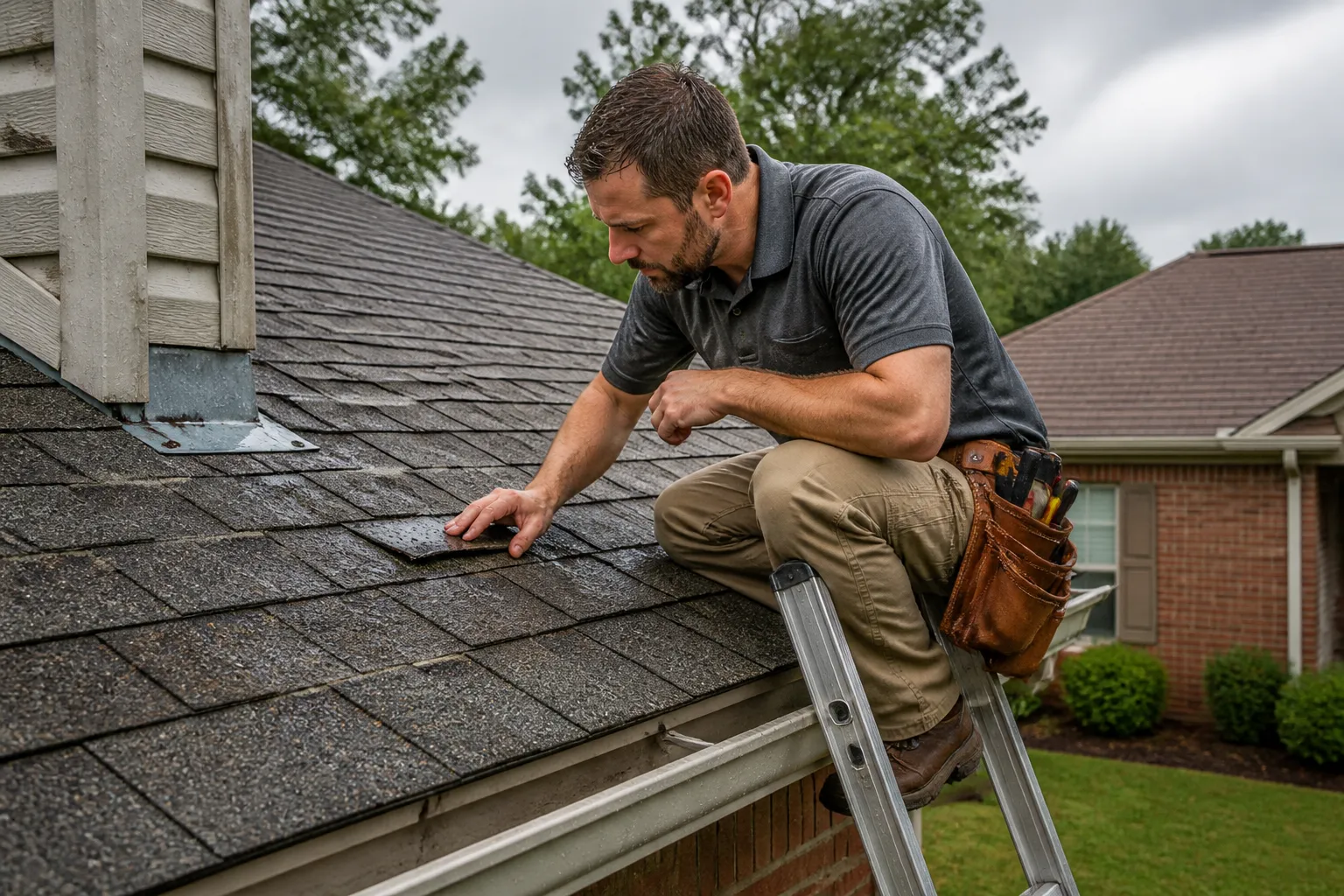
Roof repair can involve displaced shingles, failed flashing, worn seals around roof penetrations, or a transition where two roof surfaces meet. A useful assessment explains the suspected entry path, the areas checked, and the proposed repair scope. For local context and related options, see the Jonesboro roofing hub, roof replacement in Jonesboro, and the statewide roof repair service.
Water can travel along roof layers or framing before a ceiling stain appears, so the stain alone does not locate the entry point. Flashing, roof penetrations, damaged shingles, valleys, and roof edges are possible paths to investigate, not diagnoses based on symptoms alone. When calling, describe where water appears, when it happens, and any visible changes or prior repairs. Photos from indoors or ground level can document conditions safely; do not climb onto the roof.
If water is near electrical equipment, a ceiling is sagging, or an area appears unsafe, keep people clear and describe the concern when requesting an assessment. A roof review should connect interior symptoms with exterior conditions where safe access permits.
Missing, cracked, lifted, or creased shingles can expose the layers beneath them. A repair evaluation should also consider surrounding shingles and the roof surface at the edge of the affected area, not only the most visible piece. Material matching and the way a repair meets existing roofing can affect the finished scope.
Flashing directs water at joints and transitions. Loose, bent, separated, or poorly integrated flashing near a wall, valley, chimney, or roof edge may contribute to recurring moisture. Roof penetrations such as plumbing vents, exhaust outlets, and equipment supports also need careful attention to their seals and surrounding materials. Ask which component appears to be involved and how the proposed work will address the transition, not simply cover the visible symptom.
If the same area leaks after previous work, provide the timing and a brief history of what was repaired. Repeated water intrusion can mean the original entry point was missed, another nearby component is involved, or a broader section has deteriorated. The next assessment should explain what changed or what additional area needs review rather than assume that another surface patch will resolve the issue.
On commercial properties, a leak may affect ceilings, stored materials, work areas, or building systems. Describe the affected space and whether moisture appears at one location or several. The roof assembly, drainage layout, and penetrations differ between buildings, so the repair scope should identify the particular area and system being addressed.
A written repair scope is easier to compare when it identifies the roof section, observed condition, and components included. Depending on the findings, that may include removing damaged shingles, correcting flashing, resealing a penetration, or addressing an adjacent transition. Ask whether underlayment, decking, disposal, or related work is included, and what would be treated as an additional item if concealed damage is found.
These details help distinguish a defined repair from a broad description that leaves the actual work unclear.
A localized repair may suit isolated damage when surrounding materials remain serviceable. Replacement deserves comparison if wear spans multiple slopes, separate leaks keep appearing, or repair history points to broader deterioration. Curling or broken shingles, exposed underlayment, repeated failures, and widespread damage are reasons to request a fuller condition review, but no single sign settles the decision.
Ask for the observations supporting each option and compare the scope, materials, flashing, ventilation, and treatment of any decking concerns. A repair-versus-replacement discussion should be tied to the roof's observed condition rather than a general rule about age or one interior stain. The guide Roof Repair or Replacement? How to Compare Your Options offers additional questions for evaluating the alternatives.
Jonesboro properties may fall under different responsible jurisdictions depending on the address. Before scheduling work, confirm whether the project requires a permit or inspection with the office responsible for the property’s address; requirements can depend on the scope. The City of Jonesboro's Inspections page provides official contact information. Its dated code list should not be treated as current roof-specific guidance.
For storm-related concerns, describe visible changes separately from existing wear. A documented condition and clearly bounded repair proposal make it easier to compare the work being considered without presuming that every weather event calls for full replacement.
Not necessarily. Water can move along framing or roof layers before appearing indoors. The stain's location and timing help guide an assessment, which should check likely roof transitions and penetrations.
Review the seal or boot, flashing and surrounding shingles, and how those materials meet the penetration. Vents, exhaust outlets, skylights, and equipment supports each create transitions that need to be assessed in context.
The initial source may not have been identified, another nearby detail may be involved, or a wider section may have deteriorated. Share the prior repair history and ask what the new assessment found.
Compare both when damage or wear appears across multiple areas, leaks recur, or earlier repairs no longer address the condition. Ask for the evidence and written scope behind each option.
When requesting an assessment, include the Jonesboro property address and whether the building is residential or commercial. The leak details and repair history above can help frame the roof areas and scope for review.
What To Expect
Share your ZIP code, the service you are considering, and what you have noticed about the roof.
Discuss the observed condition, repair or replacement options, and proposed scope with the independent roofer, subject to local availability.
Review materials, work details, cleanup, exclusions, and any additional repairs before deciding how to proceed.
A Few Common Questions
Tell us where the property is and what your roof needs.
Roofing Estimate
Share the property ZIP code and the roofing service you need. The form uses the existing inquiry system.