Arkansas Roofing Guidance
Roof Replacement in Jonesboro, AR
Explore Jonesboro roof replacement planning, from evaluating roof condition and materials to tear-off, decking, ventilation, cleanup, and written proposals.
Arkansas Roofing Guidance
Explore Jonesboro roof replacement planning, from evaluating roof condition and materials to tear-off, decking, ventilation, cleanup, and written proposals.
A roof that leaks in several places, shows broad shingle wear, or has needed repeated patching may call for a full condition review. For a Jonesboro home or commercial building, the decision should follow an assessment of the roof covering, transitions, drainage, visible decking concerns, and ventilation rather than one symptom alone.
Replacement involves more than choosing a new surface. A useful proposal describes removal, substrate checks, underlayment, flashing, ventilation, property protection, and cleanup. Compare the findings and itemized scope with the Jonesboro roofing hub, statewide roof replacement guidance, and related Jonesboro roof repair options.
Before comparing replacement materials, identify what is happening across the roof. Look for patterns such as repeated leaks in separate areas, missing or brittle shingles, exposed underlayment, worn flashing, soft or uneven sections, and recurring damage near penetrations. These observations do not automatically decide the scope, but they help frame questions for a closer assessment.
Consider roof age alongside repair history and the condition of different slopes, edges, valleys, and transitions. For a commercial property, the existing assembly, rooftop equipment, drainage, and building use also affect the project plan. Ask for specific observations and a clear explanation of why replacement is being considered instead of a defined repair.
Asphalt shingles and metal roofing differ in appearance, panel or shingle layout, fastening details, flashing, and installation approach. The right comparison accounts for roof shape, slope, adjoining walls, penetrations, and the building's needs. A material name alone is not an itemized scope.
Ask each written proposal to identify the proposed covering and related components, such as underlayment, edge details, valleys, flashing, and ventilation work. If alternatives are presented, compare what changes from one option to another. On a commercial building, confirm that the proposed assembly is described for the existing roof system rather than treated as a residential shingle project.
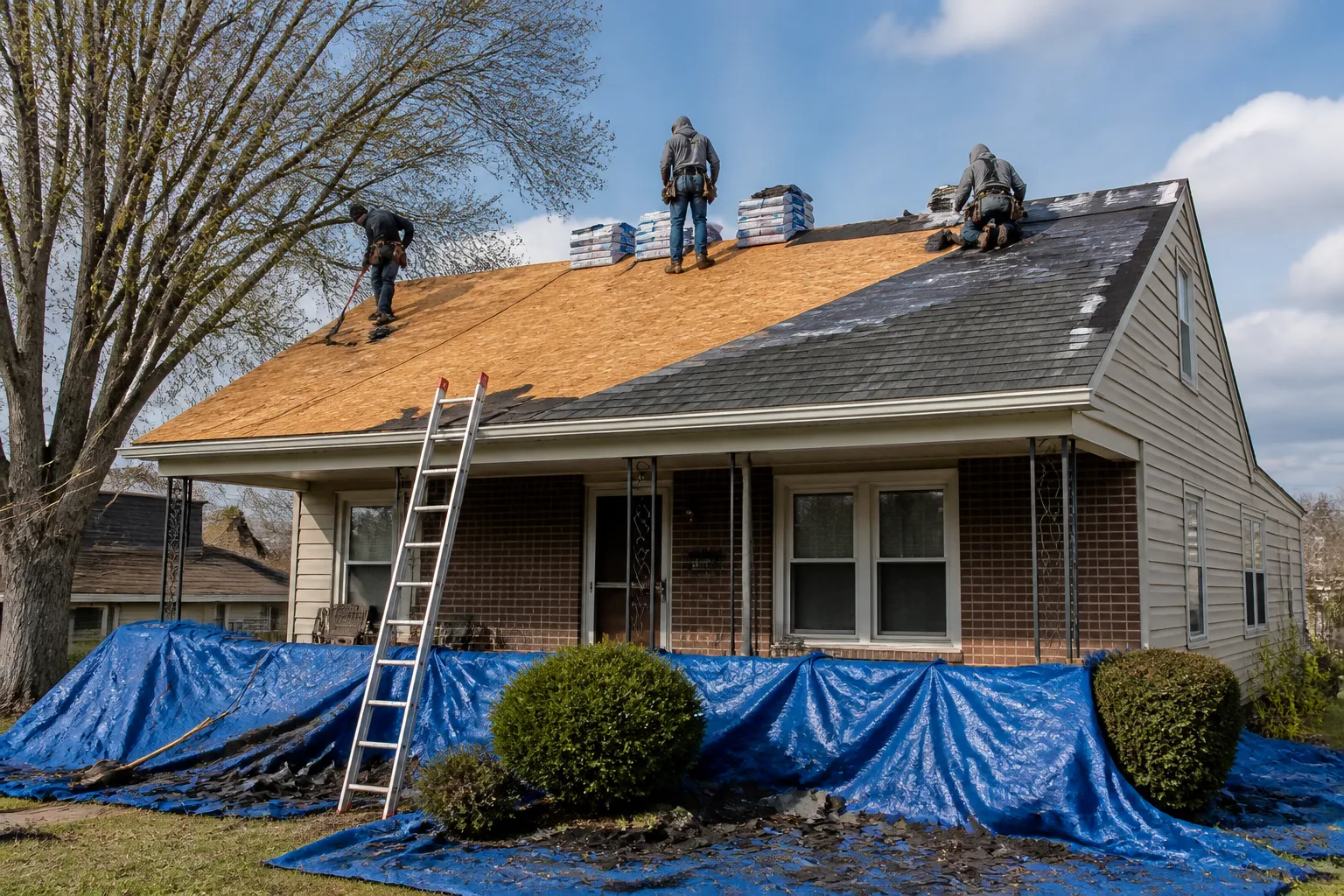
Removal of existing material can expose conditions that were not visible beforehand. The proposal should explain whether existing layers will be removed, how debris will be handled, and what assumptions apply to the roof deck. Ask how concealed soft or damaged decking will be documented, how any additional work will be described, and how authorization will be handled before the scope changes.
Clarify whether disposal and cleanup are included and how the work area will be kept orderly. A detailed scope separates known work from conditions that can only be assessed after tear-off. That distinction helps avoid comparing one complete proposal with another that leaves removal or deck-related items unclear.
A roof replacement is an opportunity to review the components that meet walls, valleys, chimneys, roof edges, and penetrations. Ask whether existing flashing will be reused or replaced and how those transitions will be integrated with the new covering. The written scope should also state what ventilation components are being retained, adjusted, or added, when applicable.
Ventilation needs depend on the roof and building configuration. Avoid assuming a particular change is required based only on a general rule. Ask the estimator to explain any proposed ventilation work in relation to the existing assembly and the observations made during assessment.
Discuss protection for landscaping, walkways, entrances, windows, vehicles, outdoor equipment, and nearby surfaces. For commercial properties, include customer or employee access, deliveries, rooftop equipment, and any areas that need to remain usable during work. The proposal or project plan should state what protection and cleanup are included rather than relying on a general promise.
Ask how loose debris will be collected, where materials will be staged, and how the site will be checked at the end of the work. The details will vary with the building and work area. Clear expectations help owners prepare without assuming a specific schedule or work sequence.
Request enough detail to compare the same categories across proposals. Useful items include the inspected roof areas, removal and disposal, selected materials, underlayment, flashing, decking assumptions, ventilation, penetrations, property protection, cleanup, exclusions, and the process for documenting concealed conditions. Note whether each proposal describes the same roof sections and scope.
The guide What Should a Roofing Estimate Include? provides a further checklist for reviewing written estimates.
Properties in and around Jonesboro may fall under different responsible jurisdictions depending on the address. Before scheduling work, confirm whether the project requires a permit or inspection with the office responsible for the property’s address; requirements can depend on the scope. The City of Jonesboro's official Inspections page provides contact information. Its dated code list should not be treated as current roof-specific guidance.
For storm-related concerns, distinguish visible damage from existing wear in the assessment. A replacement recommendation should identify the conditions observed and explain whether repair remains a reasonable comparison. This makes the proposal easier to review without assuming every storm or aging roof requires the same response.
Widespread wear, recurring leaks in different areas, and repair history that no longer addresses the broader condition may justify comparing replacement. Ask which specific observations support the recommendation.
Removing existing materials allows exposed decking to be reviewed. The written proposal should state its assumptions and explain how concealed conditions and any additional work will be documented.
That depends on the existing assembly and what the assessment finds. Ask for an explanation of any proposed ventilation work rather than assuming one solution applies to every roof.
Compare itemized materials, removal, decking assumptions, flashing, ventilation, property protection, cleanup, exclusions, and how scope changes are handled. Confirm each proposal covers the same roof areas.
Share the Jonesboro property address, building type, known leak or repair history, visible roof concerns, and any access or site-use considerations. Ask for written observations and an itemized scope that identifies what is included and what remains conditional. Those details give residential and commercial property owners a more useful basis for comparing the available options.
What To Expect
Share your ZIP code, the service you are considering, and what you have noticed about the roof.
Discuss the observed condition, repair or replacement options, and proposed scope with the independent roofer, subject to local availability.
Review materials, work details, cleanup, exclusions, and any additional repairs before deciding how to proceed.
A Few Common Questions
Tell us where the property is and what your roof needs.
Roofing Estimate
Share the property ZIP code and the roofing service you need. The form uses the existing inquiry system.