Arkansas Roofing Guidance
Commercial Roofing in Fayetteville, AR
Commercial roof assessment and planning in Fayetteville for leaks, drainage concerns, penetrations, maintenance, and repair-versus-replacement decisions.
Arkansas Roofing Guidance
Commercial roof assessment and planning in Fayetteville for leaks, drainage concerns, penetrations, maintenance, and repair-versus-replacement decisions.
A leak near a roof drain, staining below rooftop equipment, or water entering around a wall transition can disrupt a Fayetteville business and leave the source unclear. A commercial roof assessment should trace the likely water path, review drainage and penetrations, and consider the roof assembly rather than treating an interior stain as the whole problem.
Commercial properties vary in slope, construction, use, access, and operating schedule. A useful written proposal identifies the areas reviewed, observed conditions, recommended scope, exclusions, and how concealed conditions will be handled. Those details help owners and managers compare repair, maintenance, and replacement options without assuming that one roofing system fits every building. Start with the Fayetteville roofing hub for local options or review the statewide commercial roofing overview for broader system considerations.
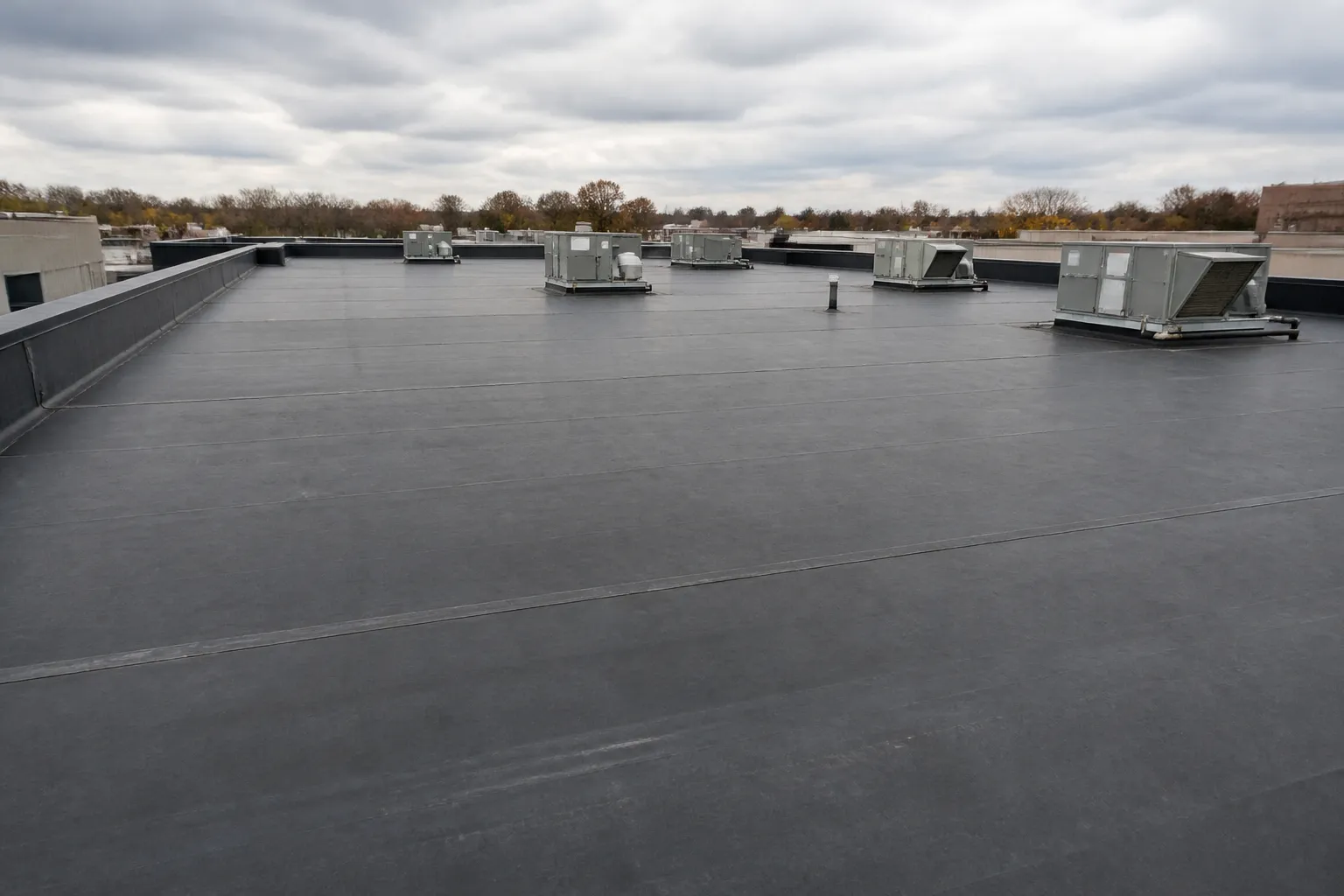
Assessment begins with the roof’s visible condition and how its parts work together. Depending on the building, review may consider the roof covering, seams, transitions, parapets, edges, flashing, drains, scuppers, gutters, and penetrations for vents, piping, or equipment. Note when water appears, which rooms or units are affected, and whether the issue follows rainfall or earlier roof work.
Access and building use also matter. Share roof access procedures, occupied areas, delivery schedules, sensitive equipment, and any restrictions that may affect a visit or later work. On a building that remains in use, a plan should identify work zones, entry routes, protection, and coordination points rather than assuming the property can be cleared.
Water near a drain or scupper may relate to the drainage component, surrounding membrane or flashing, debris, or the roof’s path for moving water. Assessment should note where water collects, whether outlets are obstructed or damaged, and how nearby seams and edges are performing. A recurring leak deserves a fresh look at the route water may take; it does not automatically identify the same entry point as a previous report.
Penetrations and equipment supports interrupt the roof surface and need compatible detailing. Ask which curb, pipe, vent, or other opening was examined and whether the recommended work includes its flashing and adjacent roof material. A written repair scope should distinguish confirmed observations from a suspected source and describe the boundaries of the work.
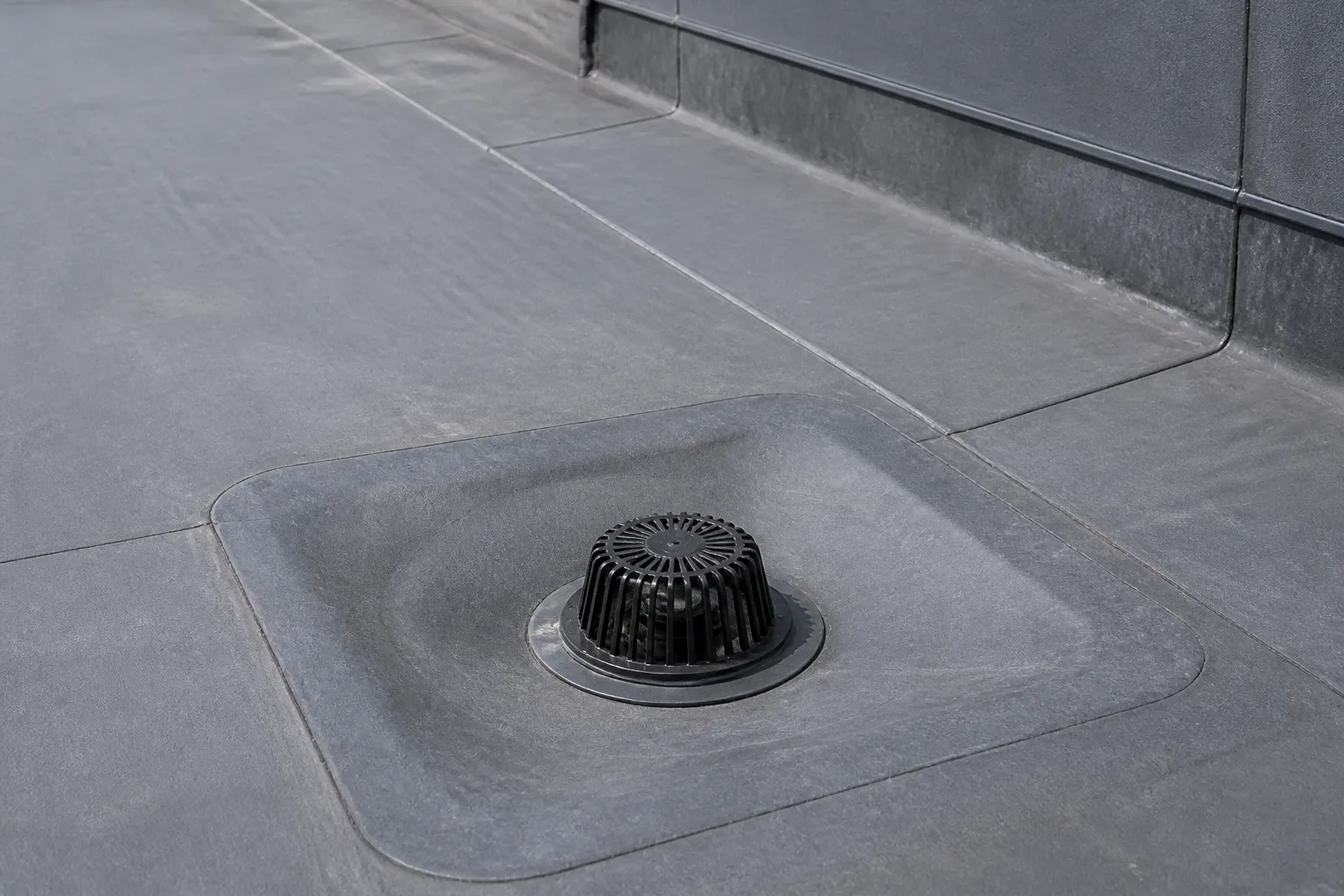
Maintenance observations can record visible conditions at drains, seams, edges, flashing, and penetrations so changes can be compared over time. A maintenance review is not a guarantee against future leaks. Ask what was actually inspected, what could not be accessed, and which conditions need follow-up or a separate repair proposal.
System selection depends on roof slope, the existing assembly, building use, drainage, access, and project requirements. A membrane may be considered on some low-slope assemblies, while metal may suit other roof designs and applications. Availability and suitability should be confirmed for the specific building; a system name by itself does not define how seams, edges, penetrations, transitions, and ventilation will be addressed.
Coatings also require an assessment. Existing layers, surface condition, moisture, drainage, and compatibility affect whether a coating is an appropriate option. It is not a universal fix for leaks or deterioration and should not substitute for identifying the roof’s condition and the work required. Compare the written scope and stated exclusions for any proposed system or coating.
A defined repair may be worth considering when the concern is localized and the remaining roof assembly is in suitable condition. Broader deterioration, repeated water intrusion, multiple problem areas, or repair history may justify comparing a replacement scope. Ask what findings support each path, what areas each would address, and what conditions would remain outside the work.
Proposals are easier to compare when they specify roof sections, preparation or removal, materials, drainage and flashing details, penetrations, protection, cleanup, exclusions, and how concealed damage or scope changes will be documented. Use the Fayetteville roof repair page and Fayetteville roof replacement page when comparing localized work with a broader project.
When contacting All Arkansas Roofing about a Fayetteville property, share its street address, building use, and site contact. Include the approximate roof size and existing system if known, along with leak locations and timing, previous repairs, and any records already available. Do not climb onto the roof or try to measure it yourself.
Ask that the written proposal state its access assumptions, included work areas, site protection, and process for documenting concealed conditions or scope changes. Fayetteville project requirements depend on the property and work scope, so confirm current permit questions with the City’s Building Safety Division. The roofing estimate checklist can help compare equivalent areas and components.
Share when water appears, affected rooms or units, nearby roof drains or equipment, and any earlier repairs. The visible stain may be separate from the entry point, so an assessment should consider the likely route across the roof and its transitions.
Compare each proposal against the roof slope, existing assembly, building use, drainage, access, and project requirements. Ask how the selected system will address seams, edges, penetrations, and transitions, and confirm that the proposed system is suitable and available for the project.
No. Coatings require a roof and substrate assessment, including condition, moisture, existing layers, drainage, and compatibility. Ask what conditions the proposed coating addresses and what repairs or exclusions remain.
Discuss access, occupied entrances, operating hours, deliveries, equipment, work zones, protection, and debris handling as described in the assessment-preparation section. The written plan should identify included areas and any site coordination needed.
For commercial roofing in Fayetteville, share the building type, roof concern, access considerations, and the areas to include in an estimate request.
What To Expect
Share your ZIP code, the service you are considering, and what you have noticed about the roof.
Discuss the observed condition, repair or replacement options, and proposed scope with the independent roofer, subject to local availability.
Review materials, work details, cleanup, exclusions, and any additional repairs before deciding how to proceed.
A Few Common Questions
Tell us where the property is and what your roof needs.
Roofing Estimate
Share the property ZIP code and the roofing service you need. The form uses the existing inquiry system.