Arkansas Roofing Guidance
Roof Replacement in Fayetteville, AR
Review Fayetteville roof replacement planning, from assessing roof condition and material options to tear-off, decking, ventilation, property protection, cleanup, and itemized proposals.
Arkansas Roofing Guidance
Review Fayetteville roof replacement planning, from assessing roof condition and material options to tear-off, decking, ventilation, property protection, cleanup, and itemized proposals.
When roof wear spreads beyond one isolated defect, patching the visible spot may not answer the bigger question: what condition is the whole roof in? For Fayetteville property owners, a replacement assessment should review roof sections, past repairs, flashing, ventilation, drainage, and signs of water intrusion before a material or project scope is selected.
Homes and commercial buildings differ in roof shape, assembly, access, and daily use. A useful written proposal connects its recommendation to the observed condition and spells out removal, new materials, decking assumptions, protection, and cleanup. That detail helps compare options without assuming that every aging or leaking roof needs the same work.
Review the full roof rather than judging by one stain or a few worn shingles. The assessment may consider slopes, ridges, valleys, edges, roof-to-wall transitions, penetrations, flashing, drainage paths, and prior repairs. Note whether problems appear in one area or recur across separate sections. Ask which conditions were observed directly and which are assumptions that can only be confirmed once the existing material is removed.
A replacement discussion is more useful when it compares the present roof with a clearly defined repair option. Localized damage may still be addressed through roof repair in Fayetteville. If wear, leaks, or previous patches involve multiple areas, ask what a complete replacement would address that a limited repair would leave behind.
Material choice depends on the roof design and the needs of the property. Asphalt shingles may be considered for many pitched residential roofs. Metal roofing can also be compared when its panel profile, attachment, underlayment, flashing, and thermal movement details fit the structure. Commercial properties may have different slopes and existing assemblies, so membrane or metal systems should be evaluated against the roof’s use and project requirements rather than chosen by name alone.
Ask for the proposed product and supporting components to be identified in writing. Compare how each option addresses roof edges, valleys, penetrations, ventilation, and transitions. A general label such as “shingle roof” or “metal roof” does not explain the installation details or what portions of the assembly are included.
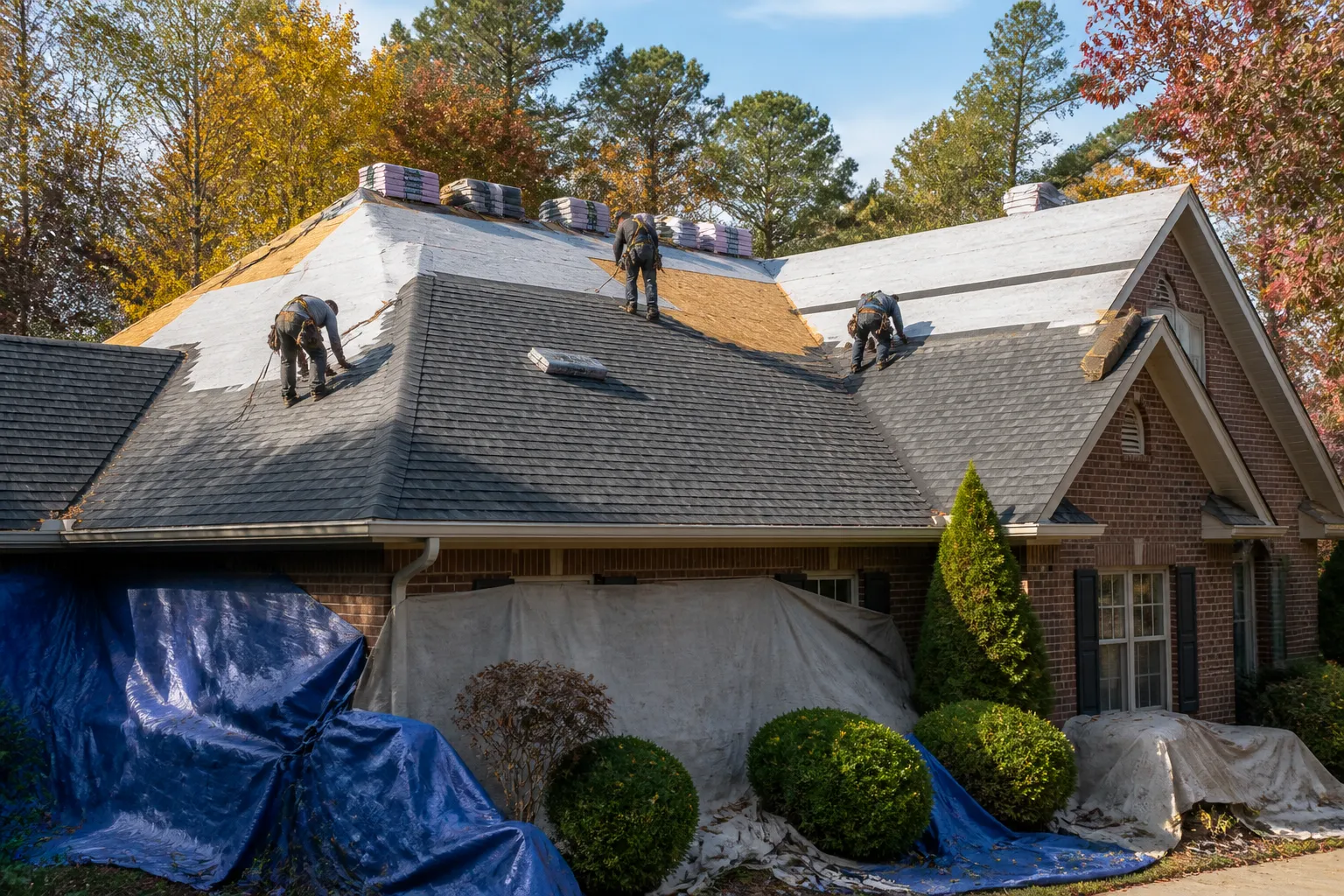
The estimate should say what existing roof layers will be removed and how debris will be contained and disposed of. After tear-off, the underlying deck becomes visible for closer assessment. Because its condition may not be fully known beforehand, ask what assumptions the proposal makes, how findings will be documented, and how any added work will be explained and approved before proceeding.
Clarify which decking areas are included in the stated scope and whether the proposal describes a process for addressing concealed deterioration. The same questions apply to underlayment, flashing, drip edges, and other layers beneath or beside the main roof covering. Itemized descriptions make it easier to compare proposals that may otherwise use different assumptions.
Ventilation should be considered as part of the roof assembly. Ask whether existing intake and exhaust components will remain, be adjusted, or be replaced, and how that decision relates to the roof layout. Any proposed changes should appear in the written scope so they can be reviewed alongside the selected materials.
Before work begins, discuss protection for landscaping, walkways, entries, vehicles, outdoor equipment, and nearby surfaces. On occupied properties, clarify access, work areas, deliveries, and how building occupants can move around the site. Cleanup should be described specifically, including debris handling, disposal, and any final site review. These details matter to residential owners and to businesses planning around normal building use.
Ask each proposal to cover the same roof sections and identify removal, products, underlayment, flashing, ventilation, decking assumptions, protection, disposal, and cleanup. Review exclusions, allowances, and the process for documenting concealed conditions or approving a scope change. If the work involves a business, compare how each plan addresses access and occupied areas as well.
Fayetteville project requirements can depend on the property, jurisdiction, and work scope. Confirm permit requirements with the City’s Building Safety Division before scheduling rather than relying on a general roofing rule. For proposal questions, use the published roofing estimate checklist and repair versus replacement guide.
Gather the property address, building type, known repair history, leak locations, access considerations, and any questions about materials or the written scope. A clear comparison should separate visible conditions from work that depends on findings after tear-off. Ask that proposed changes be described and approved before the work expands beyond the agreed scope.
Visit the Fayetteville roofing hub for local roofing information. Compare the related statewide roof repair overview and statewide roof replacement overview before requesting estimates. Request an estimate with the property details and project questions to begin a conversation about the roof’s condition and scope.
It should review roof sections, visible wear, leaks, previous repairs, flashing, penetrations, drainage, and ventilation. Ask how the recommendation follows from those observations and what remains uncertain until removal.
Removal exposes the roof deck, which may not be fully visible during an initial assessment. The proposal should state its assumptions and explain how concealed conditions will be recorded and submitted for approval.
Compare the specified products and installation details, including underlayment, flashing, edges, penetrations, ventilation, and how the system fits the roof design. A material name alone does not define the complete scope.
Review protection for landscaping, entries, walkways, vehicles, equipment, and occupied areas. The written scope should also describe debris handling, disposal, cleanup, and any final site review.
For roof replacement in Fayetteville, share the property type, roof concerns, and questions about the itemized scope through the estimate form.
What To Expect
Share your ZIP code, the service you are considering, and what you have noticed about the roof.
Discuss the observed condition, repair or replacement options, and proposed scope with the independent roofer, subject to local availability.
Review materials, work details, cleanup, exclusions, and any additional repairs before deciding how to proceed.
A Few Common Questions
Tell us where the property is and what your roof needs.
Roofing Estimate
Share the property ZIP code and the roofing service you need. The form uses the existing inquiry system.