Arkansas Roofing Guidance
Roof Repair in Fayetteville, AR
Learn how roof repair assessments in Fayetteville can trace leaks, evaluate shingles, flashing and penetrations, define a clear repair scope, and compare repair with replacement.
Arkansas Roofing Guidance
Learn how roof repair assessments in Fayetteville can trace leaks, evaluate shingles, flashing and penetrations, define a clear repair scope, and compare repair with replacement.
A ceiling stain after rain, a shingle out of place, or water appearing near a vent can make it difficult to tell what needs attention. In Fayetteville, Arkansas, roof repair starts with understanding where water may be entering and how it travels through the roof assembly. The visible symptom is useful evidence, but it does not always line up with the opening above it.
Describe when the problem appears, which rooms or roof areas seem affected, and whether prior work has addressed the same concern. All Arkansas Roofing connects property owners with independent roofing contractors for assessment and estimates. A clear written scope can help distinguish a localized repair from more extensive work without deciding before the roof is reviewed.
An interior mark shows where moisture became visible, not necessarily where it crossed the roof. Water may travel along decking, framing, underlayment, or other layers first. Flashing, roof penetrations such as vents or pipes, damaged shingles, and valleys are possible entry points; symptoms alone do not confirm which one is involved. An assessment should follow the likely water path and review related roof details before selecting a repair.
When calling, describe where water appears, when it starts or changes, and any visible changes indoors or from the ground. Take photos from inside or at ground level only, without climbing onto the roof. Identifying the source first helps set an appropriate repair boundary and shows whether the concern is localized or connected to nearby roof components.
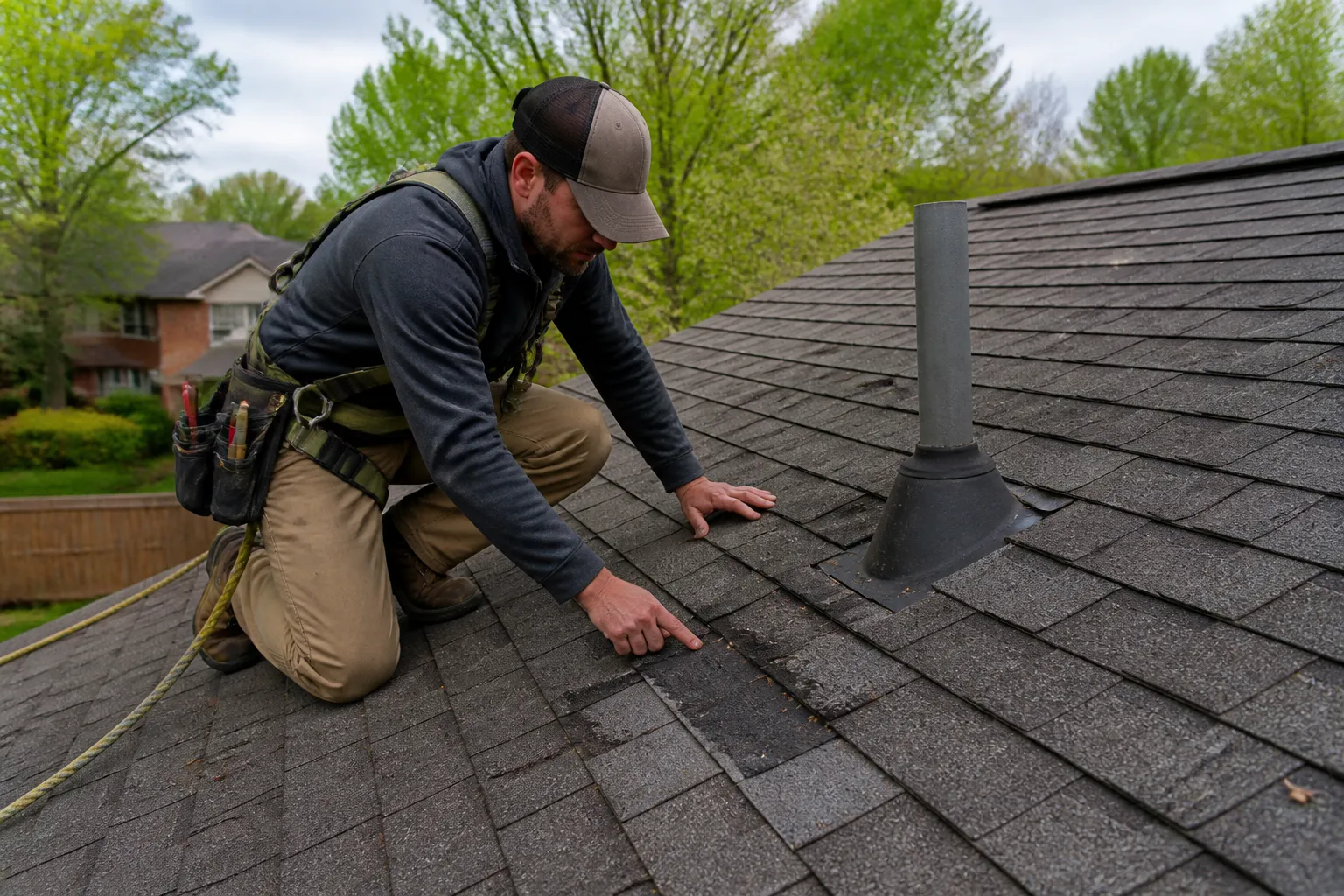
Missing, cracked, lifted, or displaced shingles can expose underlying roof components. A repair proposal should identify the affected slope or section, explain how replacement material will connect to surrounding shingles, and note whether adjacent flashing or underlayment is included. Matching details matter because a small visible defect may sit beside a transition that also needs attention.
Flashing protects joints where the roof meets a wall, chimney, valley, or other change in plane. Around pipe boots and vents, look for a clear description of the seal or flashing component being addressed rather than a general promise to stop a leak. For Fayetteville properties with more than one roof type or several penetrations, request that each area be described separately so the work boundary is easy to understand.
A useful written scope states the observed condition, the likely cause, the roof area involved, the materials or components to be repaired, and any exclusions. It should also explain how concealed damage or a change in scope will be documented and presented for approval. Ask whether related flashing, nearby roof penetrations, and adjoining materials were inspected, even if the proposed work remains limited.
When water intrusion recurs, compare the new findings with the earlier repair description. The original entry point may have been uncertain, a neighboring detail may be involved, or a separate issue may have developed. Recurrence deserves a fresh look at the water path; by itself, it does not prove that the entire roof needs replacement. Ask what the current assessment adds and how the proposed work addresses it.
Repair may suit a defined defect when the surrounding roof remains serviceable. Broader replacement is worth discussing when deterioration or leaks affect multiple areas, repeated repairs have not resolved the wider condition, or the roof system as a whole needs attention. The recommendation should be supported by observed conditions, the repair history, and a comparison of what each option would cover.
For a balanced decision, compare the roof sections involved, materials, flashing and penetration work, underlayment assumptions, exclusions, and the handling of concealed conditions. The statewide roof replacement overview and roof repair or replacement guide offer broader questions to bring to an assessment. Fayetteville project requirements can depend on the property and work scope. Check with the City’s Building Safety Division about current permit requirements rather than assuming a general rule applies to every repair.
Gather the property address, building type, leak history, affected rooms, and any known roof work. Share whether water intrusion is active or intermittent and mention visible shingle, flashing, or penetration concerns observed safely from the ground. Do not climb onto a wet or damaged roof to investigate. For an estimate, include photos only when they can be taken from a safe location and explain what each image shows.
Use the Fayetteville roofing hub for local service information. Compare a focused repair with the existing Fayetteville roof replacement page, and review the published guide to a roof leak after a storm if the concern followed severe weather. Request an estimate with the property location and symptoms you have observed.
Not always. Water can travel through or along roof and framing materials before appearing inside. The stain, its timing, and affected rooms can help guide an assessment, but the entry point needs to be evaluated separately.
That depends on how localized the damage is and the condition of surrounding materials. Ask for a written description of the repair area, nearby components reviewed, and any concerns that would remain afterward.
The first source may have been difficult to confirm, an adjacent flashing or penetration detail may also be involved, or a new issue may have developed. Compare the earlier scope with current observations and ask what supports the next step.
Compare both options when wear or recurring leaks affect several areas, or the wider roof condition raises questions about repeated localized work. Ask what each proposal addresses and what roof conditions would remain outside its scope.
For a Fayetteville roof repair discussion, share the property location, leak history, and any safely documented roof concerns through the estimate form.
What To Expect
Share your ZIP code, the service you are considering, and what you have noticed about the roof.
Discuss the observed condition, repair or replacement options, and proposed scope with the independent roofer, subject to local availability.
Review materials, work details, cleanup, exclusions, and any additional repairs before deciding how to proceed.
A Few Common Questions
Tell us where the property is and what your roof needs.
Roofing Estimate
Share the property ZIP code and the roofing service you need. The form uses the existing inquiry system.