Arkansas Roofing Guidance
Commercial Roofing in Bentonville, AR
Review commercial roof assessment, leak investigation, drainage, penetrations, maintenance, and repair or replacement planning for Bentonville, Arkansas properties.
Arkansas Roofing Guidance
Review commercial roof assessment, leak investigation, drainage, penetrations, maintenance, and repair or replacement planning for Bentonville, Arkansas properties.
A commercial roof problem can affect building operations long before the source is obvious. A ceiling stain, recurring drip, damp insulation, or water near rooftop equipment may point to a roof condition, but the visible symptom does not always identify where water entered. For property owners and managers in Bentonville, begin by noting which areas are affected and whether there has been recent roof or equipment work.
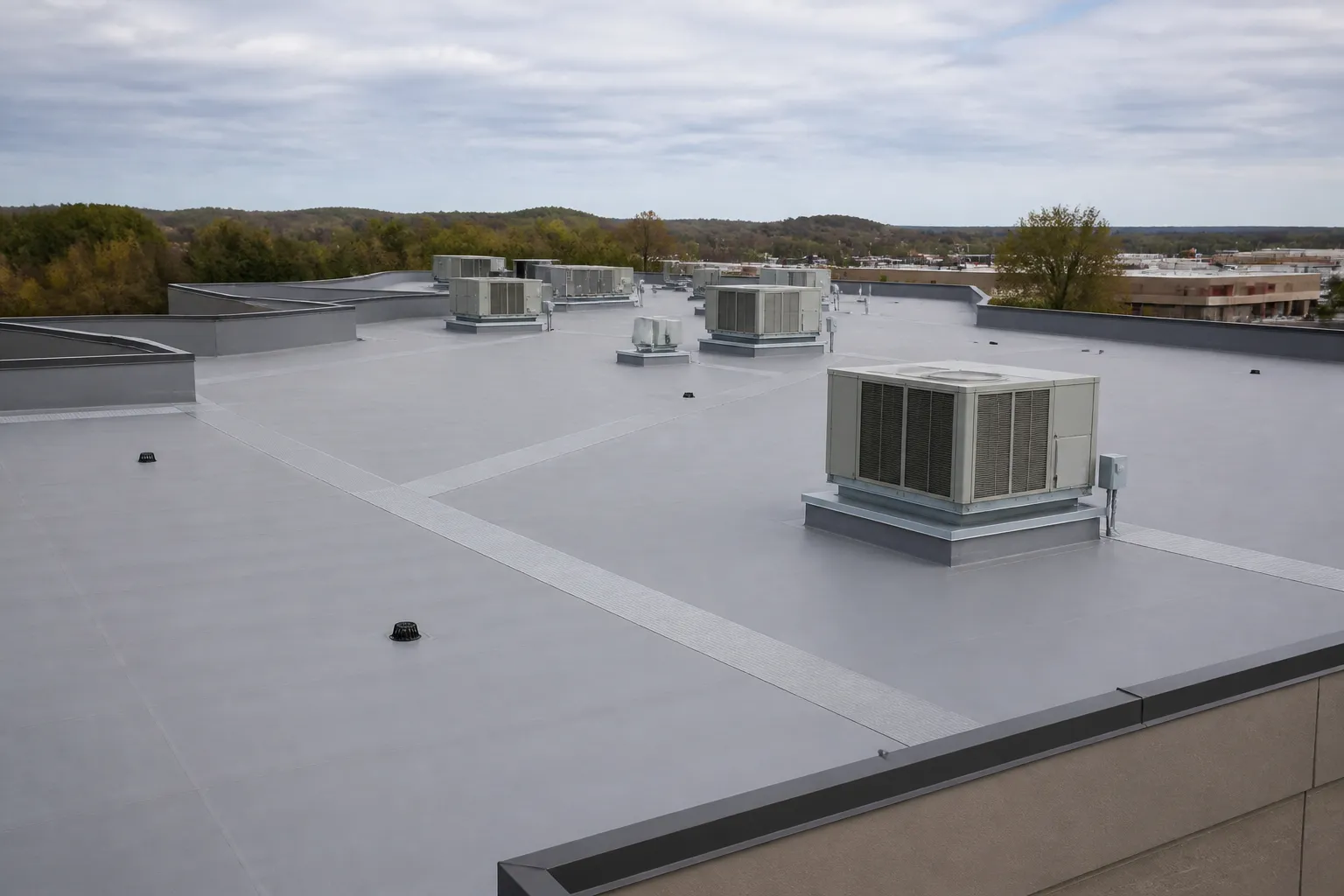
Commercial roofing decisions depend on the building and its existing roof assembly. An assessment should connect visible conditions to a defined scope, whether the question is a localized repair, planned maintenance, or broader replacement. Review the Bentonville service-area guide, statewide commercial roofing information, and metal roofing guidance for Bentonville to compare related considerations.
All Arkansas Roofing can begin with facts already available from your records or site contact. Do not climb onto the roof or try to measure it. If known, share:
Unknown details can simply be noted as unknown. The assessment can then identify which roof areas and conditions were reviewed and connect its findings to a repair, maintenance, or replacement scope.
A useful roof assessment identifies the system where possible, the areas reviewed, and the conditions that support the proposed work. Relevant details can include membrane or metal panels, seams, roof edges, transitions, flashing, drains, scuppers, penetrations, curbs, and visible adjoining materials. Roof slope, the existing assembly, building use, and project requirements all affect which systems and approaches are suitable. A product name alone is not enough to determine the right scope.
Record the location of interior water marks and whether they appear after particular weather conditions. Photos taken from a safe indoor location can help explain the symptom. Do not enter roof areas or approach equipment without appropriate access and authorization.
Water may travel along a roof surface, deck, or framing before it becomes visible indoors. An assessment can review the likely water path and the details that interrupt the roof field, including drains, scuppers, piping, vents, skylights, equipment curbs, and adjoining walls. Flashing or sealant should be considered with the surrounding membrane or panels, not as an isolated bead of material.
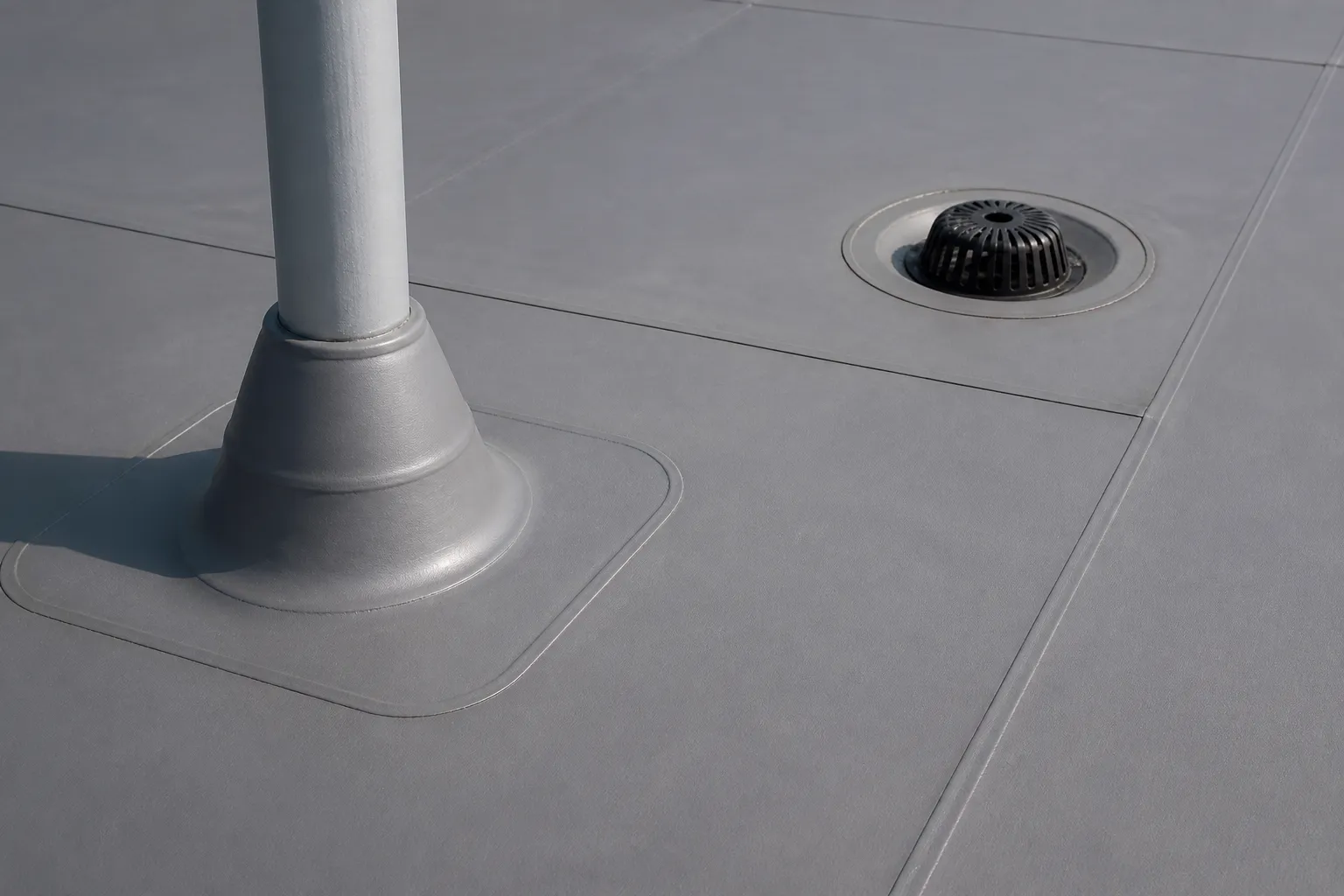
Drainage deserves particular attention on low-slope roofs. Ask whether drains and outlets are clear, whether water has a path to leave the roof, and whether observed ponding or staining relates to a drainage concern. A photograph of a commercial membrane with seams, a penetration boot, and a roof drain illustrates details that may be reviewed during an assessment.
For a leak, a written scope should identify the suspected entry area, components to be addressed, and the boundary of the repair. If the source is uncertain, ask what was observed and what further access or investigation may be needed. Guidance on documenting a leak is available in what to do after a roof leak.
Maintenance may include reviewing roof surfaces and details, clearing accessible drainage components, recording changes, and identifying conditions that need attention. The appropriate tasks depend on the roof system, access, building operations, and the agreed scope. A maintenance visit is not a promise that leaks will never occur; it can help document condition and clarify which items merit follow-up.
Roof coatings also require an assessment rather than being treated as a universal fix. Suitability may depend on the existing assembly, surface condition, moisture, drainage, compatibility, and project requirements. Ask what preparation and repairs are needed, what limitations apply, and how a coating option compares with other scoped approaches. Coating should not substitute for identifying unresolved moisture or correcting conditions that make the assembly unsuitable.
Repair may be worth considering when the concern is localized and surrounding roof areas remain serviceable. Replacement may merit discussion when deterioration is widespread, multiple areas have recurring problems, or the assembly's overall condition calls for a broader scope. Neither choice should be based only on a ceiling stain or a general statement about roof age.
Compare the observations, included roof areas, removal assumptions, drainage and flashing work, access plan, exclusions, and process for documenting concealed conditions. On larger properties, ask whether phases or sections can be defined clearly. The guide to comparing repair and replacement and the roofing estimate checklist offer questions for reviewing written proposals.
After the assessment, coordinate the agreed work areas with tenants or staff, deliveries, customer access, security, and building equipment. Confirm authorized access points, restricted areas, staging needs, and any planned shutdowns with the site contact. The written scope should explain how included areas and changes will be communicated.
For membrane and metal systems, suitability depends on slope, existing assembly, building use, and project requirements. A low-slope membrane and a metal roof have different seams, attachment, drainage, and flashing details. The estimate should identify the system under consideration and describe work at edges, penetrations, transitions, and drainage points rather than assume a particular system is available. For related Bentonville options, see roof repair and roof replacement guidance.
Share the known leak timing and locations, repair history, available records, and safe photos. The assessment-preparation list above covers other details that may help plan access and account for the building.
Ask whether drains, scuppers, outlets, slope, and visible areas of water collection were considered. The assessment should explain observed conditions and identify which drainage details are included in any proposed work.
No. Existing materials, surface condition, moisture, drainage, compatibility, and project requirements can affect suitability. Request an assessment of preparation, limitations, and alternatives before comparing a coating proposal.
Clarify access, contacts, operating hours, tenant or staff coordination, equipment restrictions, staging, included roof areas, and how scope changes will be documented.
When requesting an estimate, All Arkansas Roofing can use the available property and roof details to focus on the concern. Compare written proposals by the conditions addressed and components included, not just by the system label. For other roofing decisions, review factors that affect roof replacement estimates.
What To Expect
Share your ZIP code, the service you are considering, and what you have noticed about the roof.
Discuss the observed condition, repair or replacement options, and proposed scope with the independent roofer, subject to local availability.
Review materials, work details, cleanup, exclusions, and any additional repairs before deciding how to proceed.
A Few Common Questions
Tell us where the property is and what your roof needs.
Roofing Estimate
Share the property ZIP code and the roofing service you need. The form uses the existing inquiry system.