Arkansas Roofing Guidance
Roof Repair in Bentonville, AR
Learn how roof leak diagnosis, damaged shingles, flashing, penetrations, and repair scope shape roof repair decisions in Bentonville, Arkansas.
Arkansas Roofing Guidance
Learn how roof leak diagnosis, damaged shingles, flashing, penetrations, and repair scope shape roof repair decisions in Bentonville, Arkansas.
For Bentonville roof repair, the useful starting point is whether the concern appears localized or extends across more than one roof area, along with the history of earlier work. Those details help frame the assessment and compare an appropriate repair scope with broader options without assuming replacement is needed.
A written scope should connect proposed work to the roof area and conditions observed, and make clear what is included or excluded. For broader local information, see the Bentonville service-area guide, the statewide roof repair overview, and how to compare repair with replacement.
Water can travel through roof layers or along framing before a ceiling stain appears, so its location does not establish where water entered. Flashing, roof penetrations, damaged shingles, and valleys are possible areas to investigate, not diagnoses based on symptoms alone. An assessment should explain what was observed and what remains uncertain before a repair is selected.
When calling, report where water appears, when it happens, any visible changes, and whether the leak has returned after earlier work. Note affected rooms separately. Photos taken indoors or from ground level can document conditions without climbing onto the roof.
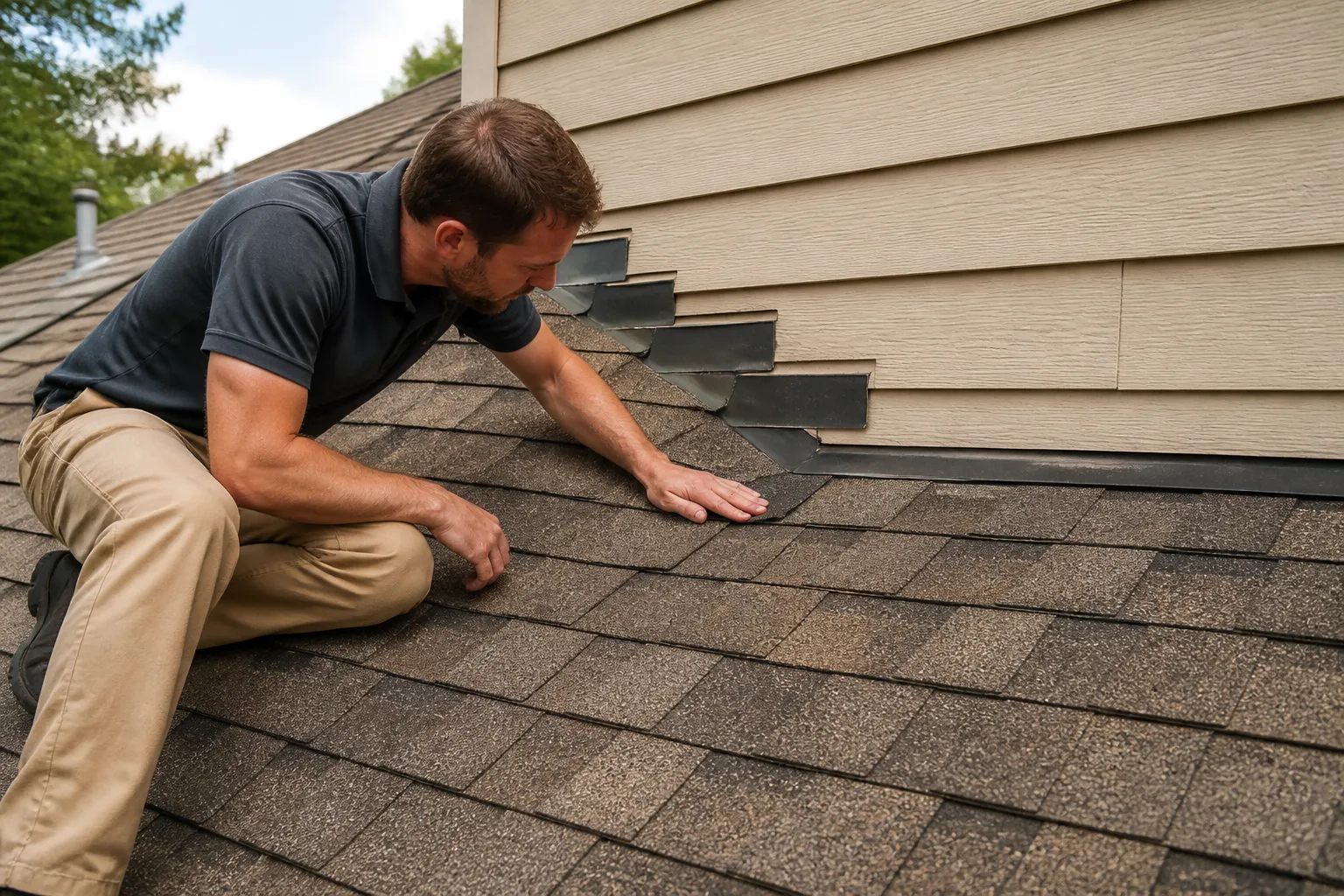
Roof repair can involve missing, cracked, lifted, or displaced shingles; damaged flashing at a wall, valley, or roof intersection; or a deteriorated seal around a pipe, vent, or other penetration. The visible symptom may also relate to an adjoining roof component. A repair scope should say which materials will be removed or replaced and how the work connects to the surrounding roof.
Flashing directs water through transitions, so a loose edge or failed connection may matter as much as the roof covering nearby. Roof penetrations deserve similar attention: the opening, boot or flashing, fasteners, and adjacent materials form part of the detail. A general promise to “seal the leak” is less informative than a written description of the suspected entry point, repair boundary, materials, and related details included.
For roofs with metal panels, the assessment may need to consider panel seams, fasteners, trims, and flashing as a coordinated system. See metal roofing in Bentonville for system-specific considerations. If the property is a business or other non-residential building, review commercial roofing in Bentonville as well.
A clear repair proposal identifies the roof area, the reported concern, the observed condition, and the work included. It should also state relevant exclusions and how additional concealed damage or a changed scope will be explained and approved. Ask whether nearby flashing, penetrations, or adjoining roof materials were reviewed, and whether the repair is intended to address a confirmed defect or a likely source.
Recurring leaks deserve a review of the earlier repair and its limits. The same symptom can return because the original entry point was not confirmed, an adjacent detail remains involved, or a separate issue has developed. Recurrence is a reason to look carefully at the water path and previous scope; it does not by itself prove that replacement is necessary. Ask what is different in the present assessment and how the proposed work addresses that evidence.
Repair may fit a localized defect when surrounding materials remain serviceable. Consider replacement when wear or recurring leaks affect multiple areas, or when the overall system condition makes isolated repairs impractical. Base the discussion on observed conditions, repair history, the assembly, and the scope each option would address, not a stain or single shingle alone.
When comparing options, request written scopes that identify roof areas, materials, flashing and penetration work, removal assumptions, and exclusions. The statewide roof replacement page explains broader project considerations, while the roofing estimate checklist can help organize proposal questions. For a Bentonville replacement discussion, see Roof Replacement in Bentonville.
For an estimate discussion, have the property address and building type available, note any known roof work, and mention access, equipment, or areas of the property that need coordination. The leak details above can help focus the assessment.
For a Bentonville roof repair discussion, compare the explanation of the condition with the work proposed and ask how any uncertainty will be handled. The aim is a scope that addresses the observed concern without assuming that every leak requires the same repair. Request an estimate for Bentonville roof repair.
The assessment considers the visible interior symptom, likely water path, roof covering, nearby flashing, and penetrations. Water can travel before appearing indoors, so the stain alone may not show the entry point.
That depends on how localized the damage is and the condition of nearby materials. A written assessment should identify the repair area and explain whether adjoining shingles or flashing also need work.
The original source may have been uncertain, a nearby detail may also be involved, or another leak may have developed. Review the previous scope and ask what current observations support the next proposed repair.
Discuss replacement when deterioration is widespread, multiple areas have recurring problems, or the overall roof condition makes isolated repairs difficult to justify. Compare documented findings and written scopes before deciding.
What To Expect
Share your ZIP code, the service you are considering, and what you have noticed about the roof.
Discuss the observed condition, repair or replacement options, and proposed scope with the independent roofer, subject to local availability.
Review materials, work details, cleanup, exclusions, and any additional repairs before deciding how to proceed.
A Few Common Questions
Tell us where the property is and what your roof needs.
Roofing Estimate
Share the property ZIP code and the roofing service you need. The form uses the existing inquiry system.