Arkansas Roofing Guidance
Commercial Roofing in El Dorado, AR
Commercial roofing in El Dorado, AR. Learn about leak assessment, repair or replacement, membrane and metal systems, drainage, and project planning.
Arkansas Roofing Guidance
Commercial roofing in El Dorado, AR. Learn about leak assessment, repair or replacement, membrane and metal systems, drainage, and project planning.
A recurring leak can disrupt tenants, inventory, equipment, and daily operations. For commercial buildings in El Dorado, note where water appears, when it occurs, and whether the problem returned after earlier work. A ceiling stain may not sit directly below the roof entry point, so identifying the source calls for evaluating the roof assembly and likely water paths.
All Arkansas Roofing connects property owners with independent roofing contractors. Contractors assess properties, provide estimates, and perform the work. Availability varies by location and project.
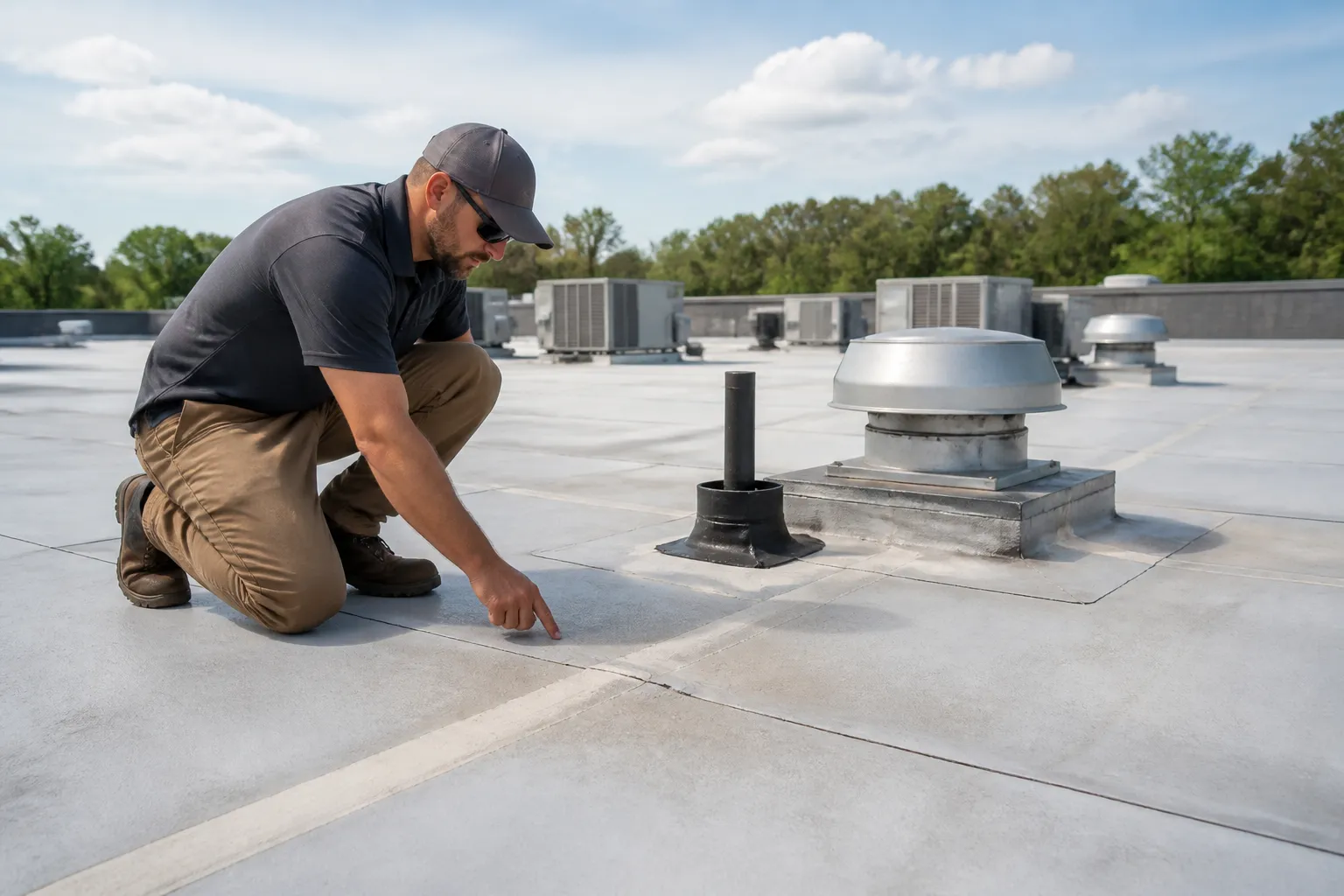
An assessment may consider membrane seams, metal panel joints, flashing, roof edges, drains, scuppers, equipment curbs, vents, pipes, and other penetrations. The visible interior stain is useful information, but does not by itself confirm the entry point. Safe interior photos, building plans, and prior assessment notes can help describe the concern and what has changed.
A repair may fit a limited concern when the surrounding assembly remains suitable for continued service. Repeated leaks, widespread deterioration, or problems in multiple areas may warrant a broader review and discussion of replacement.
The assessment should explain the findings behind each option, which areas were assessed or inaccessible, and whether the scope addresses one location or a larger roof section. The appropriate approach depends on the existing system, building, project priorities, and observed conditions.
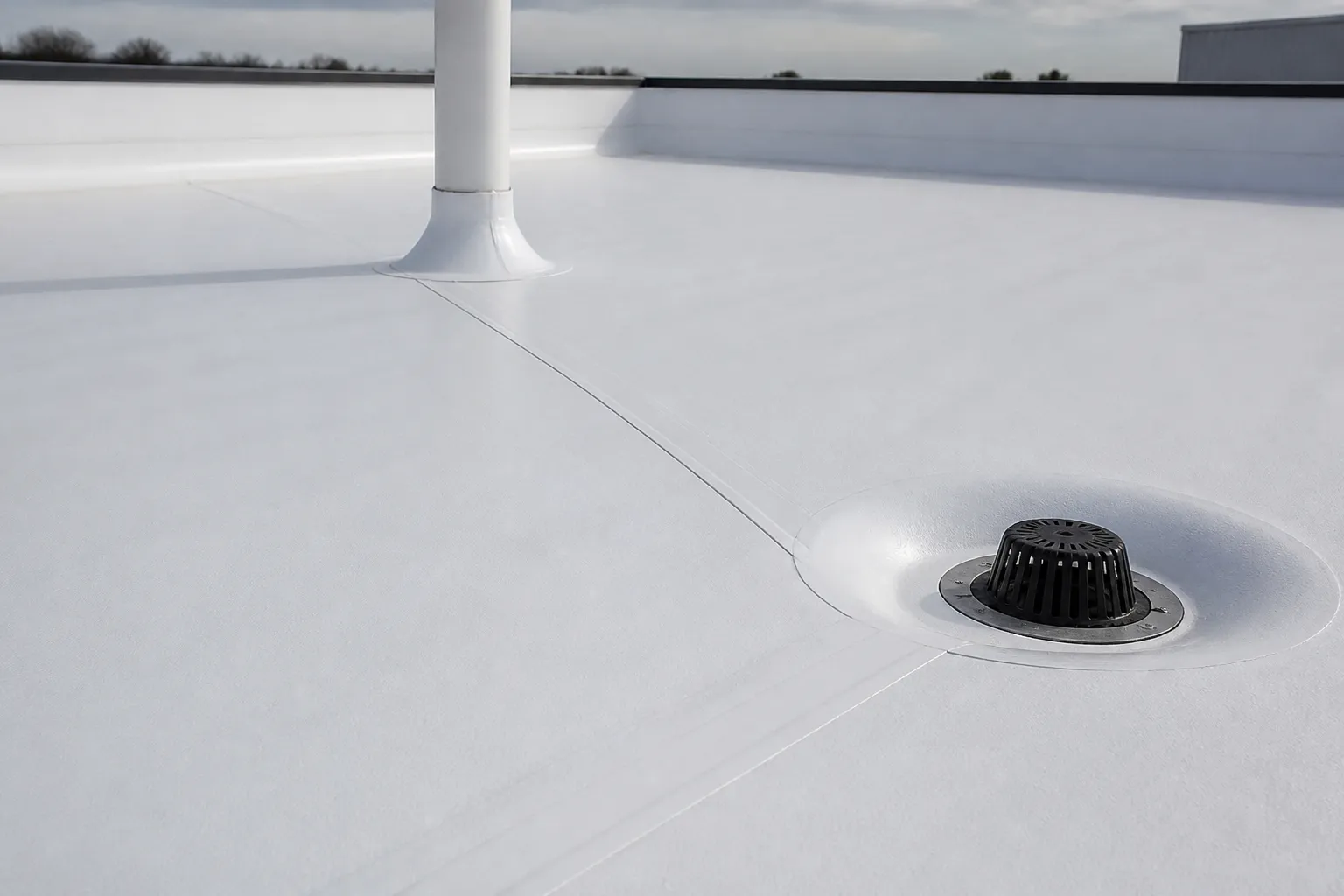
Commercial roofs may use low-slope membrane systems, metal panels, or a combination. Membranes can include TPO, EPDM, and other materials. Seams, flashing transitions, terminations, and attachment methods vary, so the written proposal should identify the observed system and explain the proposed work.
Metal systems may use standing seam or exposed-fastener panels. Standing seam panels have raised seams and generally concealed panel-field fasteners; exposed-fastener panels use visible fasteners through the surface. Joints, fasteners, edges, flashing, and equipment transitions need attention suited to the specific roof design.
Drains, scuppers, gutters, downspouts, and roof slopes affect how water leaves a building. Ask whether the assessment includes drainage paths and areas where water collects. Seams and flashing at walls, curbs, edges, and material transitions may also be relevant.
Vents, pipes, wiring, and mechanical equipment interrupt the roof surface. List known equipment changes or prior roof work, and ask which penetrations and transition details are included in the review.
Planning roofing work at an El Dorado business? Ask how material deliveries, pedestrian access, and cleanup will be handled before work begins. The project plan should also address customer entrances, employee parking, and any areas that need to stay open during business hours.
Share what you already know about the property and access needs. There is no need to climb onto or measure the roof.
Request a written scope that identifies what was reviewed and what the proposal includes. Depending on the project, ask for:
Compare estimates by scope and assumptions, not just the summary amount. Ask the contractor to explain terms you do not understand before deciding.
Use the checklist above for available property, leak, repair, and access information. Safe interior photos or relevant records may also help.
Ask for the observed conditions, included areas, reasoning for the proposed option, and any limitations or exclusions. Compare those written details and ask about differences.
Describe the roof areas and identify known systems. Contractor availability and experience vary, so ask whether the requested systems can be assessed for your project.
Confirm how entrances, parking, deliveries, pedestrian routes, work hours, and cleanup will be coordinated in the written project plan.
See the El Dorado service-area page or commercial roofing across Arkansas. Related local options include roof repair, roof replacement, metal roofing, and storm damage roofing.
Independent contractors provide estimates and perform the roofing work.
What To Expect
Share your ZIP code, the service you are considering, and what you have noticed about the roof.
Discuss the observed condition, repair or replacement options, and proposed scope with the independent roofer, subject to local availability.
Review materials, work details, cleanup, exclusions, and any additional repairs before deciding how to proceed.
A Few Common Questions
Tell us where the property is and what your roof needs.
Roofing Estimate
Share the property ZIP code and the roofing service you need. The form uses the existing inquiry system.