Commercial roof guidance for Fort Smith properties, covering assessment, leak diagnosis, drainage, penetrations, maintenance, system suitability, and project planning around occupied buildings.
A recurring leak, standing water, or damage near rooftop equipment can affect daily operations in an occupied Fort Smith building. The visible stain may not be directly below the roof opening, so note which areas are affected and whether the issue returns after rain. Consider how the condition affects building use while details are gathered.
Commercial roofing is building-specific. Roof slope, existing assembly, building use, drainage, and project requirements influence which systems and scopes may fit. A written assessment should describe observed conditions and distinguish a limited repair from broader replacement planning rather than assume one approach suits every property.
Assess the Roof and Trace Water Intrusion
Leak diagnosis considers both interior symptoms and roof details that could admit water. Depending on the system, these can include membrane seams, panel joints, flashing, roof edges, curbs, vents, pipes, and other penetrations. Water can travel through the assembly before appearing indoors, so location and timing help guide the review but do not prove the entry point.
For a Fort Smith office, retail space, warehouse, or other occupied property, note affected rooms, stored materials, equipment, and areas that must remain accessible. Share prior leak history, earlier repairs, roof plans, and safe photos if available. Ask which roof sections were reviewed, what observations support the suspected source, and whether nearby transitions or drainage paths were considered.
Review Drainage and Roof Penetrations
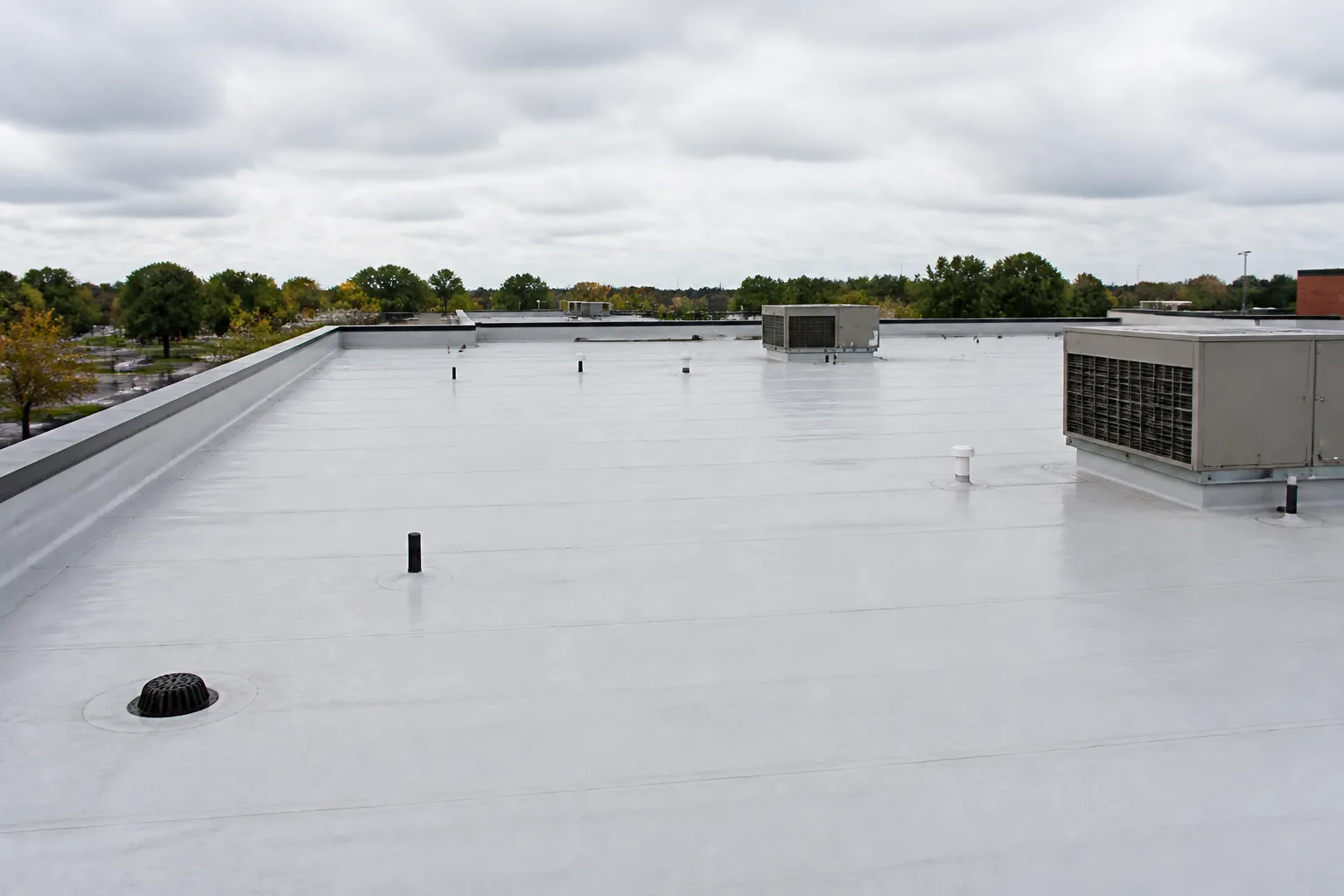
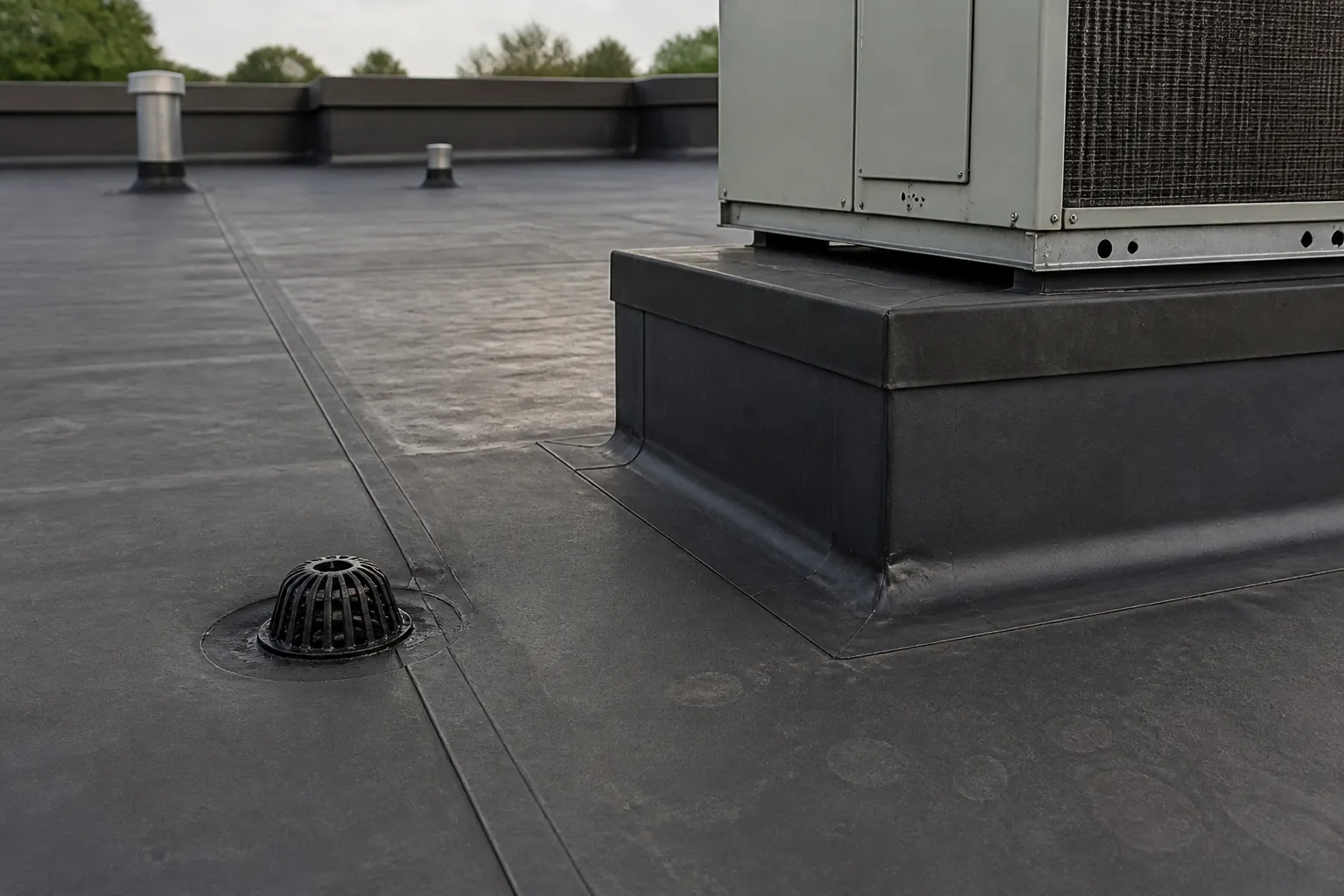
Drainage is part of the roof system. Drains, scuppers, gutters, downspouts, roof slope, and collection points influence where water travels and exits. An assessment can document visible obstructions, damaged components, or areas where water appears to collect, while distinguishing those observations from conditions that require closer inspection. Do not assume that a puddle alone identifies the cause of a leak.
Commercial roofs often have HVAC equipment, exhausts, piping, supports, and access features that interrupt the roof surface. Flashing and compatible details at each penetration matter. Ask whether the scope identifies which curbs, pipes, seams, edges, and adjacent materials are included. If equipment has been installed or serviced recently, describe that work so the assessment can account for affected areas without presuming a cause.
Compare Repair, Replacement, and Maintenance
A focused repair may be worth considering when the observed problem is limited and the surrounding assembly remains serviceable. Replacement deserves comparison when deterioration spans multiple areas, leaks recur at separate locations, or repair history suggests a broader condition. The assessment should explain the evidence for each option and define which roof sections and components proposed work covers.
Maintenance can document visible conditions and identify items to monitor or address. It should not be presented as a guarantee against future leaks. If a coating is proposed, request an assessment of the roof's condition, existing assembly, compatibility, preparation needs, drainage, and project requirements. A coating is not a universal repair and may not address underlying damage or unsuitable roof conditions.
Choose a System for the Actual Building
Low-slope membrane systems and commercial metal roofing in Fort Smith are examples of approaches used on some buildings, but they are not interchangeable and no system is appropriate for every property. A membrane proposal should identify the assembly and explain how seams, edges, penetrations, transitions, and drainage will be handled. A metal proposal should identify the panel approach and relevant flashing, attachment, and movement details.
Suitability depends on roof slope, existing assembly, building use, project requirements, roof condition, and configuration. Ask for the specific system proposed for each roof area and why it fits the building. Mention rooftop equipment, access needs, interior use, and known roof layers. For statewide information, see Commercial Roofing in Arkansas; local property owners can also review the Fort Smith roofing hub.
Plan Work Around Occupied Spaces
Once the assessment and scope are defined, a written work plan can clarify work areas, staging, debris handling, and how newly discovered conditions will be discussed. Coordinate any tenant or customer movement, loading activity, security needs, sensitive equipment, or spaces that must remain in use with the site contact.
Permit or inspection questions depend on the property's jurisdiction and project scope. Confirm requirements with the office responsible for the property's address rather than relying on a general assumption. If the project involves multiple building sections or uses, provide that context when asking about applicable requirements.
Compare Building-Specific Written Proposals
Proposals are easier to evaluate when they address the same building areas and provide itemized scope details. Look for the observed condition, proposed system, preparation or removal, materials, drainage and penetration details, repair boundaries, exclusions, protection, cleanup, and how concealed conditions or scope changes will be documented. For occupied buildings, compare access and phasing assumptions as well as the roofing work itself.
Which roof sections, drains, transitions, and penetrations were assessed?
What repair, preparation, coating, or removal work is included?
Which system and materials are specified for each area?
How will occupied spaces, equipment, access, and debris be managed?
The roofing estimate checklist offers questions for reviewing written scopes; commercial proposals still need building-specific details. Compare repair options with a clearly defined replacement alternative, including stated exclusions.
Commercial Roofing in Fort Smith FAQ
What information helps diagnose a commercial roof leak?
Record when water appears, which rooms or operations are affected, whether it returns after rain, and any prior repairs. Safe photos, roof plans, and notes about equipment or access can help focus an assessment.
Are low-slope membranes and metal roofing suitable for every commercial building?
No. Suitability depends on roof slope, existing assembly, building use, condition, drainage, and project requirements. Ask which system is proposed for each area and how its details fit the building.
Does a roof coating fix any leak?
No. Coating suitability requires an assessment of roof condition, compatibility, preparation, drainage, and project requirements. It should not be treated as a universal substitute for addressing underlying roof conditions.
How can roofing work be coordinated around an occupied building?
Share operating hours, access rules, tenant or customer circulation, sensitive areas, and equipment restrictions. Ask the written plan to describe work areas, access assumptions, protection, debris handling, and how changes will be discussed.
Before requesting a commercial roof assessment
To help frame a Fort Smith assessment, pass along details already on hand. Do not climb onto or measure the roof. A site contact can share:
The building address, its use, and the appropriate site contact.
An approximate roof size and known roof system, if available.
Where leaks occur, their timing, and whether they recur.
Prior repairs and any roof plans, reports, or related records available.
How roof access is arranged and any applicable site procedures.
Rooftop equipment and building areas that may need protection.
Occupancy, operating hours, and scheduling limits.
These details help All Arkansas Roofing understand the property's needs when you request an assessment. For local service information, visit the Fort Smith hub. Existing local guidance also covers Fort Smith roof repair and Fort Smith roof replacement.
Share your ZIP code, the service you are considering, and what you have noticed about the roof.
02
Review the Assessment
Discuss the observed condition, repair or replacement options, and proposed scope with the independent roofer, subject to local availability.
03
Compare the Estimate
Review materials, work details, cleanup, exclusions, and any additional repairs before deciding how to proceed.
A Few Common Questions
A Clearer Path For Your Roofing Project
How do I know whether my roof needs repair or replacement?
A localized leak or a few damaged shingles may be repairable. Widespread wear, repeated leaks, and damage beneath the roof covering may make replacement worth considering. An assessment should explain the condition and the reasons behind the recommendation.
What affects the cost of a new roof?
Roof size, slope, material, access, removal of existing roofing, and decking repairs can all affect the price. Compare written estimates that describe the same scope of work.
How long does a roof replacement take?
The schedule depends on the roof’s size and complexity, weather, material availability, and any damage uncovered during removal. Ask for an estimated timeline and how delays will be handled.
Is metal roofing better than asphalt shingles?
Both can be suitable options. Compare installation cost, appearance, roof design, maintenance needs, and the specific products being proposed before choosing.
What should I do if my roof starts leaking?
Keep clear of sagging ceilings and wet electrical fixtures. If safe, move belongings away from the affected area and document visible damage from indoors. Arrange a roof assessment rather than climbing onto a wet or damaged roof.
What should a roofing estimate include?
Look for materials, removal and disposal, decking allowances, flashing, ventilation, cleanup, payment terms, and applicable warranty details. Ask how additional work will be documented and approved.
Ready to Discuss Your Roof?
Tell us where the property is and what your roof needs.