Arkansas Roofing Guidance
Roof Repair in Fort Smith, AR
Guidance for tracing roof leaks, assessing shingles, flashing and penetrations, defining a repair scope, and comparing repair with replacement in Fort Smith.
Arkansas Roofing Guidance
Guidance for tracing roof leaks, assessing shingles, flashing and penetrations, defining a repair scope, and comparing repair with replacement in Fort Smith.
For a Fort Smith roof repair assessment, describe whether the concern appears limited to one roof area or involves several, and mention any previous repair work. The condition of nearby materials helps frame whether a localized repair may be suitable or whether a broader review deserves consideration.
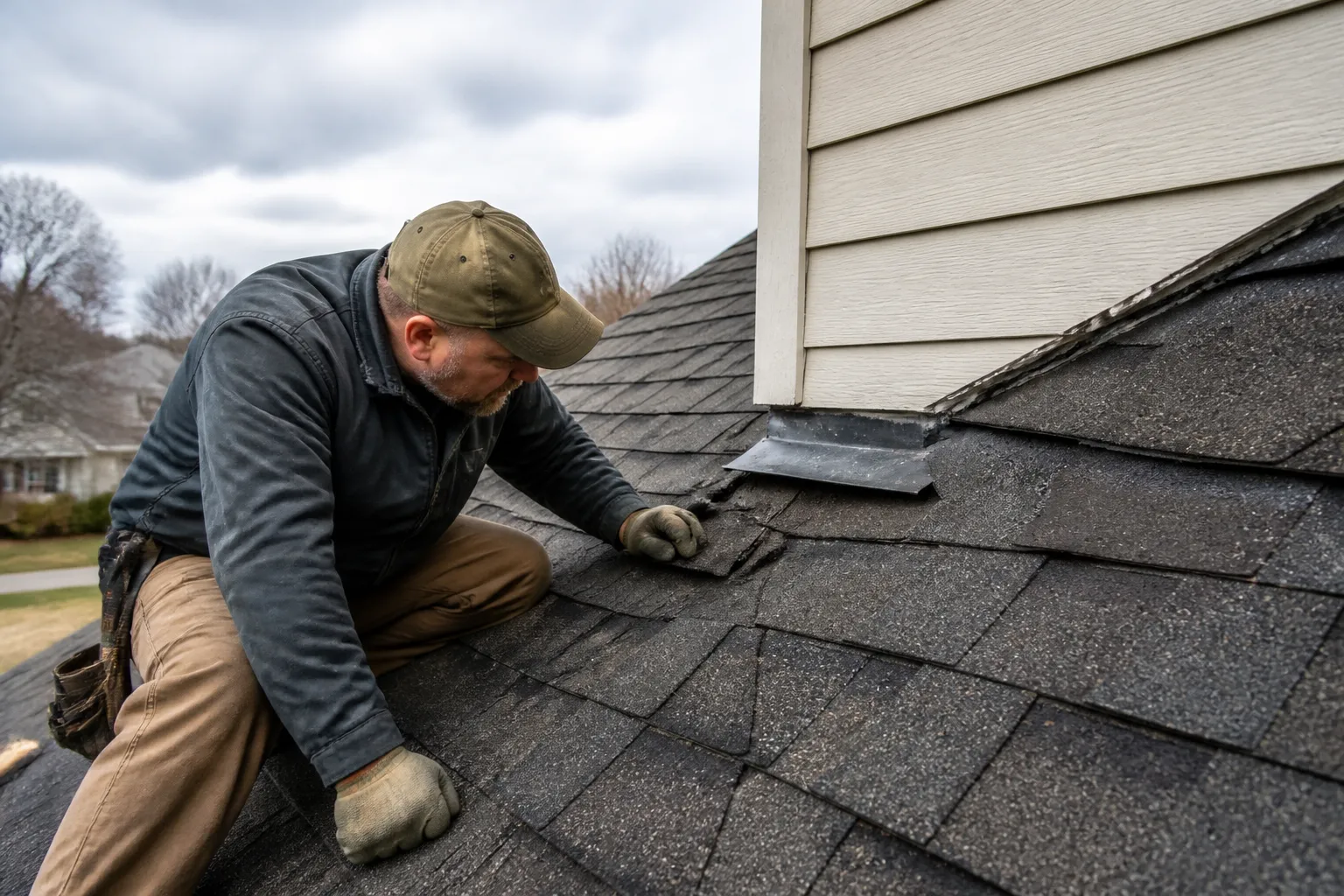
Roof repair begins with identifying the likely entry point and the condition of nearby materials. A focused assessment can help distinguish a localized issue from broader roof wear, recurring intrusion, or damage that deserves a replacement discussion. For area-specific information, visit the Fort Smith roofing hub. For an overview of repair options across Arkansas, see Roof Repair in Arkansas.
Water may travel beneath the roof covering or along framing before a ceiling stain or drip appears, so the visible mark cannot confirm where a leak began. Damaged shingles, flashing at transitions, seals around penetrations, and valleys are possible entry paths to investigate, not diagnoses from symptoms alone. When calling, report where water appears, when it happens, and any visible changes or earlier repairs. Photos from a safe indoor or ground-level position can help document conditions; do not climb onto the roof.
If the leak recurs, mention any earlier repair and whether the symptom returns under similar conditions. Do not enter unsafe attic spaces or climb onto wet, steep, or damaged roofing. If moisture is near electrical fixtures or a ceiling appears to sag, keep clear and describe the safety concern when requesting an assessment.
The review should connect the reported symptoms with roof details that may be involved. Depending on access and roof type, that can include shingles or other covering, flashing, penetrations, valleys, transitions, edges, and nearby drainage paths. For a commercial building, drains, rooftop equipment, and adjoining roof sections may also affect where water travels.
Ask what was observed, which areas were inspected, and how the suspected entry path relates to the interior signs. If there was earlier repair work, share what was addressed and whether the water returned in the same place. That history can help frame the next inspection and clarify whether the proposed work addresses the cause or only a visible symptom.
A useful written repair proposal identifies the roof area and components involved, the work to be performed, and any related materials or details included. Depending on the findings, the scope may address damaged shingles, replace or secure flashing, reseal a roof penetration, or correct more than one connected detail. The scope should also identify exclusions so it is clear which conditions are outside the proposed work.
When water intrusion has recurred, ask how the proposed approach differs from earlier repairs and what nearby materials will be checked. If concealed deterioration is possible, the written plan should explain how additional findings will be documented and discussed before the work changes. Clear boundaries make it easier to understand what the repair is intended to resolve.
A repair can be sensible when the cause is limited and the surrounding roof remains serviceable. Replacement deserves comparison when leaks recur in separate areas, visible wear extends across multiple roof sections, or repairs no longer address the roof’s overall condition. Missing or curling shingles can be relevant observations, but no single sign establishes that the entire roof needs replacement.
Ask for the observations supporting each option and compare a defined repair scope with a replacement scope. Consider the roof covering, flashing, penetrations, drainage, and any reported interior damage together. The roof repair or replacement guide offers questions for weighing those paths. For Fort Smith replacement details, see Roof Replacement in Fort Smith, AR.
Fort Smith properties include homes and buildings with different roof shapes, coverings, and uses, so the repair plan should be tied to the actual assembly rather than a generic checklist. Mention whether the building is occupied, where access is limited, and whether rooftop equipment, landscaping, or active work areas need consideration. Confirm any permit or inspection question with the office responsible for the property’s address, since requirements can depend on jurisdiction and project scope.
For storm-related leaks or visible damage, document conditions from a safe location and compare the observed areas with the work proposed. The guide to a roof leaking after a storm covers safe next steps and useful information to record. A request can include the property location, timing of the leak, previous repairs, and photos taken safely.
Not necessarily. Water may travel along roof decking or framing before it becomes visible indoors. An assessment should consider the stain together with nearby roof transitions, flashing, penetrations, and other possible entry paths.
The penetration’s surrounding flashing or boot, its connection to the roof covering, and nearby materials should be reviewed. The appropriate repair depends on the roof design and the condition observed.
Share where and when it returned and what prior work addressed. The next assessment should consider the repair history, adjacent details, and whether the original suspected entry path was fully addressed.
Compare the roof areas inspected, observations, work included, materials, exclusions, and how concealed conditions will be handled. Ask what evidence supports each option rather than comparing summary labels alone.
When requesting an assessment, include the property address and any access or occupancy considerations. To compare local roofing options, use the Fort Smith hub, or review Fort Smith roof replacement alongside this repair page.
What To Expect
Share your ZIP code, the service you are considering, and what you have noticed about the roof.
Discuss the observed condition, repair or replacement options, and proposed scope with the independent roofer, subject to local availability.
Review materials, work details, cleanup, exclusions, and any additional repairs before deciding how to proceed.
A Few Common Questions
Tell us where the property is and what your roof needs.
Roofing Estimate
Share the property ZIP code and the roofing service you need. The form uses the existing inquiry system.