Arkansas Roofing Guidance
Roof Replacement in Fort Smith, AR
Review roof condition, material choices, tear-off, decking, ventilation, property protection, cleanup, and written-proposal comparisons for Fort Smith properties.
Arkansas Roofing Guidance
Review roof condition, material choices, tear-off, decking, ventilation, property protection, cleanup, and written-proposal comparisons for Fort Smith properties.
Replacing a roof is a sequence of decisions about the existing assembly, the material to install, and how the property will be protected while work is underway. For a Fort Smith home or commercial building, begin with a condition assessment that identifies the roof areas reviewed, visible wear, recurring leaks, flashing and drainage details, and any concerns that may only become clear after removal.
A written scope makes it easier to understand what replacement includes and compare proposals on the same basis. The Fort Smith roofing hub covers local roofing options; for statewide replacement information, see Roof Replacement in Arkansas.
Assessment should consider more than the surface covering. Note the type and condition of shingles or other roofing, recurring water entry, flashing, roof penetrations, drainage, ventilation, and any visible uneven or deteriorated areas. For a commercial roof, building use, roof slope, drains, rooftop equipment, and the existing assembly can affect which systems and work methods are suitable.
Ask which observations support replacement rather than repair and which areas are included. A roof with a limited problem may still have a practical repair option; broader wear or recurring issues in multiple locations can make replacement worth comparing. The recommendation should explain the condition found, not rely on a general age statement or a single symptom.
Material choice depends on the roof’s shape and slope, the existing assembly, building use, and project requirements. Asphalt shingles may suit many residential roofs, while metal systems or commercial low-slope assemblies may be considered for appropriate designs. The proposed system should fit the structure and explain how edges, valleys, wall connections, penetrations, and drainage will be handled.
Ask what underlayment and flashing details are included and whether ventilation needs attention as part of the project. A material name alone does not describe the full roofing system. If the property is commercial or has sections with different slopes, clarify which system is proposed for each area and how transitions between sections will be finished.
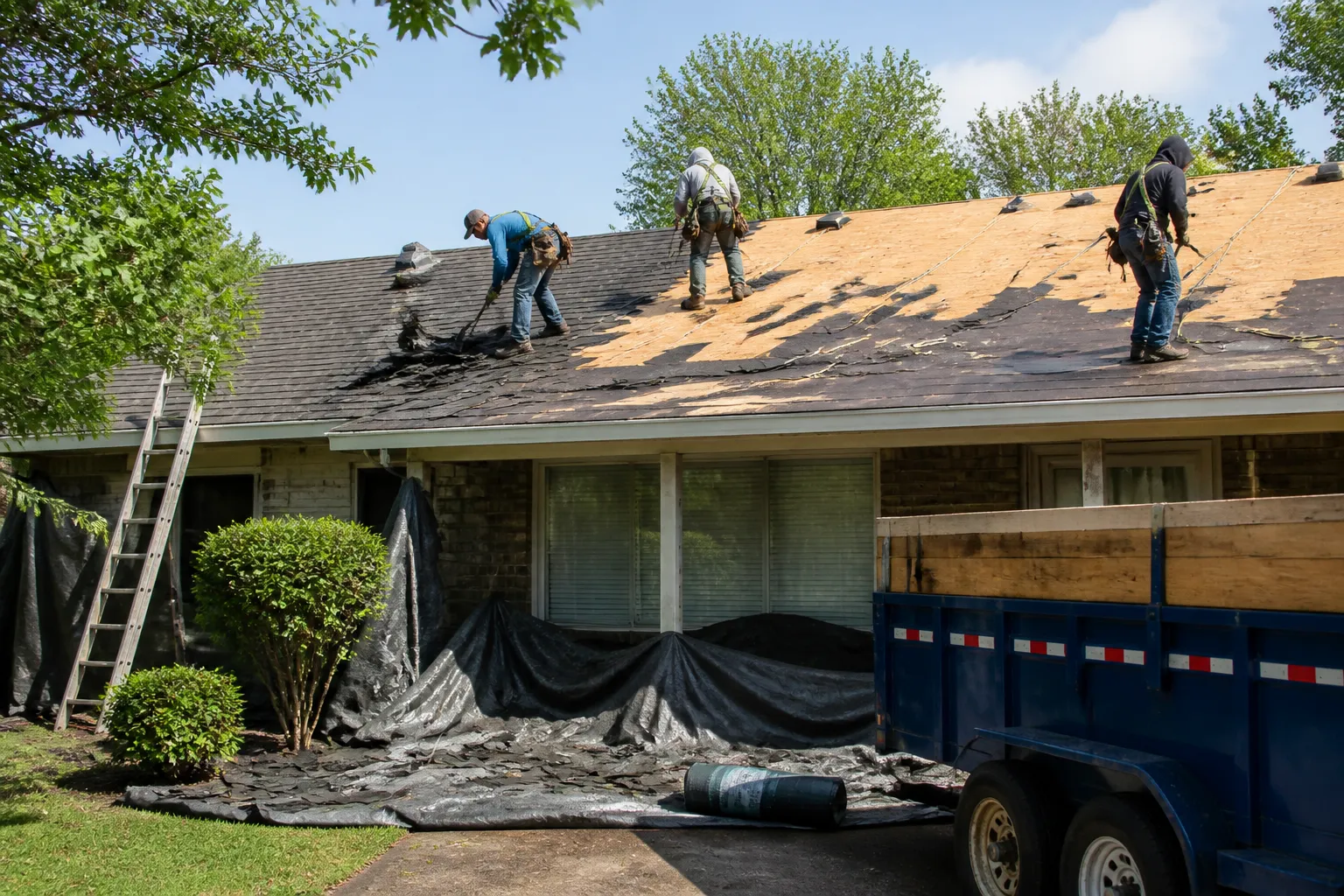
Many replacement scopes include removal of existing roofing so the deck can be examined before the new system is installed. The proposal should state what material will be removed, how debris will be handled, and how the exposed deck will be reviewed. If damaged or unsuitable decking is found, ask how its location and proposed additional work will be documented and approved before the scope changes.
Underlayment, edge details, flashing, and penetrations should be described alongside the main roof covering. The written plan should also identify how roof openings will be protected if weather interrupts work. These details help clarify the sequence from removal through installation rather than leaving the work boundaries implicit.
Property protection is part of project planning. Discuss how landscaping, walkways, vehicles, exterior equipment, and areas near the building will be protected from falling materials or debris. For occupied homes or businesses, clarify access routes, which areas may be affected, and how the work sequence can account for people using the property. Do not assume every building can be handled with the same staging plan.
Ventilation should be considered in relation to the roof assembly and building. Ask whether existing intake and exhaust openings are being retained, changed, or repaired, and what conditions support that decision. The proposal should also explain how debris will be collected, where materials will be staged, and what cleanup is included at the end of the work.
Compare proposals by matching the work area and components, not just the summary description. Look for a clear account of removal, decking review, underlayment, roof covering, flashing, penetrations, ventilation, property protection, debris handling, cleanup, exclusions, and how additional findings will be approved. If proposals use different materials or cover different roof sections, ask for clarification before comparing them.
The roofing estimate checklist offers a practical way to review written scopes. Fort Smith property owners should also confirm any permit or inspection questions with the office responsible for the property’s address; requirements can depend on jurisdiction and project scope. For repair-versus-replacement context, see Roof Repair in Fort Smith, AR.
It should identify the roof areas reviewed and discuss the covering, visible wear, leaks, flashing, penetrations, drainage, ventilation, and relevant building conditions. Ask which findings support replacement and whether a defined repair remains a reasonable comparison.
The deck is typically reviewed when existing roofing is removed, but whether any section needs repair or replacement depends on the condition found. Ask how additional decking work will be identified, documented, and approved.
Discuss access, staging, protected areas, rooftop equipment, and which sections will be worked on. A proposal can clarify the sequence and property-protection measures relevant to the building’s use.
Compare the included roof areas, materials, removal, decking process, underlayment, flashing, ventilation, protection, cleanup, exclusions, and how concealed conditions will be handled. Ask for clarification where scopes differ.
Share the property location, whether the building is residential or commercial, known leak history, prior repairs, and any areas with restricted access or active use. Note concerns about ventilation, drainage, or roof-mounted equipment. A clear assessment and itemized written proposal can help organize the decisions before work is scheduled.
For city-specific information, return to the Fort Smith roofing hub. Compare this page with Fort Smith roof repair guidance if the extent of work is still being evaluated.
What To Expect
Share your ZIP code, the service you are considering, and what you have noticed about the roof.
Discuss the observed condition, repair or replacement options, and proposed scope with the independent roofer, subject to local availability.
Review materials, work details, cleanup, exclusions, and any additional repairs before deciding how to proceed.
A Few Common Questions
Tell us where the property is and what your roof needs.
Roofing Estimate
Share the property ZIP code and the roofing service you need. The form uses the existing inquiry system.