Arkansas Roofing Guidance
Commercial Roofing in Conway, AR
Explore commercial roofing in Conway, Arkansas, including roof assessments, leaks, drainage, penetrations, maintenance, repair or replacement, and planning around occupied buildings.
Arkansas Roofing Guidance
Explore commercial roofing in Conway, Arkansas, including roof assessments, leaks, drainage, penetrations, maintenance, repair or replacement, and planning around occupied buildings.
A leak over a tenant space, water collecting near a drain, or deterioration around rooftop equipment can affect more than the roof itself. For a commercial property in Conway, the first step is a roof assessment that connects visible symptoms to the roof assembly, drainage paths, and the way the building is used.
Commercial Roofing in Arkansas connects property owners with independent roofing contractors. Contractors assess properties, provide estimates, and perform work. A useful written scope identifies the roof areas and details reviewed, explains the recommended work, and notes what could not be confirmed before the roof is opened.
Share information you already have to help frame the conversation. There is no need to climb onto or measure the roof; access and inspection should be arranged through the site contact and contractor.
When comparing proposals, look for the roof areas and details reviewed, work sequence, protection and debris handling, exclusions, and how concealed conditions or additional work would be documented and approved.
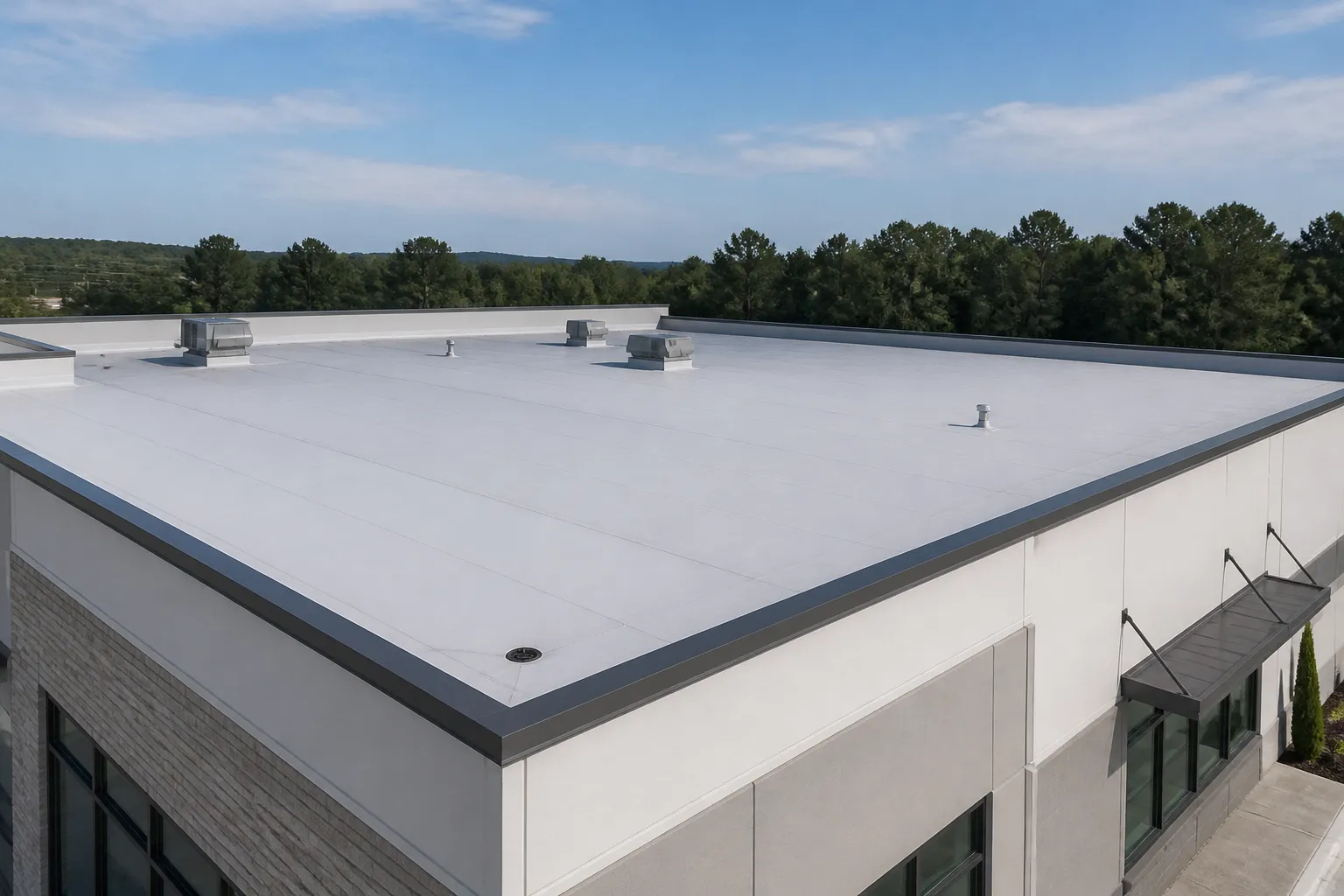
Leaks may develop at membrane seams, flashing transitions, roof edges, drains, scuppers, or penetrations for vents, piping, and mechanical equipment. A roof curb or pipe opening interrupts the roof surface and depends on properly integrated flashing. Ask which details were checked and how the proposed work addresses the suspected path of water.
Drainage should be considered as a system. Roof slope, drain locations, scuppers, gutters, and downspouts all influence how water leaves the building. Debris or a damaged drain component may contribute to a concern, but an assessment should distinguish a maintenance issue from a problem with the roof assembly or drainage design. Share observations about recurring ponding without assuming the cause.
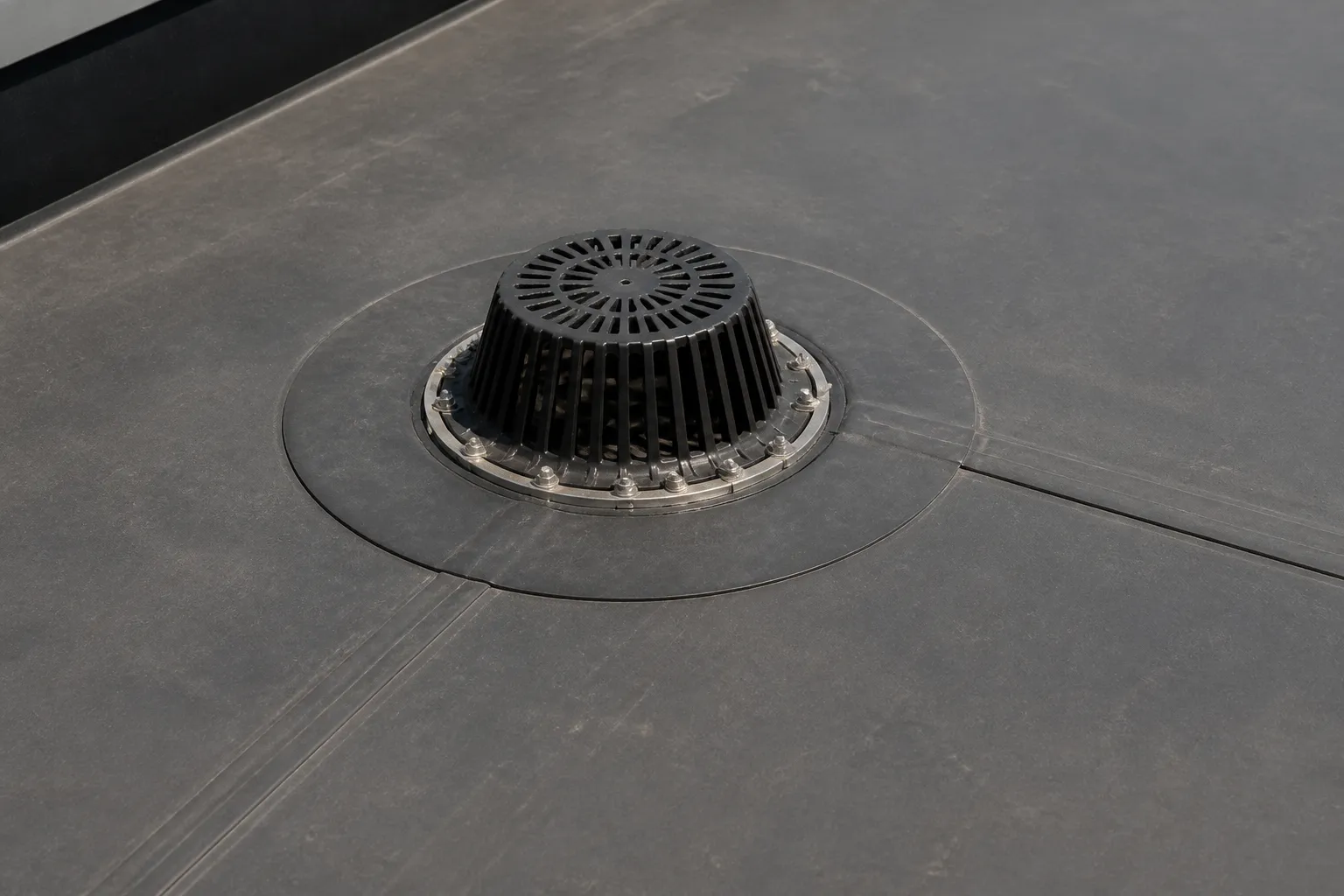
Where a membrane system is present, the proposal may need to identify the membrane type, seam or flashing areas, and any included drain work. Metal systems have different panel, fastener, seam, and transition details. The roof’s slope, existing assembly, building use, and project requirements determine which approaches are suitable; the availability of a particular system or service should be confirmed for the property.
Maintenance can document visible conditions, keep drainage components clear when included in the agreed scope, and identify details that may need attention. It does not guarantee that leaks will be prevented. Ask what areas are inspected, what observations are recorded, and whether the work includes cleaning, minor repairs, or only a condition report.
A focused repair may be reasonable when a concern is limited and the surrounding roof remains serviceable. Replacement may deserve consideration when deterioration is widespread, leaks recur in several areas, or repairs would leave significant portions of the assembly unresolved. Compare the findings and scope in writing: which roof sections are affected, what each option is intended to correct, and what limitations or future concerns remain.
Coatings are not a universal fix. Their suitability depends on the existing roof’s condition, assembly, preparation needs, drainage, and the project requirements. A coating proposal should explain the assessment behind the recommendation, preparation and repairs included, and limitations. It should not substitute for diagnosing active leaks or unsuitable underlying materials.
Share the affected rooms or units, when moisture appears, whether it follows rain, prior repair history, and safe photos from indoors. Site access and operating details can help with planning.
No. Coating suitability depends on the existing assembly, roof condition, preparation needs, drainage, and project requirements. Ask for the assessment findings, included repairs, and limitations before comparing options.
Compare both when damage is widespread, leaks recur in separate areas, or a localized repair may leave significant concerns unresolved. Ask what evidence supports each scope and what conditions would remain afterward.
Discuss access, occupied areas, operating hours, equipment, restricted spaces, site contacts, and notifications before work is planned. Confirm how the work area and sequence will be coordinated with those needs.
For broader questions about comparing written scopes, review the roofing estimate checklist. Conway property owners can also explore the Conway service-area page, statewide commercial roofing guidance, and local roof repair and roof replacement options.
To discuss a commercial roof concern or request an estimate, use the estimate form or the existing call-first controls.
What To Expect
Share your ZIP code, the service you are considering, and what you have noticed about the roof.
Discuss the observed condition, repair or replacement options, and proposed scope with the independent roofer, subject to local availability.
Review materials, work details, cleanup, exclusions, and any additional repairs before deciding how to proceed.
A Few Common Questions
Tell us where the property is and what your roof needs.
Roofing Estimate
Share the property ZIP code and the roofing service you need. The form uses the existing inquiry system.