Arkansas Roofing Guidance
Roof Replacement in Conway, AR
Compare roof condition, repair and replacement options, roofing materials, and the details to review in a written replacement estimate.
Arkansas Roofing Guidance
Compare roof condition, repair and replacement options, roofing materials, and the details to review in a written replacement estimate.
A roof replacement is a significant decision, especially when leaks, visible wear, or prior repairs raise questions about how much serviceable life remains. The right next step depends on the roof’s observed condition, the extent of affected areas, and whether a focused repair can reasonably address the problem. A clear assessment should explain those findings before a full replacement is proposed.
For a Conway home or business, comparing written scopes can help separate the materials and work actually included from broad descriptions. Review removal, roof-deck evaluation, flashing, ventilation, property protection, cleanup, and how concealed conditions will be handled before approving a project.
Consider the pattern of concerns, not just one symptom. Repeated leaks, widespread shingle deterioration, several damaged areas, or recurring repairs may support discussing replacement. A limited problem on an otherwise serviceable roof may still be a repair question. The assessment should identify where materials are worn or damaged and explain what repair would address, what replacement would include, and what concerns could remain under either option.
Ask how the recommendation follows from the roof’s condition. An estimate should distinguish observed facts from assumptions and note areas that cannot be confirmed until existing materials are removed. That makes it easier to compare a focused repair with a broader replacement plan without deciding based only on roof age or a ceiling stain.
Material selection should fit the building, roof shape, and priorities for appearance and maintenance. Asphalt shingles are a familiar option for many homes; metal roofing and other systems may also be considered when appropriate for the structure. For commercial buildings, the roof system and drainage design can make material comparisons different from residential choices.
Compare the specific products and system components named in each written proposal rather than comparing general labels alone. Ask what underlayment, edge details, flashing, and ventilation components are included. If a proposal leaves product or installation details unspecified, request clarification so the full scope can be understood before a decision.
Related reading: Metal Roofing vs. Asphalt Shingles. For the local service-area overview, see roofing in Conway. Compare this page with Roof Replacement in Arkansas and Roof Repair in Conway, AR.
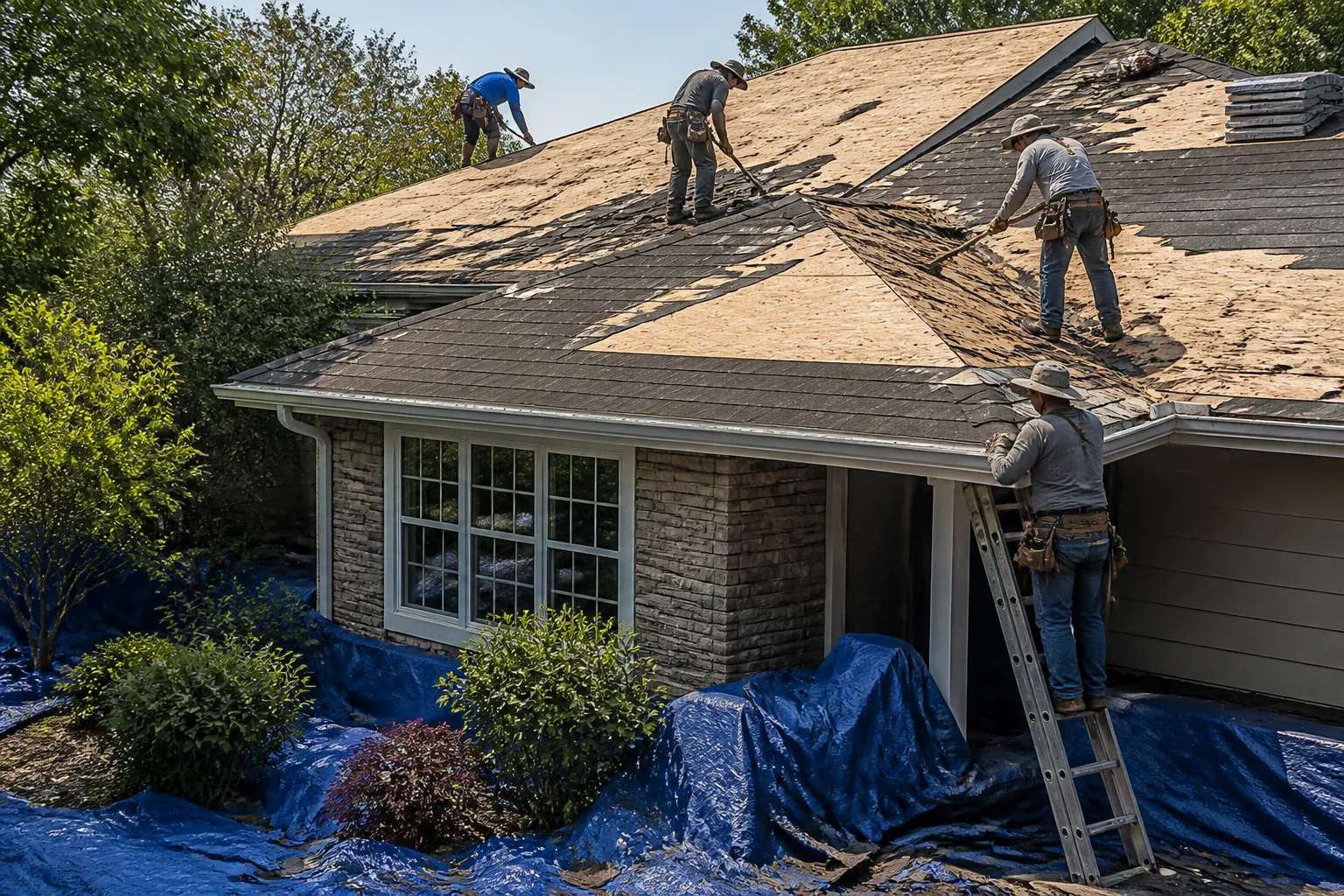
Replacement typically includes removing existing roofing materials so the roof deck can be examined before the new system is installed. The estimate should describe what layers will be removed and how the surface will be prepared. If the deck is concealed, no one can fully assess its condition from the exterior alone.
Ask how damaged or unsuitable decking will be documented once exposed. The written proposal should explain how additional work will be described, how any effect on the scope will be communicated, and how approval will be obtained before that extra work proceeds. Clarifying this process in advance helps avoid confusion when removal reveals a condition that was not visible during the initial assessment.
A replacement plan should address more than the visible roof covering. Flashing at roof edges, walls, valleys, and penetrations directs water through critical transitions. Ask whether existing flashing will be reused or replaced and which locations are included. Ventilation should also be considered as part of the roofing system, with the estimate identifying the planned work or stating when no change is proposed.
Before the project begins, confirm how nearby surfaces and property will be protected, how materials and debris will be managed, and what cleanup is included. Ask whether the proposal explains access, preparation, and removal of leftover roofing debris. These practical details help set expectations for the work without relying on assumptions.
Place proposals side by side and compare scope, not just the final summary. Look for the roofing materials and components specified, removal method, roof-deck assumptions, flashing and ventilation work, property protection, and cleanup. Also review exclusions, stated limitations, and the process for documenting concealed conditions.
A written estimate should explain the proposed work in terms that can be reviewed before approval. If important elements are unclear, ask for a written explanation or revised scope. A practical comparison helps show whether proposals cover equivalent work.
Compare both when roof wear or damage affects multiple areas, leaks recur, or repair work may not resolve the overall pattern. Ask for the observed condition, the scope of each option, and the issues that could remain after a repair.
Removal exposes the roof deck for review. Ask the estimate to explain how the deck will be assessed, how any concern will be documented, and how proposed additional work will be presented for approval before it proceeds.
Compare the actual products and components specified, their fit for the building and roof design, and the related flashing and ventilation details. Request clarification if a proposal names a general material type without identifying the planned system.
Review removal, materials, decking assumptions, flashing, ventilation, property protection, cleanup, exclusions, and the process for concealed conditions. Similar written scopes make differences between proposals easier to understand.
To discuss roof condition and request a written estimate, use the estimate form or the existing call-first controls.
What To Expect
Share your ZIP code, the service you are considering, and what you have noticed about the roof.
Discuss the observed condition, repair or replacement options, and proposed scope with the independent roofer, subject to local availability.
Review materials, work details, cleanup, exclusions, and any additional repairs before deciding how to proceed.
A Few Common Questions
Tell us where the property is and what your roof needs.
Roofing Estimate
Share the property ZIP code and the roofing service you need. The form uses the existing inquiry system.