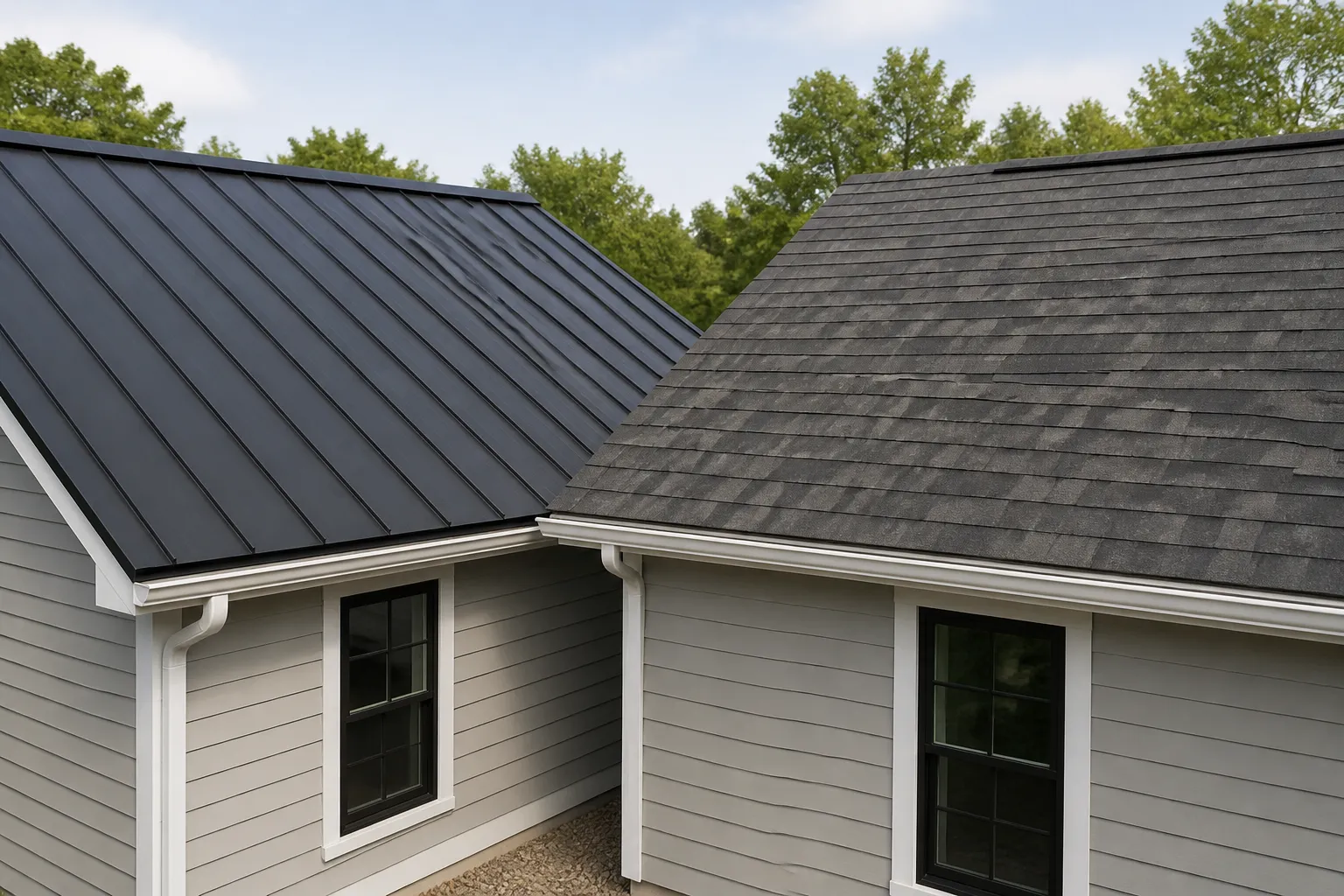
Choosing between metal roofing and asphalt shingles is not just a choice between two surface materials. Each category includes different products and installation systems, and the roof’s slope, shape, existing layers, and details affect what may suit the building. Compare the exact products and written work scopes rather than relying on a general claim about either material.
Start with the building and the roof condition
Before comparing products, clarify whether the work is a repair, a roof-over where appropriate, or a full replacement. The condition of the existing covering, deck, flashing, underlayment, and ventilation can change the scope. If a roof has recurring leaks or widespread deterioration, read Roof Repair or Replacement? How to Compare Your Options for questions that help frame that decision.
Roof shape also matters. Slope, valleys, hips, dormers, wall transitions, penetrations, and edges influence panel or shingle selection and detailing. A product that fits one roof design is not automatically suitable for another. Ask for the proposed system to be identified by product and installation instructions, and have the estimate explain how the roof’s actual features will be handled.
Initial cost is about the complete scope
Metal and asphalt proposals may differ in material selection, panel or shingle profile, underlayment, trim, fasteners, tear-off, decking work, and labor. Some metal systems have a higher initial project cost than some asphalt shingle options, but that comparison is not universal. Product grade, roof geometry, access, existing layers, and the work included can all change the total. No material name alone tells you the price or value of a specific project.
Compare written estimates for the same property and equivalent scope. Confirm whether removal and disposal are included, what happens if concealed deck damage is found, and whether flashing, ventilation, and cleanup are part of the proposal. A lower total may reflect a different product or excluded work rather than a like-for-like offer. The roofing estimate checklist covers details to line up before comparing totals.
Metal roofing includes different systems
Standing-seam systems use raised, interlocking panel seams. Depending on the product, panels may attach with concealed clips or other system-specific connections. Some clip-attached designs allow for panel movement as temperatures change, so clip type, spacing, substrate, and installation details matter. The Metal Construction Association’s standing-seam roof clips guide discusses selection and use of clips for these systems.
Exposed-fastener metal panels are attached through the panel with visible screws and sealing washers. The fastener type, placement, substrate, and sealing details form part of the weather-resistant assembly. Fasteners and washers also need inspection and maintenance appropriate to the product. The association’s fastener compatibility bulletin explains why appropriate fastener selection matters for profiled metal panels. Standing seam and exposed-fastener are not interchangeable labels for the same roof; proposals should name the system and its components.
Metal panel profiles, materials, finishes, and attachment methods vary. Some systems use a solid substrate; others may be designed for a different support arrangement. The Metal Construction Association overview of steep-slope metal roofing describes structural and architectural system categories. Use the selected manufacturer’s documents for the actual product rather than assuming that guidance for one system applies to every metal roof.
Asphalt shingles also come in product options
Asphalt shingles include different shapes, constructions, colors, and product specifications. The proposal should identify the shingle product, underlayment, starter and ridge components, flashing approach, and other accessories that are included. Ask whether any alternate product or color could be substituted and how that would be documented before the work is changed.
Roof slope can affect which products and installation methods are appropriate. For example, the Asphalt Roofing Manufacturers Association guidance on lower-sloped roofs explains that additional procedures apply in certain slope ranges and that product instructions should be consulted. This is one reason to compare the specific shingle and installation plan, not only the broad category “asphalt.”
Appearance, ventilation, and condensation
Metal can provide a linear panel appearance, while shingles create a layered, granular surface. Both categories have style and color variations. Consider how the selected product will look with the building’s proportions, trim, and existing architectural details. Request samples or manufacturer product information when appearance is important, and confirm that the product shown in the proposal matches the selection.
Ventilation and moisture control are assembly questions, not simple properties of a roof-covering material. The attic or enclosed roof space, insulation, air movement, interior moisture, and underlayment all matter. Changing the outer covering does not by itself correct a ventilation or condensation problem. Ask what existing conditions were reviewed, which ventilation components are included or retained, and how the proposed assembly follows product instructions. ARMA’s attic ventilation guidance for asphalt shingle systems describes balanced intake and exhaust as part of an effective ventilation system. Metal installations also need product- and building-specific moisture planning; do not assume a metal panel prevents condensation.
Maintenance, repair, and warranty questions
Maintenance needs depend on the exact products and installation. For metal, ask what periodic checks are recommended for seams, exposed fasteners, sealants, penetrations, edges, and the finish. A repair may require compatible components and knowledge of the specific panel profile. For shingles, ask how damaged pieces, flashing, and nearby materials would be evaluated and whether a proposed repair can be matched to the existing product.
Read material and workmanship warranty documents separately. Coverage, exclusions, maintenance conditions, transfer terms, and claim procedures vary by product and provider. Do not assume a warranty lasts for a particular period or covers every leak or installation condition because a proposal uses a broad phrase such as “lifetime.” Ask for the actual documents and confirm which products and scope they apply to.
Comparison at a glance
| Factor | Metal roofing | Asphalt shingles |
|---|---|---|
| System choices | Standing-seam and exposed-fastener systems, among other profiles; components and details vary. | Different shingle products, designs, colors, and system accessories. |
| Initial project cost | Depends on panel system, product, roof geometry, preparation, and included details. | Depends on shingle product, roof geometry, preparation, and included details. |
| Appearance | Panel lines and profiles create a distinct metal-roof look; finishes vary. | Layered shingle appearance with product-dependent shapes and colors. |
| Installation questions | Clarify panel attachment, seams, fasteners, trim, slope suitability, and movement details. | Clarify product, slope-specific instructions, fastening, underlayment, and accessories. |
| Maintenance and repair | Ask what checks apply to seams, fasteners, coatings, and system-specific parts. | Ask how damaged shingles and connected roof details will be assessed and repaired. |
Questions to ask when comparing proposals
- What exact product, profile, finish, and accessories are included?
- Is the proposed system suitable for this roof’s slope, shape, substrate, and existing conditions?
- What removal, disposal, underlayment, flashing, ventilation, and cleanup work is included?
- How will concealed decking damage or other unexpected conditions be documented, priced, and approved?
- Which items are excluded, and what substitutions could be made?
- What separate material and workmanship warranty documents apply?
- How do the two written scopes differ, apart from their totals?
The better choice depends on the building, budget, specific products, and installation details—not the material name alone.
Metal roofing and asphalt shingle FAQs
Is metal roofing always more expensive at the start?
No general rule can determine the cost of a particular project. Compare written estimates for the same roof areas, system scope, products, removal, flashing, ventilation, and allowances. Ask for clarification wherever the scopes differ.
What is the practical difference between standing-seam and exposed-fastener metal roofing?
Standing-seam panels join at raised seams and may use concealed clips or system-specific connections. Exposed-fastener panels are attached through the panel with visible fasteners and washers. The exact design, details, and maintenance instructions depend on the product selected.
Can either material be used on any roof slope?
No. Product suitability and installation methods can depend on slope and roof design. Ask for the selected manufacturer’s instructions and a written explanation of how the proposed product is appropriate for the building.
Does choosing metal or shingles solve condensation or ventilation problems?
Not by itself. Moisture control depends on the complete roof assembly and building conditions, including ventilation, insulation, and interior moisture. Ask what was evaluated and what ventilation or moisture-control work, if any, is included.
Related guides and services
Explore the Roofing Resources hub, compare repair and replacement options, or review the roofing estimate checklist. For statewide service information, visit Metal Roofing in Arkansas and Roof Replacement in Arkansas.