Arkansas Roofing Guidance
Commercial Roofing in Russellville, AR
Review commercial roof leaks, drainage, penetrations, maintenance, repair, and replacement planning for Russellville properties.
Arkansas Roofing Guidance
Review commercial roof leaks, drainage, penetrations, maintenance, repair, and replacement planning for Russellville properties.
A leak over a work area, standing water near a drain, or deterioration around rooftop equipment can affect daily operations as well as the roof itself. Commercial roof planning in Russellville starts with identifying the roof assembly, documenting the affected areas, and understanding how the building is used before comparing repair or replacement scopes.
Describe when a leak appears, which rooms or areas are affected, and whether the issue has returned after earlier work. A written assessment should connect observed conditions to the recommended work, identify assumptions, and distinguish immediate repair needs from longer-term planning. For a local overview, see roofing options in Russellville.
Share what you already know about the building; do not climb up or try to measure the roof. Details that may help include:
Photos taken indoors or from a safe ground-level location can help show visible conditions. The assessment should note what was observed and any roof areas that could not be accessed.
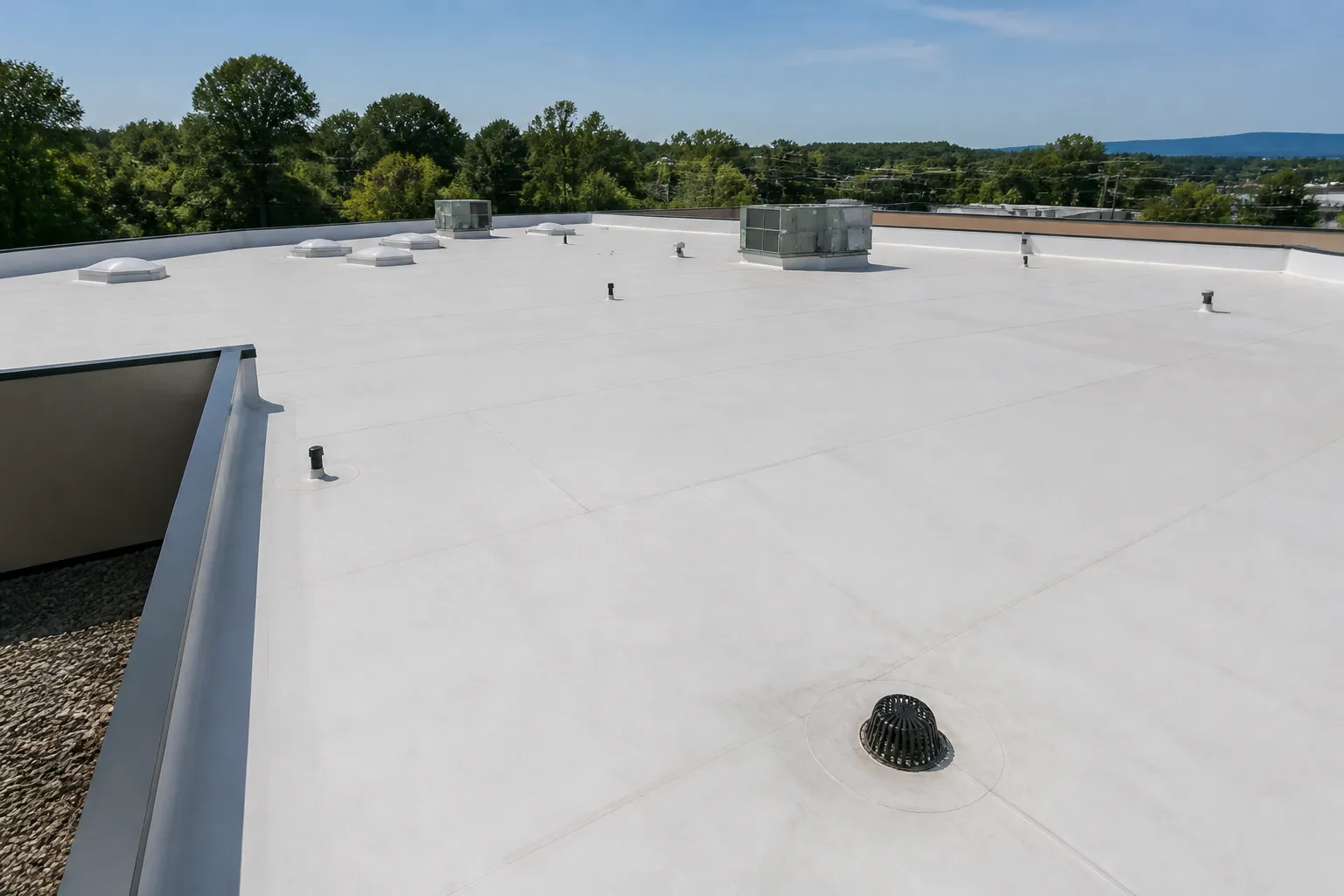
Commercial leak investigations commonly consider seams, flashing, roof edges, drains, scuppers, curbs, and openings for vents, piping, or mechanical equipment. A drain that is obstructed or a transition that no longer sheds water as intended may affect more than one roof area. The assessment should distinguish visible symptoms from confirmed causes and explain what additional access or inspection is needed.
Penetrations interrupt the roof surface and rely on compatible flashing and careful transitions. When equipment, piping, or other rooftop items have been added or changed, note that history. Work around those details should account for the roof covering and the condition of adjacent materials instead of treating each opening as an isolated patch.
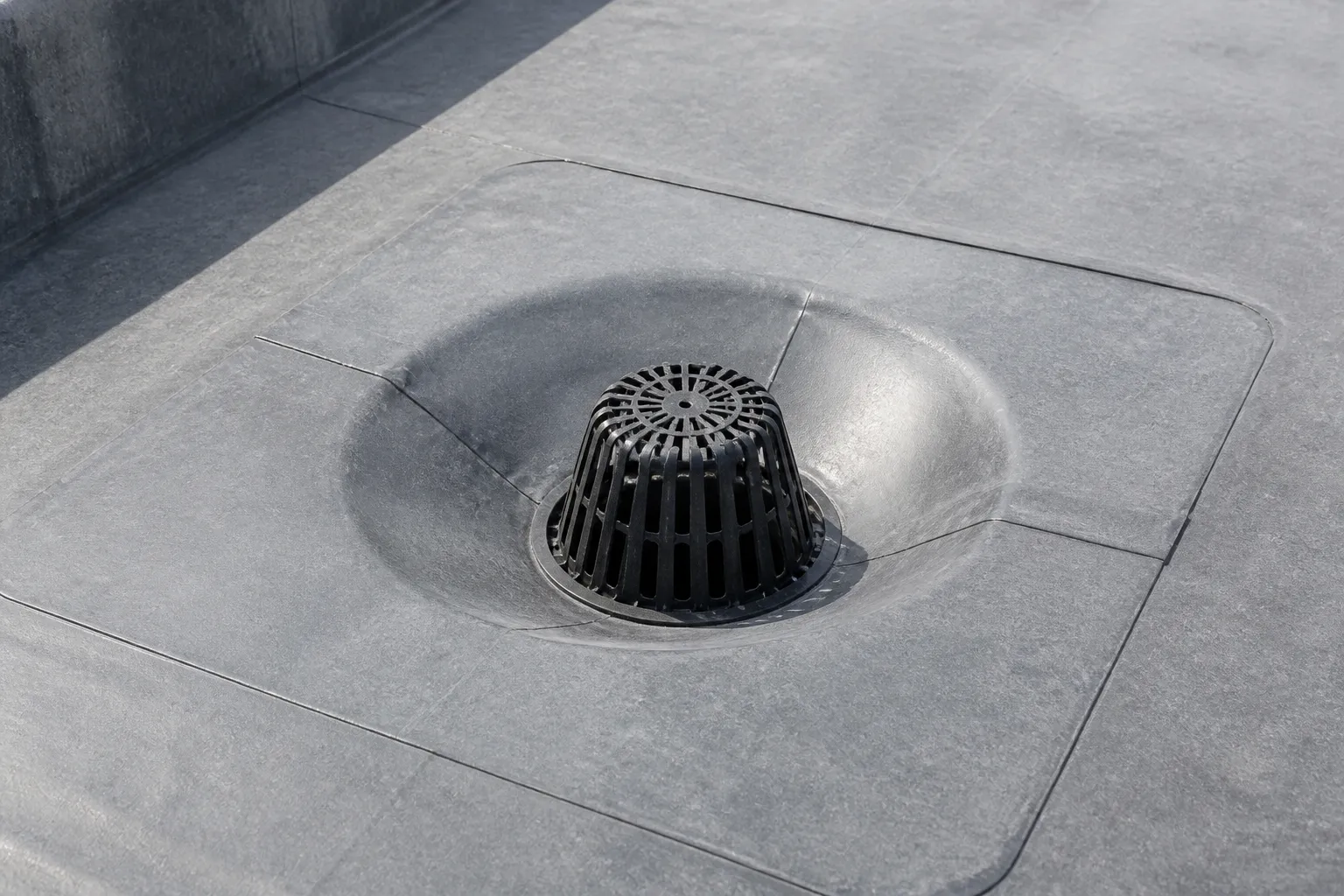
Periodic attention to drains, seams, flashing, roof edges, and penetrations can help document changing conditions and identify items for follow-up. A maintenance review is not a promise that leaks will not occur. Ask what areas were checked, what was observed, and which findings call for repair, monitoring, or further evaluation.
A localized issue with a defined cause may be considered for repair. Widespread wear, repeated leaks in different areas, or extensive deterioration of the existing assembly may prompt a comparison with replacement. Neither roof age nor a single leak alone establishes which choice is appropriate. Request written alternatives that describe the areas addressed, the limitations of each option, and what remains outside the proposed scope.
Commercial roof systems are not interchangeable. Membrane and metal options may be considered depending on roof slope, the existing assembly, building use, and project requirements. A membrane system may suit some low-slope assemblies; metal systems have their own panel, seam, edge, and attachment requirements. A proposal should identify the system being considered and explain how its details fit the building rather than implying that a particular product is suitable for every roof.
Roof coatings also require a careful assessment. Existing material, moisture, surface preparation, drainage, and the condition of seams and details can affect whether a coating is appropriate. A coating is not a universal fix for leaks, concealed damage, or an unsuitable assembly. Ask what conditions support its use, what preparation is included, and what problems it would not address.
Once access and schedule limits are understood, discuss sequencing, entrances, tenant or staff circulation, delivery areas, rooftop equipment, and sensitive interior spaces. The project plan should identify affected work areas, expected property preparation, and how scope changes will be communicated.
For comparison, ask each written proposal to identify roof sections, preparation or removal, drainage and penetration details, materials, property protection, cleanup, exclusions, and how concealed conditions are handled. The roofing estimate checklist offers questions for reviewing scope details. For other Russellville options, see local roof repair and roof replacement. The statewide commercial roofing overview provides broader context, while metal roofing in Russellville covers that system category.
It should describe the roof assembly and affected areas, review drainage, seams, edges, penetrations, and visible conditions, and explain the basis and limits of the recommended scope.
Not by itself. The drainage path, roof slope, drain condition, membrane or panel assembly, and duration or location of water should be assessed before deciding what work is appropriate.
No. Suitability depends on the existing assembly and its condition, including moisture, surface preparation, seams, and drainage. An assessment should identify why a coating is proposed and what it will not resolve.
Discuss access, operating hours, entrances, tenant or staff movement, equipment, and sensitive areas in advance. Ask that the proposal explain affected areas, preparation, protection, and communication about scope changes.
What To Expect
Share your ZIP code, the service you are considering, and what you have noticed about the roof.
Discuss the observed condition, repair or replacement options, and proposed scope with the independent roofer, subject to local availability.
Review materials, work details, cleanup, exclusions, and any additional repairs before deciding how to proceed.
A Few Common Questions
Tell us where the property is and what your roof needs.
Roofing Estimate
Share the property ZIP code and the roofing service you need. The form uses the existing inquiry system.