Arkansas Roofing Guidance
Commercial Roofing in Springdale, AR
Explore commercial roofing in Springdale, AR, with guidance on roof assessments, leaks, drainage, maintenance, repairs, and system selection.
Arkansas Roofing Guidance
Explore commercial roofing in Springdale, AR, with guidance on roof assessments, leaks, drainage, maintenance, repairs, and system selection.
A commercial roof problem can affect occupied space, equipment, inventory, and normal building use. A ceiling stain, recurring drip, ponding water, or concern around a roof opening deserves an assessment that looks beyond the visible symptom. For properties in Springdale, the useful starting point is a clear account of when the issue appears, which areas are involved, and how the building is used.
Commercial roofs differ in slope, assembly, access, drainage, and rooftop equipment. An assessment should identify what was observed, what remains uncertain, and which roof areas a proposed scope addresses. For broader local guidance, see the Springdale roofing hub or the statewide commercial roofing overview.
Water inside does not always appear directly below its entry point. It may travel across a roof deck, framing, insulation, or other assembly layers before reaching a ceiling or wall. Note when the leak appears, whether wind or rainfall changes the symptom, and which rooms or business areas are affected. A safe interior photo or written location note can help define the area for review.
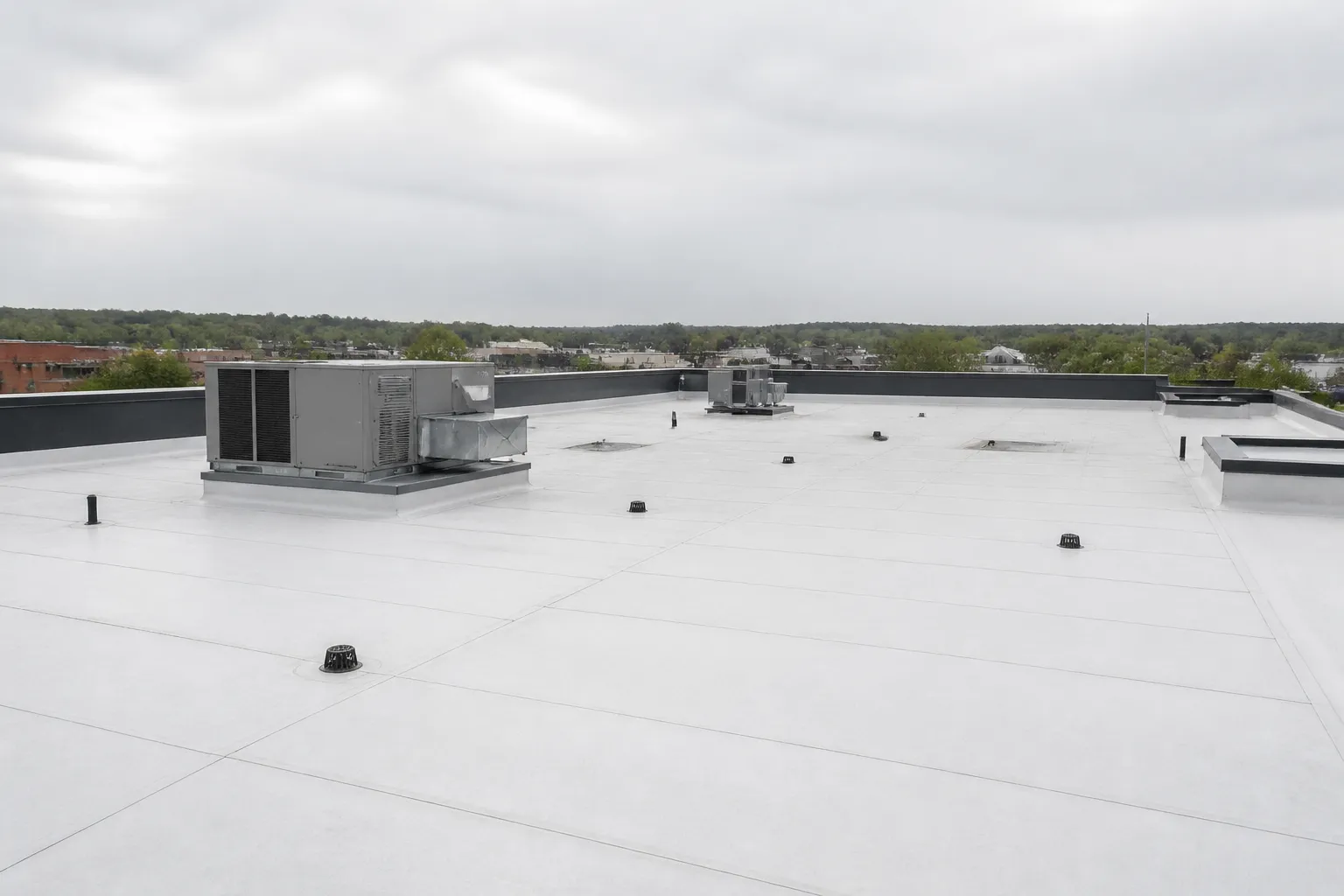
A roof assessment should consider the main roof surface and its transitions. Relevant details can include seams, edge conditions, roof-to-wall flashing, drains, scuppers, equipment curbs, vents, pipes, and other penetrations. For low-slope sections, drainage paths and areas where water collects merit attention. The written findings should distinguish visible conditions from suspected causes and explain what would need further investigation.
Drains, scuppers, gutters, and slopes guide water away from the roof. Debris, damaged components, or an unsuitable drainage path may contribute to standing water or water entry, but the cause should be assessed rather than assumed. A useful scope names the affected drain or edge, the observed condition, and the proposed work. It should clarify whether nearby membrane, flashing, or interior areas are included.
Mechanical equipment, pipes, vents, and rooftop supports interrupt the roof surface and require compatible flashing and secure transitions. When a leak appears near one of these features, the assessment should examine the surrounding roof assembly as well as the visible seal. Repeatedly applying surface material without identifying the entry route may leave the original condition unresolved.
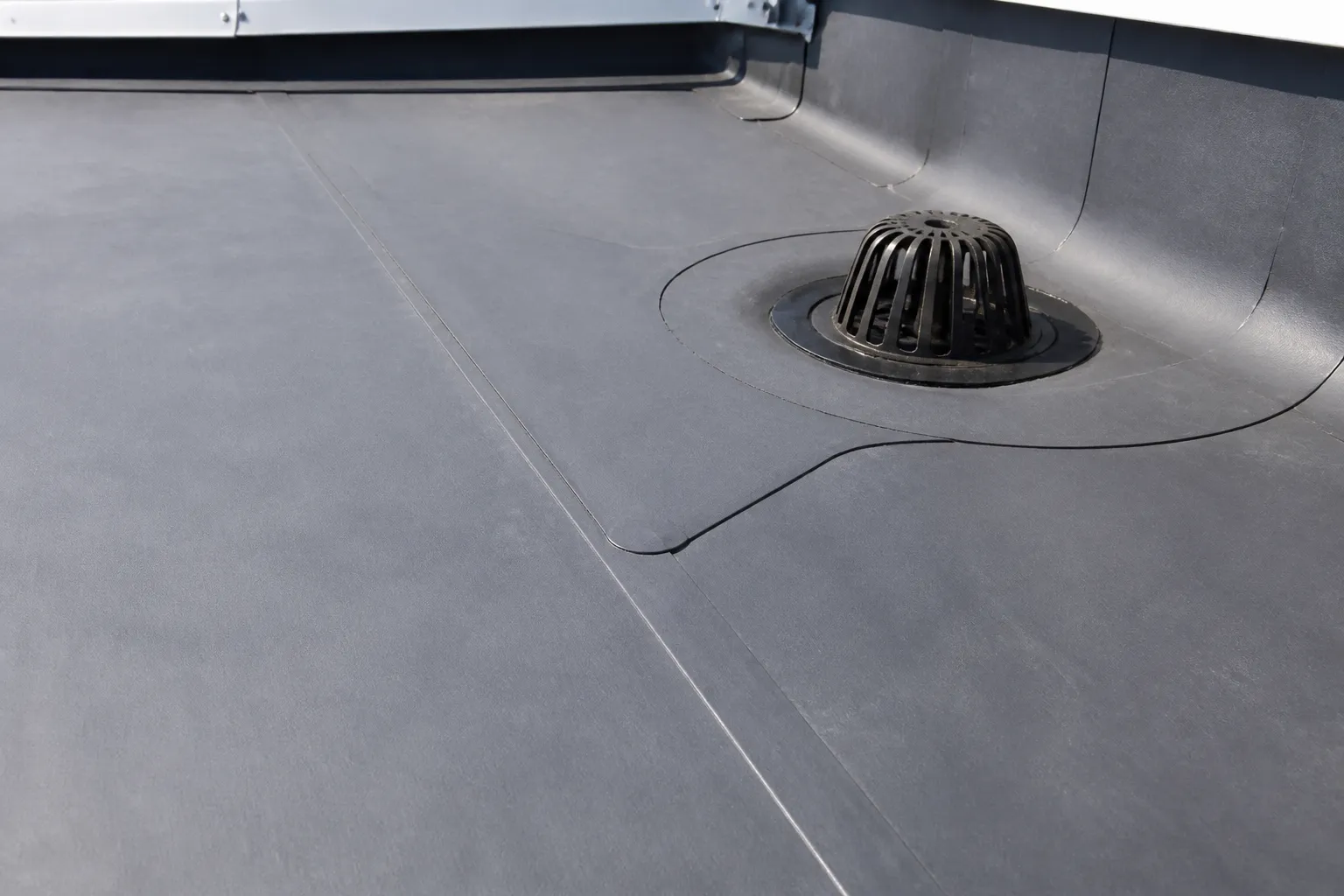
Membrane and metal systems may be considered for commercial work, but neither should be treated as universally suitable or automatically available. System selection depends on roof slope, the existing assembly, building use, drainage, rooftop equipment, and the requirements of the project. The proposal should identify the system under consideration and explain how edges, seams, penetrations, and transitions will be handled.
Membrane assemblies have seams and flashing details that need to suit the roof and its use. Metal systems may use standing-seam or exposed-fastener panels, with different attachment and transition details. The name of a material alone does not show whether the full assembly fits the building. Ask what preparation, underlayment or other layers, attachment, and detail work are included.
Roof coatings also require a condition assessment. Existing layers, moisture, drainage, adhesion, and the project objective affect whether a coating is even appropriate. A coating is not a universal fix for leaks, damaged assemblies, or neglected drainage, so the scope should explain its purpose and limits.
Repair may be considered when a concern is localized and the surrounding roof system can support a defined repair. Replacement deserves comparison when deterioration is widespread, similar leaks recur across different areas, or the assembly has several unresolved issues. A written recommendation should cite observed conditions and explain what each option would address and leave in place.
Maintenance reviews can document visible conditions, drainage, seams, flashing, penetrations, and areas that may need attention. They are not a promise that future leaks will be prevented. Compare proposals for the same roof sections and check the stated scope, exclusions, assumptions about concealed conditions, debris handling, and cleanup. The guide on comparing roof repair and replacement offers practical questions for evaluating options. Local pages for Springdale roof repair and Springdale roof replacement describe those scopes in more detail.
When contacting All Arkansas Roofing about a Springdale property, start with the building address, its use, and the site contact. Include an approximate roof size and existing system only if known. Describe leak locations and timing, previous repairs, and records you already have; there is no need to climb onto the roof or measure it yourself.
Also share the known roof-access arrangements and site procedures, rooftop equipment and any areas that need protection, plus occupancy, operating hours, and scheduling restrictions. The written proposal should state its access assumptions, work areas, protection, disposal, cleanup, and how concealed conditions or scope changes will be reviewed. Springdale’s Building Department publishes residential and commercial permit application resources, but those forms do not establish whether a particular repair requires a permit. Confirm the property jurisdiction and project scope with the responsible City office before work begins; consult the current Springdale Building Department forms and documents for published resources.
Share when the leak occurs, the rooms or building areas involved, any visible interior changes, and whether the issue follows particular weather. Note nearby drains, equipment, or roof openings if known, without assuming they are the source.
The assessment considers how water moves across and off the roof, including slopes, drains, scuppers, edges, and nearby seams or flashing. The findings should identify the specific condition and proposed scope instead of relying on a general drainage concern.
No. A coating requires an assessment of the existing assembly, moisture, surface condition, drainage, and project goals. It should not be presented as a universal solution for leaks or roof deterioration.
Compare the observed roof condition, areas included, materials and details, assumptions about concealed layers, exclusions, and what concerns would remain after each option. Request written explanations for the recommendation.
Use the estimate form to describe the Springdale property, roof concern, occupied-building needs, and any known access considerations.
What To Expect
Share your ZIP code, the service you are considering, and what you have noticed about the roof.
Discuss the observed condition, repair or replacement options, and proposed scope with the independent roofer, subject to local availability.
Review materials, work details, cleanup, exclusions, and any additional repairs before deciding how to proceed.
A Few Common Questions
Tell us where the property is and what your roof needs.
Roofing Estimate
Share the property ZIP code and the roofing service you need. The form uses the existing inquiry system.