Arkansas Roofing Guidance
Roof Replacement in Springdale, AR
Learn what to compare for roof replacement in Springdale, AR, including roof condition, materials, tear-off, decking, ventilation, property protection, cleanup, and itemized proposals.
Arkansas Roofing Guidance
Learn what to compare for roof replacement in Springdale, AR, including roof condition, materials, tear-off, decking, ventilation, property protection, cleanup, and itemized proposals.
A roof replacement affects more than the visible covering. Before selecting material or setting a work scope, the roof should be reviewed for wear, prior repairs, moisture concerns, flashing, ventilation, drainage, and the condition of the deck beneath the existing roof. In Springdale, a useful proposal explains what was observed and separates confirmed conditions from items that can only be assessed after removal.
Homes and commercial buildings have different roof shapes, access needs, operations, and assemblies. Comparing itemized written proposals makes it easier to see whether each option includes the same preparation, materials, details, protection, and cleanup. For local roofing guidance across property types, start with the Springdale roofing hub.
A replacement review should cover more than visible shingle wear. Look at slopes, valleys, ridges, eaves, roof-to-wall transitions, penetrations, and flashing around vents, chimneys, skylights, or equipment. Signs such as recurring leaks, widespread material damage, or repeated patching can be reasons to compare a broader scope, but the recommendation should explain the observed conditions behind it.
Ask whether the proposal accounts for existing layers and how removal will expose the roof deck. Decking assumptions matter because concealed deterioration cannot always be confirmed beforehand. The estimate should say how affected areas will be recorded, how any additional work will be discussed, and what must be approved before scope or materials change.
Asphalt shingles and metal roofing are different system choices, not interchangeable labels. Roof slope, geometry, structural details, underlayment, flashing, ventilation, attachment, and the surrounding assembly all affect whether a particular product is suitable. On commercial buildings, the existing roof assembly, drainage, rooftop equipment, building use, and project requirements also shape the comparison.
For metal, clarify whether the proposed system uses standing-seam or exposed-fastener panels and how its fasteners, seams, edges, and penetrations are detailed. For any covering, compare the specified product and components rather than relying on a generic material name. The statewide roof replacement overview and roof repair or replacement guide can help organize questions before reviewing proposals.
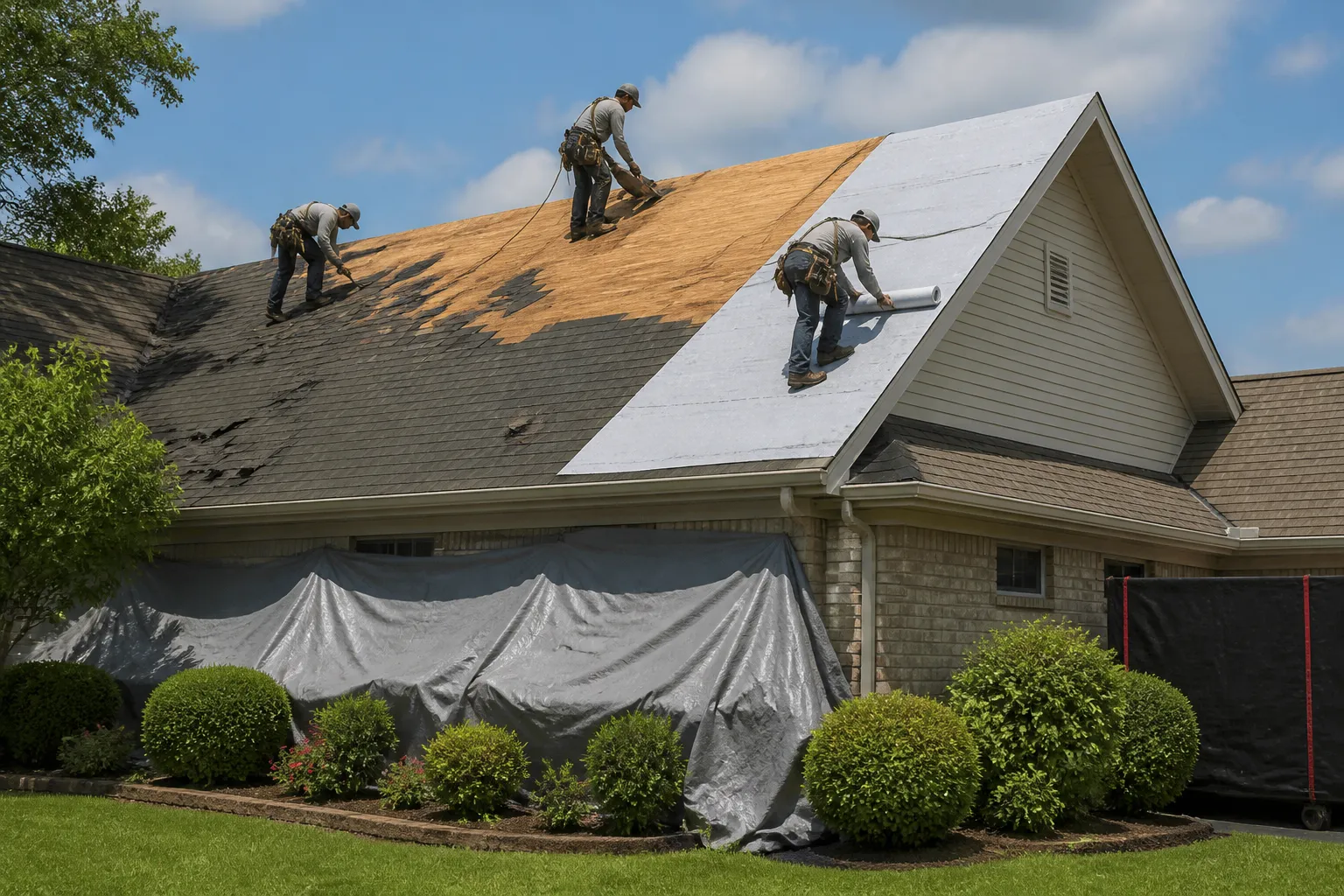
A written scope should identify what existing roofing will be removed and whether disposal is included. It should describe the planned underlayment, edge treatment, flashing, and the assumptions for the roof deck. Removal can reveal conditions that were not visible during the initial review, so ask how photographs, findings, proposed changes, and authorization will be handled.
Deck preparation is important because the new covering depends on a suitable surface and secure attachment. Ask which areas are included in the stated scope and how any deck repair is documented. Avoid comparing proposals solely by the top-layer product if one option describes the layers beneath it and another leaves those details unclear.
Ventilation should be reviewed as part of the roof assembly, not treated as an afterthought. A proposal should explain whether existing intake and exhaust components are being retained, adjusted, or replaced and how that decision relates to the roof design. Changes to ventilation or other building components should be clearly identified rather than assumed.
Before work begins, discuss protection for landscaping, walkways, entries, vehicles, outdoor equipment, and nearby surfaces. For an occupied business, clarify access routes, work zones, customer or employee entrances, rooftop equipment, and operating constraints. The proposal should describe debris handling, magnet or ground cleanup if included, final site review, and how the sequence will be communicated.
Ask each provider to describe the same roof areas and state the material system, removal, underlayment, flashing, ventilation, decking assumptions, protection, disposal, and cleanup. Review exclusions, allowances, and how concealed conditions or scope changes are approved. Make sure the estimate identifies penetrations and transitions instead of referring only to the main roof field.
The City of Springdale Building Department publishes residential and commercial permit application resources. The forms list alone does not establish whether a particular reroofing project requires a permit. Confirm the property’s jurisdiction and specific project scope with the responsible City office. The City’s Building Department forms and documents page provides a place to locate its current resources.
Compare roof slope and shape, the existing assembly, underlayment, flashing, penetrations, ventilation, drainage, and the building’s use. The proposal should identify the actual product and components so the options can be evaluated on the same basis.
The roof deck is beneath the existing covering and may not be fully visible until removal. A clear estimate states its assumptions and explains how concealed conditions will be documented and approved if they affect the work.
Look for specific descriptions of landscaping and entry protection, debris handling, disposal, cleanup, and any final site review. Occupied properties should also discuss access, work zones, and operating constraints.
Compare both options when damage or wear affects multiple areas, leaks recur, or the proposed repair would leave significant concerns unresolved. Ask what each scope addresses and what condition would remain afterward.
Share the property type, roof concerns, and questions about the proposed scope through the estimate form to begin a Springdale replacement discussion.
What To Expect
Share your ZIP code, the service you are considering, and what you have noticed about the roof.
Discuss the observed condition, repair or replacement options, and proposed scope with the independent roofer, subject to local availability.
Review materials, work details, cleanup, exclusions, and any additional repairs before deciding how to proceed.
A Few Common Questions
Tell us where the property is and what your roof needs.
Roofing Estimate
Share the property ZIP code and the roofing service you need. The form uses the existing inquiry system.