Arkansas Roofing Guidance
Roof Repair in Springdale, AR
Explore roof repair in Springdale, AR, including leak diagnosis, shingle and flashing damage, recurring water intrusion, repair scope, and when to compare replacement.
Arkansas Roofing Guidance
Explore roof repair in Springdale, AR, including leak diagnosis, shingle and flashing damage, recurring water intrusion, repair scope, and when to compare replacement.
A ceiling stain or damp wall can appear well away from the point where water enters a roof. In Springdale, a useful repair assessment starts by following the clues: when the mark appears, whether it changes after wind-driven rain, and which roof areas or interior rooms are affected. The visible symptom matters, but it should not be mistaken for a confirmed source.
Roof coverings, slopes, flashing details, penetrations, and prior repairs vary from property to property. A clear repair proposal identifies the suspected entry point, explains what will be opened or repaired, and states what nearby areas are outside the scope. For a wider view of local roof options, see the Springdale roofing hub.
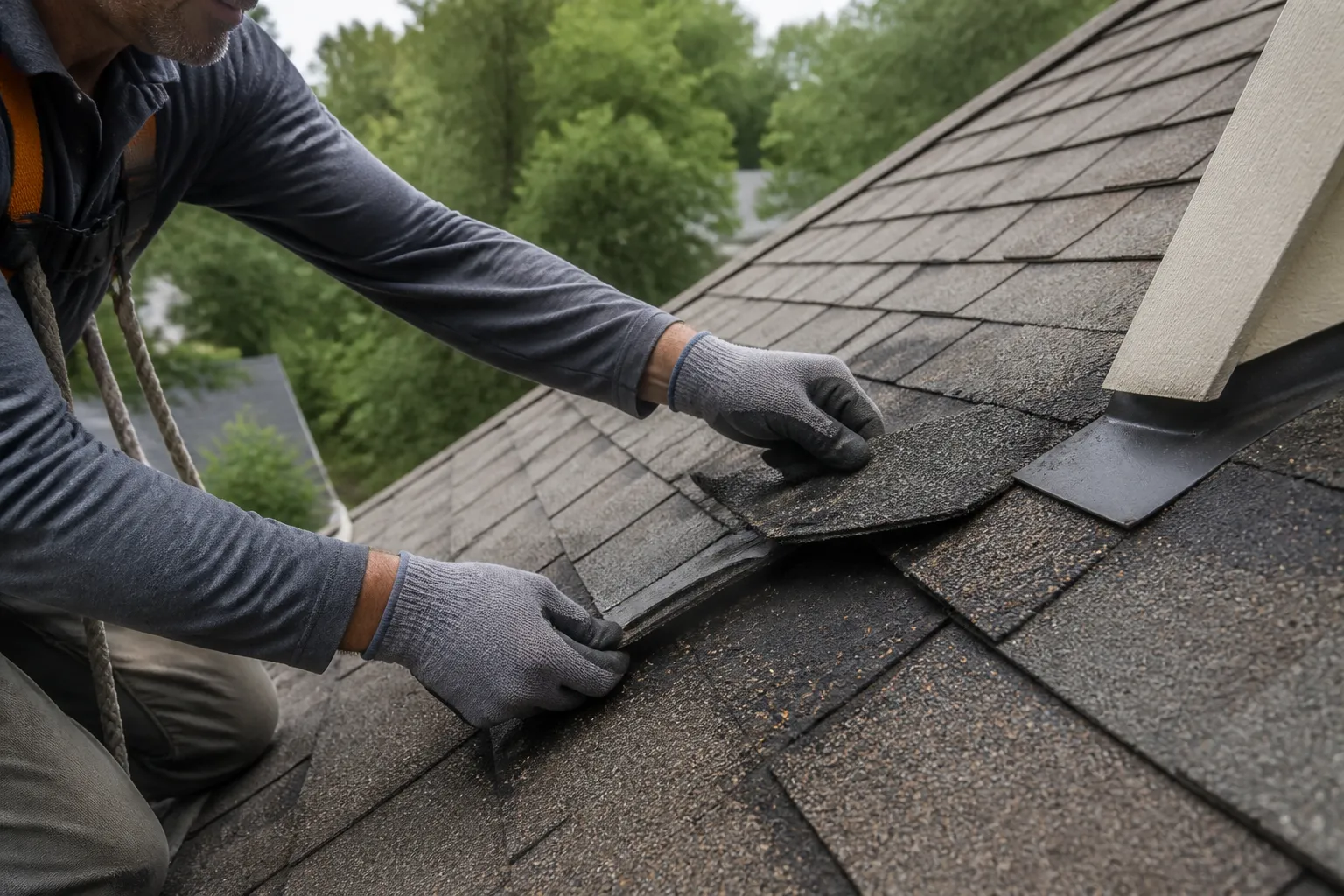
Water can move along decking, framing, or other roof layers before a ceiling stain appears, which means the indoor mark may be some distance from where it entered. Flashing, roof penetrations, damaged or displaced shingles, and valleys are possible entry points, but a symptom alone cannot confirm the cause. The assessment should follow the water path and review the surrounding roof details before a repair is chosen.
When calling, tell the roofer where water appears, when it occurs, and what has visibly changed inside or outside. Photos of a ceiling mark or a roof feature should be taken indoors or from ground level; do not climb onto the roof. Finding the source first helps determine whether a focused repair is suitable and which nearby materials or transitions need to be included.
A useful written repair scope describes the affected area, materials, flashing or underlayment work, and how the repair will connect with existing roofing. It should distinguish observed conditions from items that cannot be confirmed until a layer is opened. Ask how concealed decking or other changes would be documented and approved before additional work is performed.
On a residence, the assessment may consider roof intersections, attic ventilation, and whether nearby shingles remain serviceable. On a business property, access, rooftop units, drainage, operating hours, and occupied areas can affect how repairs are sequenced. For either building type, clarify what will be protected, how debris will be managed, and what cleanup is included.
Repair may be appropriate when the damage is limited and the surrounding roof system remains in suitable condition. Replacement deserves a closer comparison when problems recur in different locations, wear extends across broad sections, or the roof assembly has multiple unresolved issues. The decision should follow inspection findings, not just the age of a roof or the location of one stain.
When both options are proposed, compare what each scope will resolve and what will remain. A broader review may include the covering, underlayment, flashing, penetrations, drainage, ventilation, and condition of the roof deck. The guide to comparing roof repair and replacement offers questions to help frame that discussion. For the statewide service overview, see roof repair in Arkansas.
The City of Springdale Building Department publishes residential and commercial permit application resources. That forms page does not, by itself, establish whether a particular roof repair requires a permit. Confirm the property’s jurisdiction and the exact scope with the responsible City office before work begins, especially if the project involves structural changes or other building systems. The current Springdale Building Department forms and documents page is a practical place to locate the office’s published resources.
Water can move along roof layers or framing before it reaches an interior surface. The stain helps locate where water became visible, while a roof assessment looks for the likely entry path and related details.
Possibly, if the damage is localized and the surrounding materials and transitions can support a compatible repair. The assessment should explain the repair limits and note any nearby wear that could affect the result.
It should identify the suspected source, the area and materials included, flashing or penetration work, how the repair joins the existing roof, exclusions, cleanup, and how concealed conditions would be handled.
Consider comparing replacement when leaks return, appear in multiple areas, or accompany broader wear. Ask which observations support repair and replacement so the remaining risks and scope are clear.
Share the property type, leak location, timing, and any safely collected photos through the estimate form to help describe the Springdale roofing concern.
What To Expect
Share your ZIP code, the service you are considering, and what you have noticed about the roof.
Discuss the observed condition, repair or replacement options, and proposed scope with the independent roofer, subject to local availability.
Review materials, work details, cleanup, exclusions, and any additional repairs before deciding how to proceed.
A Few Common Questions
Tell us where the property is and what your roof needs.
Roofing Estimate
Share the property ZIP code and the roofing service you need. The form uses the existing inquiry system.