Arkansas Roofing Guidance
Commercial Roofing in Little Rock, AR
Explore commercial roofing in Little Rock, AR, including leak assessment, drainage, penetrations, maintenance, repair versus replacement, and system selection.
Arkansas Roofing Guidance
Explore commercial roofing in Little Rock, AR, including leak assessment, drainage, penetrations, maintenance, repair versus replacement, and system selection.
A leak over an office, retail space, warehouse, or multifamily property can interrupt daily use and put finishes, equipment, inventory, or tenant spaces at risk. In Little Rock, the useful first step is to note where water appears, when it follows weather, and whether the area has needed attention before. An indoor stain may not be directly below the roof opening, so an assessment should consider the water path and roof assembly rather than assume the nearest detail is the source.
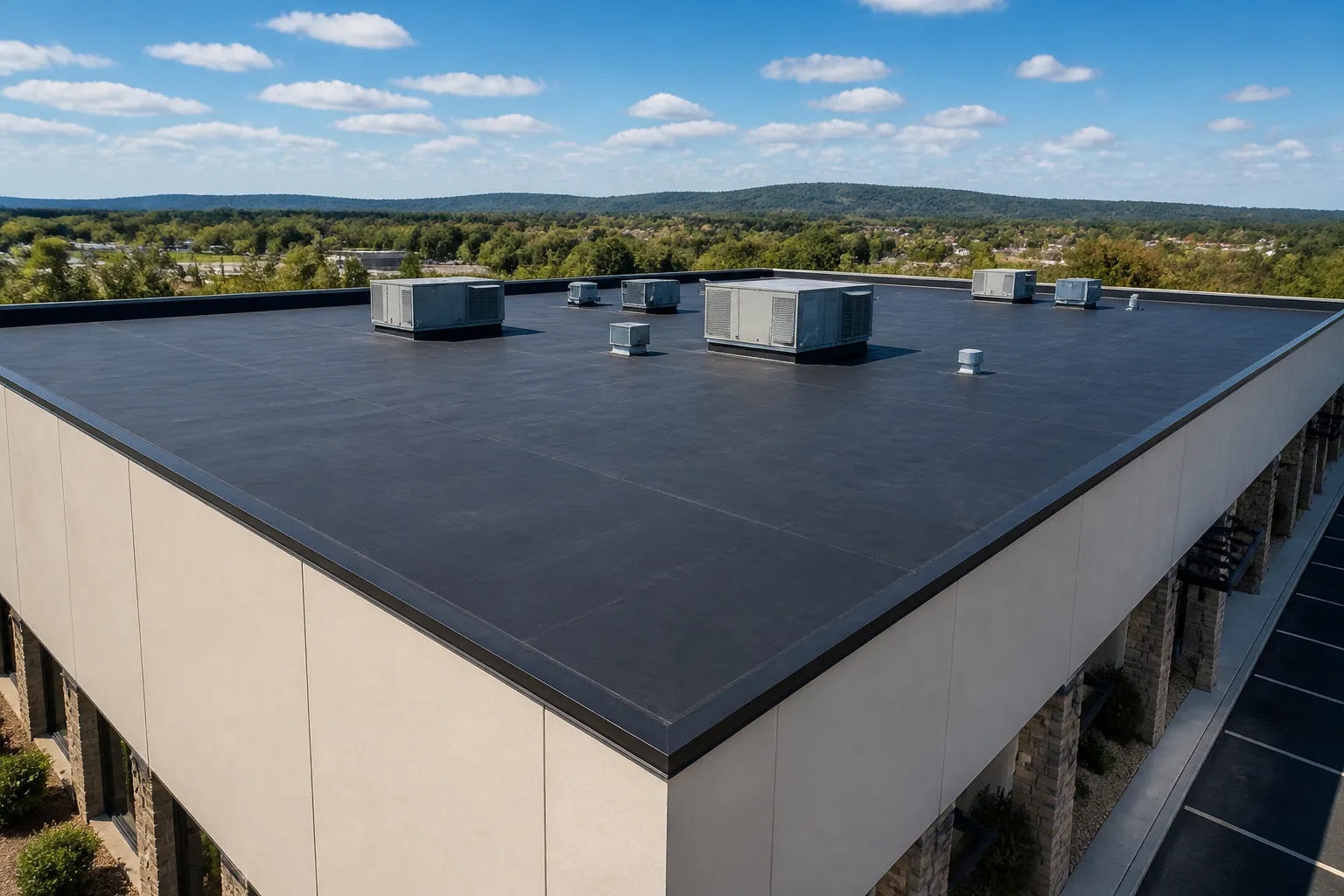
Commercial roofs vary widely. Slope, existing assembly, building use, access, drainage, and project requirements affect which repair or replacement options may be appropriate. A clear description of observed conditions and a written scope help compare next steps without assuming one system fits every building.
Share information already available; there is no need to climb onto the roof or measure it. If useful, include photos taken safely from indoors or ground level.
A leak may involve a seam, flashing, an open transition, a puncture, a drain, a roof edge, or a penetration for equipment or piping. Recent rooftop equipment changes or other building work may also affect nearby details. The indoor stain alone does not establish where water entered; the assessment should investigate the suspected source and surrounding assembly before selecting a repair.
Repair history, adjacent roof condition, and compatibility between existing and proposed materials can affect what is appropriate. A new patch over the visible area may not address a recurring leak if its underlying cause remains. Ask what was inspected, what evidence supports the scope, and what limitations or uncertainties remain.
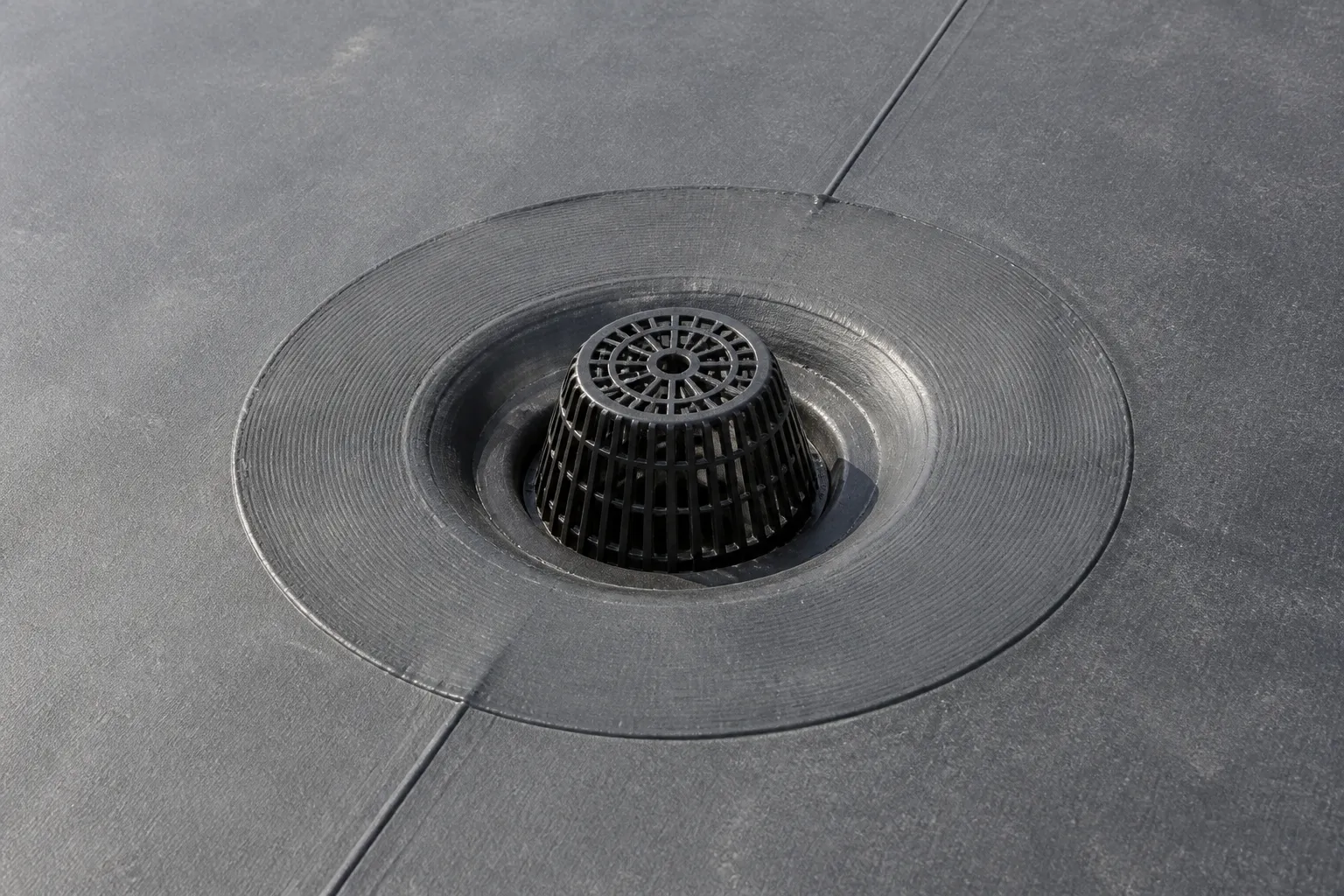
Drainage deserves attention as part of that investigation. Drains, scuppers, gutters, downspouts, slopes, and overflow paths work together; debris, displaced components, or persistent ponding may warrant review. The roof-drain detail below illustrates a transition where drainage and membrane flashing meet, but the actual condition and repair scope require property-specific assessment.
A leak or an older roof does not automatically require replacement. It may be useful to compare replacement when deterioration is widespread, recurring problems affect multiple areas, moisture findings indicate broader concerns, or the existing assembly no longer supports a practical localized repair. Ask the assessment to explain the evidence, repair alternatives considered, and what cannot be confirmed until materials are opened.
A written replacement scope should identify the existing assembly and assumptions about insulation and decking, drainage, flashing, preparation, and any removal or recover work. For an occupied property, clarify work zones, access, protection, sequencing, and coordination with tenants, staff, equipment, or business operations. Ask how concealed conditions and scope changes will be documented.
Membrane and metal systems may be relevant, but suitability and availability should not be assumed. Low-slope roofs may use different membrane assemblies; metal roofs may use standing-seam or exposed-fastener panels. Selection depends on the existing assembly, building use, drainage, access, and project requirements. Transitions, edges, penetrations, attachment, and compatibility with existing materials matter alongside the system name. For system-specific low-slope considerations, see the flat roofing overview.
Coatings require assessment of the roof, substrate, moisture conditions, drainage, and preparation. A coating is not a universal solution for leaks, damaged components, or an assembly that needs broader work. A proposal should describe existing conditions, preparation, included details, limitations, and how suitability was determined.
Compare estimates that describe the same roof areas and work. Look for the system or materials proposed, preparation, flashing and penetration details, drainage work, access assumptions, protection of entrances and interior spaces, work sequencing, debris handling, exclusions, and a process for documenting concealed conditions before scope changes. If proposals recommend different approaches, ask how each recommendation relates to observed conditions.
For related planning, review the statewide commercial roofing overview, Little Rock roofing information, local roof repair and roof replacement pages, and the guide to what a roofing estimate should include.
Share affected rooms or units, timing, whether the leak follows rain, prior repair history, and safe photos. Note roof-access limits, building operations, and recent rooftop equipment or other work.
That depends on roof condition and the extent of affected areas. Ask for observed evidence, the proposed repair boundary, moisture findings where available, and why broader replacement should or should not be compared.
No. Suitability depends on the assembly, substrate, moisture, drainage, preparation, and project requirements. Ask for an assessment that explains fit and remaining limitations.
Discuss work zones, protection for entrances and sensitive areas, deliveries, debris handling, and sequencing around property use. Ask how concealed conditions would be documented before the scope changes.
What To Expect
Share your ZIP code, the service you are considering, and what you have noticed about the roof.
Discuss the observed condition, repair or replacement options, and proposed scope with the independent roofer, subject to local availability.
Review materials, work details, cleanup, exclusions, and any additional repairs before deciding how to proceed.
A Few Common Questions
Tell us where the property is and what your roof needs.
Roofing Estimate
Share the property ZIP code and the roofing service you need. The form uses the existing inquiry system.