Arkansas Roofing Guidance
Metal Roofing in Arkansas
Explore metal roof installation, replacement, repair, system types, ventilation, condensation, and estimate considerations across Arkansas. Provider availability varies by location.
Arkansas Roofing Guidance
Explore metal roof installation, replacement, repair, system types, ventilation, condensation, and estimate considerations across Arkansas. Provider availability varies by location.
Considering a metal roof for a new project or an aging roof? The right choice depends on the building, the existing roof assembly, the intended metal system, and how details such as edges, penetrations, and ventilation will be handled.
All Arkansas Roofing connects property owners with independent roofing contractors. Contractors provide estimates and perform the work.
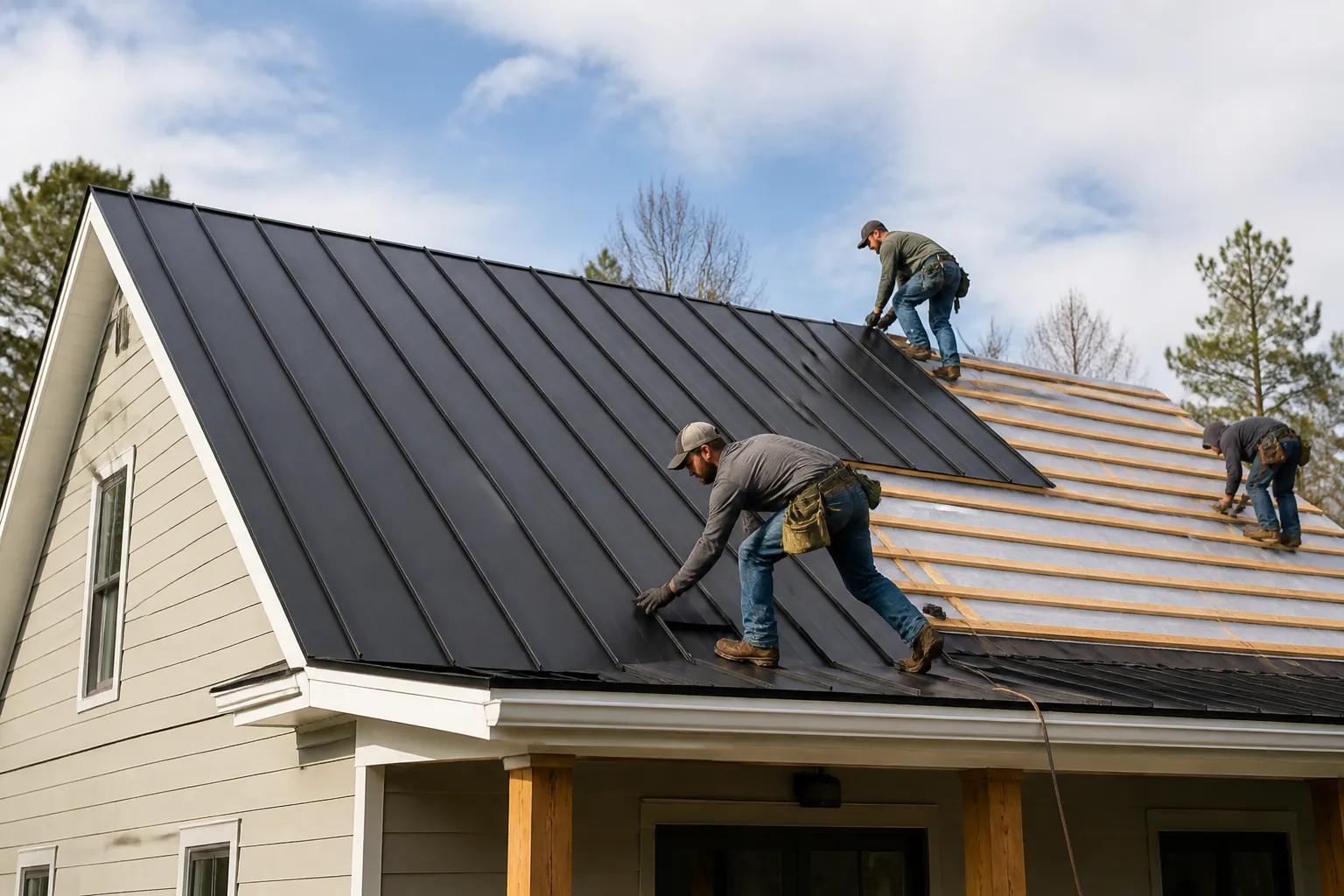
Metal roofing is not one single product or installation method. Panels, underlayment, attachment details, trim, and transitions work together as a roof system. For a new installation, the contractor can review the building and proposed assembly. For replacement, the existing roof condition, number and type of roof layers, and details at the edges and penetrations may affect the work being considered.
Ask what components are included in the proposed scope and how the contractor intends to handle transitions, penetrations, and ventilation. A written estimate should describe the selected system and the work planned for your property rather than relying on a general label such as “metal roof.”
Standing-seam systems use raised seams to join panels, with fasteners generally concealed beneath or within the panel system. Exposed-fastener systems secure panels with visible fasteners and washers. Each approach has different panel profiles, attachment details, appearance, and installation considerations. Neither label alone determines whether a system is suitable for a particular building.
Discuss roof slope, panel layout, substrate, trim, penetrations, and how the proposed system handles movement and water shedding. Ask the contractor to identify the specific panel and fastening approach in the estimate and explain any relevant differences for the building. Compare scopes that describe equivalent components and work.
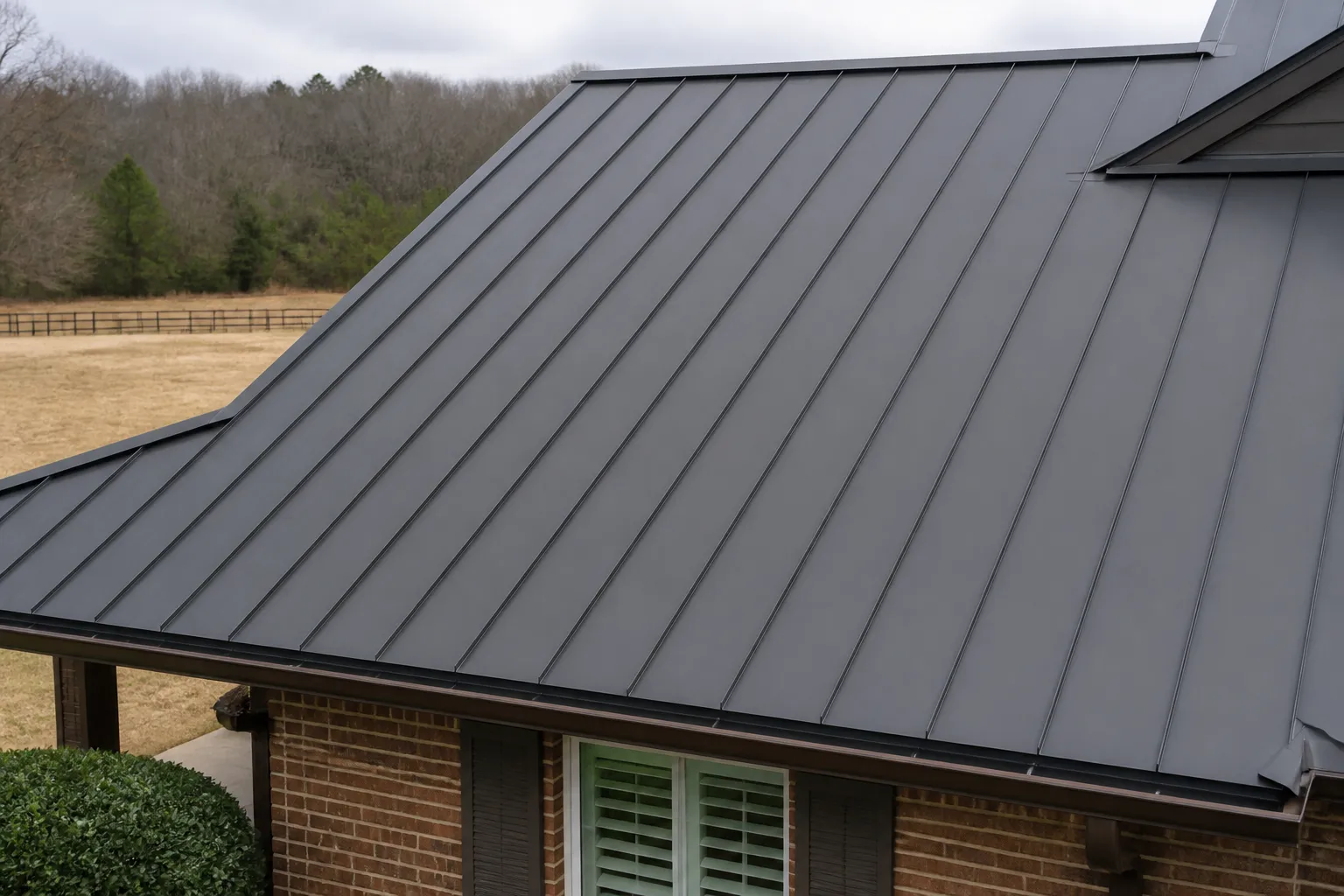
Leaks may involve flashing, penetrations, seams, or fasteners, depending on the roof system; symptoms alone do not identify the source. Standing-seam and exposed-fastener roofs require different assessment: a standing-seam review may consider seams, clips, panel movement, and transitions, while an exposed-fastener review may consider visible fasteners, washers, sidelaps, and corrosion. Panel movement, corrosion, previous repairs, and compatibility among panels, fasteners, flashing, and sealants can affect the repair scope. Metal Construction Association guidance describes how clip-attached standing-seam details accommodate panel movement; review its standing-seam clip guidance.
Before calling, prepare the property location, roof type or age if known, where and when water appears, any interior signs, and available maintenance or repair records. Safe ground-level photos can show the overall roofline, visible edges, gutters, or a roof-to-wall transition; do not climb onto the roof or use an unsafe vantage. Applying sealant alone does not necessarily resolve the underlying condition. Ask what detail will be assessed and how the proposed repair addresses it. MBCI’s panel-repair guidance also emphasizes system-appropriate repair materials and treatment of existing corrosion.
Ventilation and moisture control also deserve attention. The roof assembly, insulation, air movement, and indoor moisture all affect condensation risk. Metal roofing itself does not eliminate condensation. Ask how the proposed assembly addresses ventilation and moisture management for your building, and whether existing attic or interior conditions should be considered as part of the project.
Estimate details help you understand what is being proposed. Consider asking whether the document identifies:
Metal roofing is not maintenance-free, and a specific lifespan should not be assumed from the material name alone. For a side-by-side look at system types, shingles, and proposal details, read the guide to metal roofing versus asphalt shingles. Conditions, design, installation, and care vary. Ask the contractor to explain the materials and scope in the estimate, including any stated exclusions, so you can make an informed comparison.
Property owners can share their property ZIP code, whether the project is an installation, replacement, or repair, and any questions about the existing roof. Availability varies by location. Independent contractors assess the building, provide estimates, and perform any agreed work; All Arkansas Roofing does not install roofs or employ roofing crews.
That depends on the existing roof assembly, its condition, applicable requirements, and the proposed system. Ask the contractor to inspect the property and explain whether removal or another preparation approach is included in the estimate.
Standing-seam panels join at raised seams and generally conceal their fasteners, while exposed-fastener panels use visible fasteners and washers. Panel construction, attachment, and detailing vary, so compare the specific system proposed for your building.
No roof covering by itself guarantees that condensation will not occur. The building's insulation, air movement, ventilation, and moisture conditions matter. Ask how those factors are considered in the proposed roof assembly.
Share the property ZIP code, whether you need installation, replacement, or a repair, and any known concerns with leaks, ventilation, or interior moisture. Ask for the panel system, included components, preparation work, and exclusions to be described in the estimate.
What To Expect
Share your ZIP code, the service you are considering, and what you have noticed about the roof.
Discuss the observed condition, repair or replacement options, and proposed scope with the independent roofer, subject to local availability.
Review materials, work details, cleanup, exclusions, and any additional repairs before deciding how to proceed.
A Few Common Questions
Tell us where the property is and what your roof needs.
Roofing Estimate
Share the property ZIP code and the roofing service you need. The form uses the existing inquiry system.