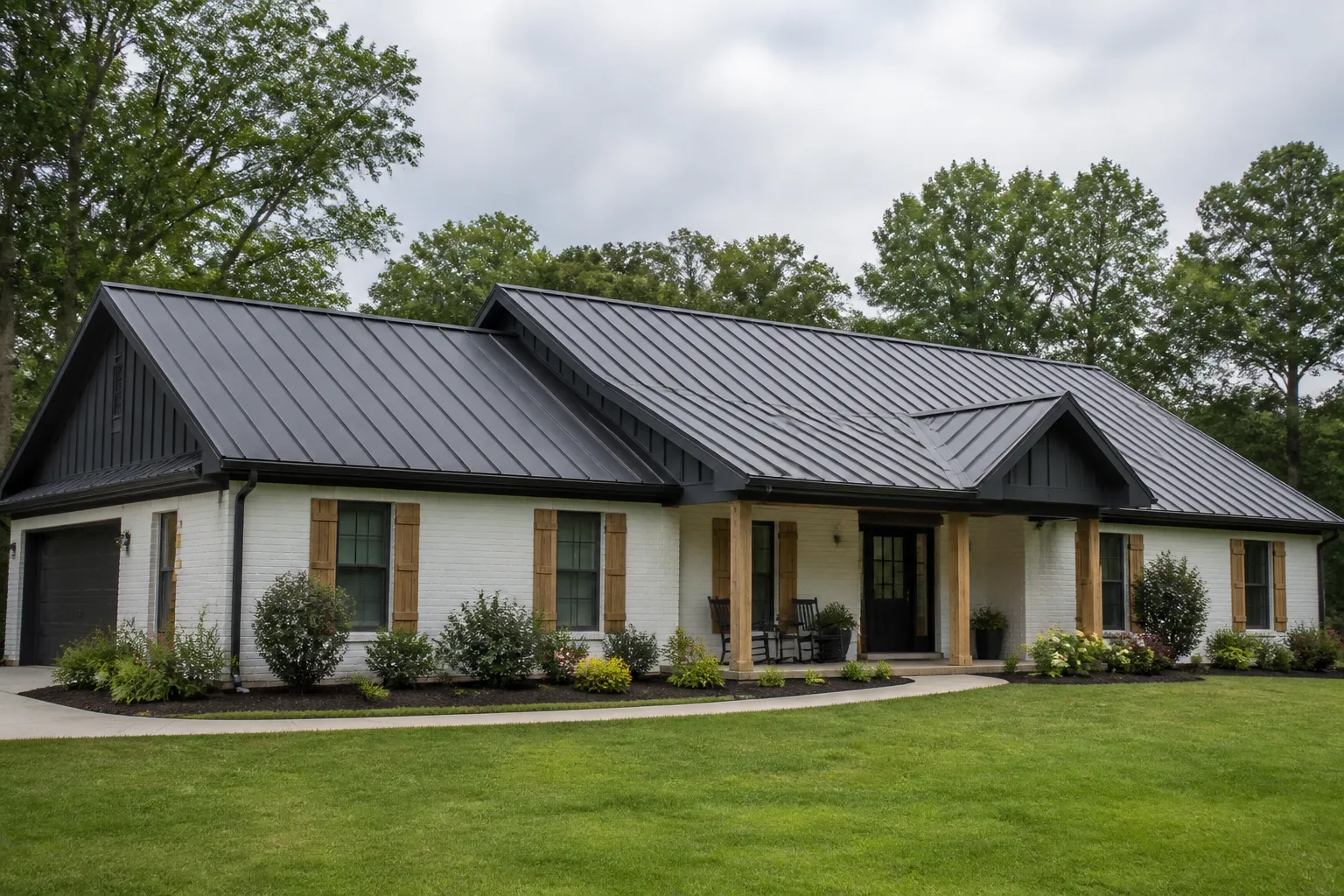
Arkansas Roofing Guidance
Metal Roofing in Little Rock, AR
Compare metal roofing in Little Rock, AR, from standing-seam and exposed-fastener panels to underlayment, flashing, fastening, ventilation, maintenance, and proposals.
Arkansas Roofing Guidance
Compare metal roofing in Little Rock, AR, from standing-seam and exposed-fastener panels to underlayment, flashing, fastening, ventilation, maintenance, and proposals.
Metal roofing describes a range of assemblies, not one panel or installation method. For a Little Rock home or an appropriate commercial building, a useful comparison starts with the roof’s slope, layout, existing assembly, use, and project requirements. Standing-seam and exposed-fastener systems differ in their seams and attachment details, and the best comparison is between specific proposals for the actual building.
A written scope should explain how panels, underlayment, flashing, fasteners, ventilation, and transitions work together. For local context, start with the Little Rock roofing hub. The statewide metal roofing overview and the local metal roofing versus asphalt shingles guide offer additional questions to consider.
Standing-seam panels join along raised seams. Depending on the product, panel-field fasteners are generally concealed beneath or within the seam assembly. Exposed-fastener panels use visible screws and washers through the panel face. Profiles, attachment patterns, substrates, trim, and installation details vary, so a system label alone does not establish whether a roof is suitable.
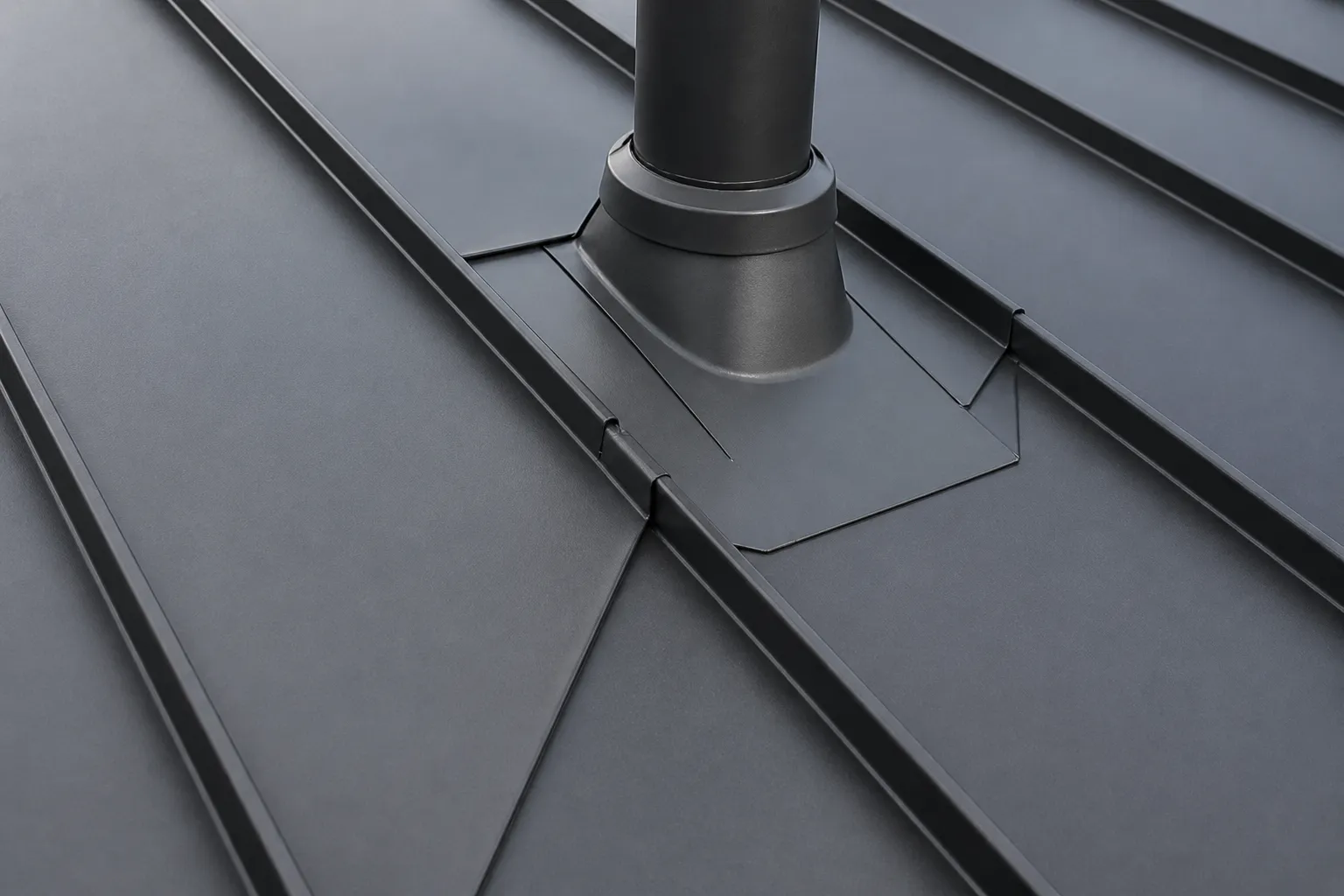
Ask for the exact panel profile and fastening approach in writing. Review how the layout handles ridges, eaves, valleys, rake edges, roof-to-wall transitions, and openings. Roof geometry matters: multiple planes and transitions create different detailing needs from a broad, simple roof section. The image below shows standing seams meeting a roof penetration; proposed flashing and panel details should be evaluated for the actual assembly.
Underlayment forms part of the assembly beneath the visible panels. The proposed product, coverage, and preparation should suit the roof design, substrate, and selected system. Ask whether existing materials will be removed, what layers are known, and how the roof deck will be reviewed if removal exposes concealed conditions.
Flashing helps direct water around edges, walls, valleys, vents, pipes, chimneys, and equipment. A proposal should identify how these transitions will be completed and how flashing interfaces with the panel profile. Fastening also varies by system: concealed clips, exposed screws, and other attachment details have different layouts and inspection considerations. Avoid comparing estimates that use the same broad phrase but describe different components or preparation.
Metal panels expand and contract as temperatures change. The roof assembly needs attachment and detailing that allow for the movement expected by the selected system. Ask how panel lengths, clips or fasteners, seams, and transitions are addressed in the proposal rather than assuming every panel installation handles movement in the same way.
Ventilation and moisture management are separate considerations. Attic ventilation, insulation, air leakage, and indoor moisture can affect condensation conditions beneath a roof. A metal covering alone does not prevent condensation. For a home, ask whether the existing attic or roof assembly should be reviewed. On an appropriate commercial building, discuss how the proposed assembly relates to the building’s use and existing roof conditions.
Metal roofing may be considered for residential roofs and for suitable commercial applications, but the building and project determine fit. Slope, framing, deck, roof access, drainage, existing layers, and how the space is used should be part of the assessment. Commercial systems may involve larger roof areas, equipment, drains, and occupied-building coordination; the system should be selected for those actual requirements, not simply transferred from a residential specification. See commercial roofing in Little Rock for related planning.
In Little Rock, a leak may involve flashing, a penetration, a panel seam, or fasteners, depending on the roof system; the symptom alone cannot confirm its source. Standing-seam and exposed-fastener roofs call for different assessment. Standing-seam details may involve seams, clips, panel movement, and transitions; exposed-fastener details may involve visible screws and washers, sidelaps, or corrosion. Panel movement, corrosion, previous repairs, and compatibility of panels, fasteners, flashing, and sealants can all affect the repair scope. The Metal Construction Association’s standing-seam clip guidance explains why clip details are system-specific.
Before contacting a roofing provider, note the property address, roof system or age if known, when and where water appears, any interior signs, and previous repair or maintenance history. Safe photos from the ground may show the roofline, visible gutters, edges, or transitions; do not climb onto the roof or take risks for a closer view. Surface-applied sealant alone does not necessarily correct the cause. Ask what will be assessed and how the suggested repair addresses the roof detail. MBCI’s panel-repair guidance discusses matching repair materials and treating corrosion as part of a system-aware repair.
The local Little Rock roof repair page covers assessment and repair-scope questions. If broader wear or multiple trouble areas are present, compare the local roof replacement page as well.
Metal roofs still need attention over time. Maintenance planning can include visual review of panels, seams, fasteners where exposed, flashing, penetrations, drainage, and areas affected by other building work. The appropriate review depends on the system and safe access; do not assume that a metal roof requires no maintenance or that one inspection interval fits every property.
Compare itemized written proposals that name the panel type and profile, underlayment, flashing, attachment, ventilation considerations, removal or preparation, penetrations, exclusions, and the process for documenting concealed conditions. Ask each proposal to identify the roof sections included and explain how work will be protected and cleaned up. Confirm any project-specific requirements with the office responsible for the property and exact scope rather than relying on a general permit assumption. Little Rock and nearby North Little Rock are distinct jurisdictions, so use the property’s actual address when directing that inquiry.
It should identify the underlayment and areas included, preparation or removal assumptions, and how flashing will be handled at edges, valleys, walls, penetrations, and other transitions.
No. Ventilation, insulation, air movement, and indoor moisture remain relevant to the roof assembly. Ask whether the existing conditions and proposed assembly have been considered for the particular building.
What To Expect
Share your ZIP code, the service you are considering, and what you have noticed about the roof.
Discuss the observed condition, repair or replacement options, and proposed scope with the independent roofer, subject to local availability.
Review materials, work details, cleanup, exclusions, and any additional repairs before deciding how to proceed.
A Few Common Questions
Tell us where the property is and what your roof needs.
Roofing Estimate
Share the property ZIP code and the roofing service you need. The form uses the existing inquiry system.