Arkansas Roofing Guidance
Roof Replacement in Crossett, AR
Compare roof replacement in Crossett, Arkansas, including roof assessment, shingle and metal assemblies, tear-off, decking, ventilation, and itemized proposals.
Arkansas Roofing Guidance
Compare roof replacement in Crossett, Arkansas, including roof assessment, shingle and metal assemblies, tear-off, decking, ventilation, and itemized proposals.
Recurring leaks, widespread shingle wear, or damage across several roof slopes can make replacement worth comparing with focused repairs. A condition assessment should identify affected areas, visible material condition, and what needs to be checked after tear-off so Crossett property owners can compare the proposed scope.
All Arkansas Roofing provides information for homeowners and commercial property owners reviewing roofing work in Crossett, Arkansas. For statewide service details, review the roof replacement page. The Crossett roofing hub summarizes local considerations. If damage appears limited, compare a Crossett roof repair assessment before deciding that full replacement is necessary.
A condition review should describe the affected slopes or roof sections, visible wear, previous repairs, signs of moisture, and vulnerable transitions. Ask which observations support replacement rather than repair and whether the assessment covers the entire roof or only selected areas. An indoor stain, loose shingle, or isolated panel problem should be documented, but no single symptom establishes the condition of every roof surface.
Ask how concealed decking will be evaluated once old materials are removed. The initial proposal can describe an allowance or unit method for damaged sheathing, but any added work should be documented with the location, reason, and approval process. This keeps hidden conditions from becoming an unexplained change to the original scope.
Asphalt shingles and metal roofing are different systems, and proposals should identify more than the finish color. For shingles, compare the specified product, underlayment, starter and ridge components, flashing, ventilation details, and transitions at valleys and penetrations. For metal, ask about panel profile, fastening method, trim, substrate preparation, and connections at eaves, ridges, walls, and roof openings.
Neither material should be selected from appearance alone. Consider the existing roof structure, slopes, details, owner priorities, and the written assembly proposed for the building. See residential roofing options, the statewide asphalt shingle roofing page, and the guide to metal roofing versus asphalt shingles.
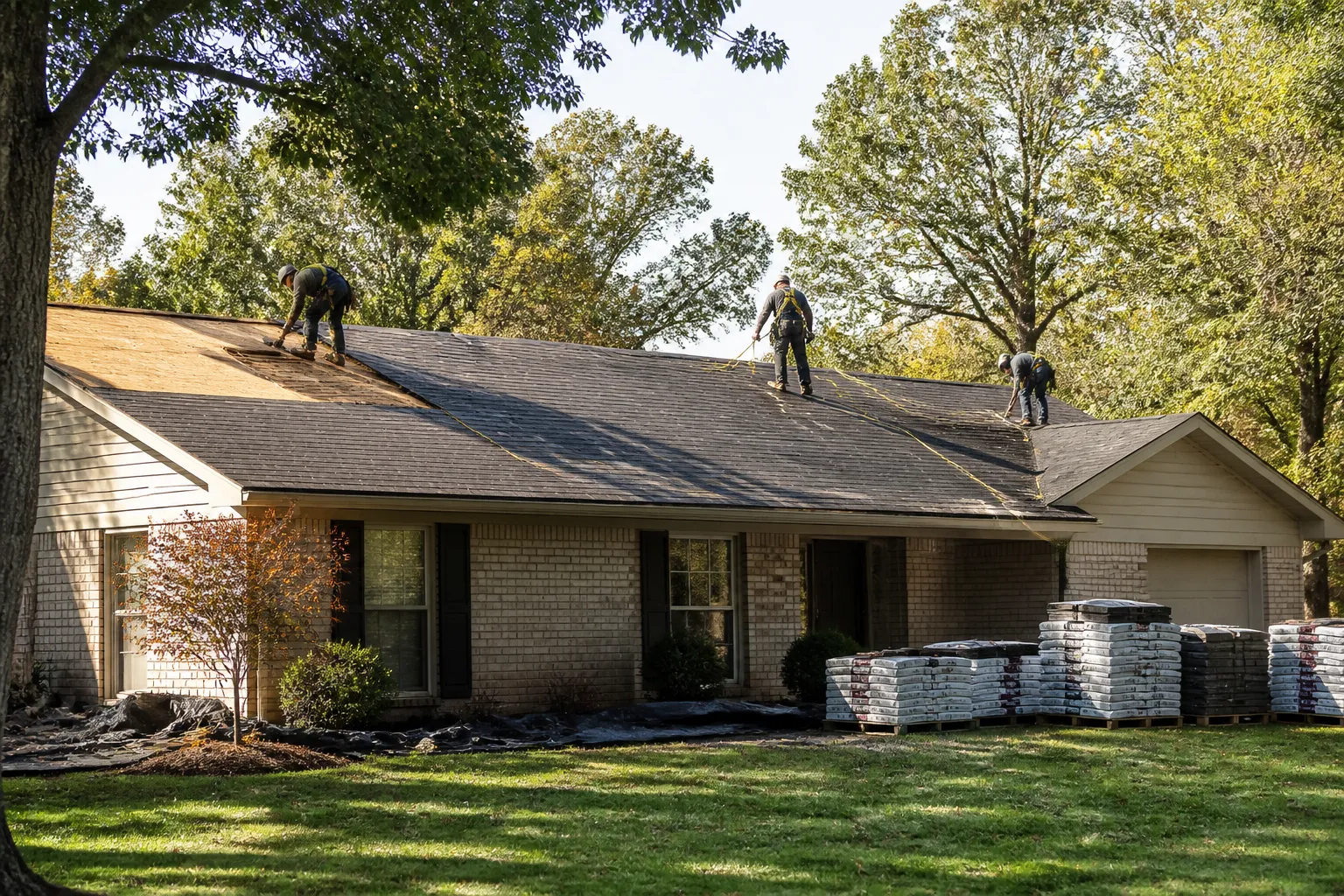
A replacement scope should state what existing layers will be removed, how debris will be contained and hauled away, and which new materials will be installed. Ask whether removal is planned across the full roof or only defined sections. If more than one layer or a prior overlay is present, the assessment should explain how that affects removal and inspection.
After tear-off, exposed decking can reveal soft, split, or otherwise damaged panels that were not visible beforehand. The proposal should explain how those areas will be photographed or described, what replacement material will be used, and how authorization is obtained before extra work. This is also the point to verify that edge details and flashing conditions can be prepared as specified.
Roof replacement is an opportunity to review intake and exhaust ventilation, but the scope should be based on the building and roof assembly rather than a generic promise. Ask what ventilation is currently present, whether it is being retained or changed, and how openings will be coordinated with the underlayment and roofing system. Vent placement and balance are building-specific.
Review valleys, eaves, rakes, wall intersections, chimneys, skylights, vents, and drainage paths. A proposal should say which flashings are replaced, which remain, and how the new covering connects to existing surfaces. These details help distinguish a complete installation plan from a material-only line item.
Discuss protection for landscaping, exterior fixtures, driveways, vehicles, windows, entrances, and stored items before work begins. Ask where materials and debris will be staged and how access to doors or occupied areas will be maintained. If a building remains in use, identify sensitive areas and confirm how the work zone and daily cleanup are described in the proposal.
Cleanup should be a defined part of the scope, including removal of discarded roofing materials and a final check of accessible ground areas. Clarify who handles debris disposal and what condition the site should be in at completion. Avoid assuming that cleanup is included when the written proposal does not say so.
Compare proposals for the same roof areas and system. Useful line items identify tear-off, disposal, underlayment, selected roofing materials, flashing, ventilation, decking contingencies, property protection, and cleanup. Review exclusions and payment or change documentation separately. A lower total may reflect a narrower scope or omitted preparation rather than the same work at a lower price.
For help reviewing line items, read what affects roof replacement cost in Arkansas and what a roofing estimate should include. Confirm permit requirements with the authority for the property's address and the exact scope. Do not assume a Crossett mailing address establishes jurisdiction or that general permit information answers a roof-specific question.
Ask for the condition of each affected roof area and the evidence supporting the recommendation. Compare replacement when wear or damage is widespread, repairs recur, or a repair would leave substantial deterioration in place. A documented assessment is more useful than relying on age or one symptom alone.
Look for roof areas, tear-off and disposal, underlayment, roofing products, flashing, ventilation, decking contingencies, property protection, cleanup, and exclusions. Ask how concealed damage and added work will be documented and approved.
Not always. Some sheathing conditions remain concealed until existing roofing is removed. A proposal can explain how newly exposed damage will be documented, priced, and authorized before the scope changes.
Compare the complete assemblies, including preparation, underlayment, fastening or attachment details, flashing, edges, transitions, and ventilation. Confirm that both proposals cover the same areas and work outcomes.
What To Expect
Share your ZIP code, the service you are considering, and what you have noticed about the roof.
Discuss the observed condition, repair or replacement options, and proposed scope with the independent roofer, subject to local availability.
Review materials, work details, cleanup, exclusions, and any additional repairs before deciding how to proceed.
A Few Common Questions
Tell us where the property is and what your roof needs.
Roofing Estimate
Share the property ZIP code and the roofing service you need. The form uses the existing inquiry system.