Arkansas Roofing Guidance
Roof Repair in Crossett, AR
Explore roof repair in Crossett, Arkansas, including leak assessment, water travel, localized damage, repair scope, and when replacement may be worth comparing.
Arkansas Roofing Guidance
Explore roof repair in Crossett, Arkansas, including leak assessment, water travel, localized damage, repair scope, and when replacement may be worth comparing.
A ceiling stain, damp insulation, or a shingle displaced after wind can leave a Crossett property owner unsure where to begin. The visible mark is useful evidence, but it does not necessarily identify the roof opening. Water may move along roof layers or framing before reaching a ceiling or wall.
Describe what changed, when it appeared, and which part of the property is affected. All Arkansas Roofing helps homeowners and property managers review repair considerations, compare a defined scope, and decide whether a localized repair or broader replacement assessment is appropriate. Start with the Crossett roofing hub for local options.
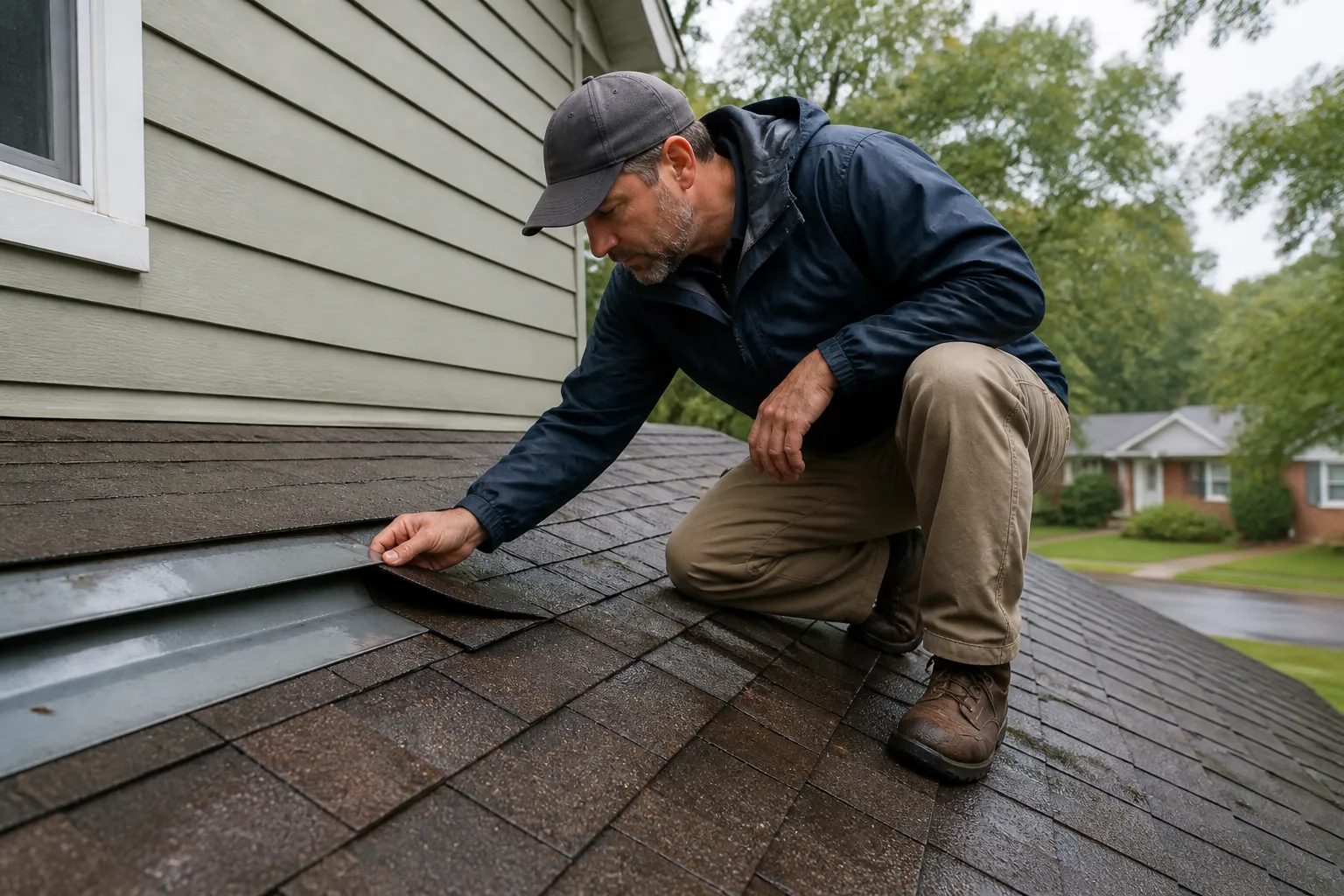
Water can enter at a damaged shingle, roof edge, valley, flashing joint, vent, chimney, or another roof transition, then travel beneath the surface before it appears indoors. A ceiling stain directly below a roof feature does not prove that feature is the source. A careful assessment traces the water path and checks adjacent materials so the repair addresses the entry point rather than only covering the indoor symptom.
When contacting a roofing provider, report the room and location of the stain or drip, when it first appeared, whether it returns after rain, and whether wind or recent work preceded it. Mention attic access, visible debris, and whether more than one area is affected. Indoor photos of staining and ground-level photos of visible roof edges or missing material can help document conditions. Do not climb a ladder or walk on a wet roof to take pictures.
Finding the source matters because water can damage underlayment, roof decking, insulation, and interior finishes beyond the spot where it becomes visible. If the entry point is not identified, a surface patch may leave the cause active and the leak may recur.
A focused repair can be reasonable when damage is limited, nearby roofing remains serviceable, and the affected assembly can be reached and repaired without leaving a larger defect. Ask the written scope to identify the roof plane and specific work area, the materials to be removed and installed, and whether flashing, underlayment, fasteners, or adjoining shingles are included.
Clarify what is excluded. A proposal that says only “repair leak” may not explain whether the work addresses the entry point, replaces damaged substrate if found, or includes related transitions. Ask how concealed conditions will be documented and approved before added work proceeds.
A leak that returns after a prior repair deserves a fresh look at the whole water path. The earlier patch may have covered a symptom, a nearby transition may also be involved, or moisture may be appearing later from material that was already wet. Record whether the leak returns in the same room and under similar conditions, then share the earlier repair details if available.
Repeated service in one small area does not by itself prove the roof needs replacement. Compare the condition of surrounding shingles or panels, underlayment, flashing, and decking. If wear spans multiple roof planes, leaks recur at several locations, or repairs would leave substantial deterioration untouched, request a replacement assessment alongside the repair scope.
Ask for the observed condition, likely entry area, proposed work, materials, and limits to appear in writing. The estimate should distinguish visible damage from conditions that cannot be confirmed until roofing layers are opened. It should also describe debris removal and how the work area will be protected.
Compare proposals that address the same location and intended outcome. A useful comparison explains why the repair should address the source and what condition would make the repair unsuitable. For a wider storm-related concern, read what to do when a roof leaks after a storm.
All Arkansas Roofing provides information for comparing roofing options in Crossett, Arkansas. The statewide roof repair page explains the broader service category. If the assessment points to widespread deterioration instead of a contained defect, compare the companion roof replacement page for Crossett before choosing a scope.
For permit questions, confirm requirements with the authority serving the property's address and describe the exact work. A general city permit page may not establish a roof-specific rule, and a Crossett mailing address does not alone determine jurisdiction.
No. Water can travel along framing or beneath roofing materials before it appears indoors. The stain's location and timing are useful clues, but an assessment should trace the source rather than assume the opening is directly above it.
Share where the water appears, when it began, whether it returns after rain, any recent wind or roof work, and whether other rooms or structures are affected. Safe indoor or ground-level photos can document visible changes.
No. Avoid ladders and roof surfaces, especially when wet or damaged. Photograph indoor staining or visible roof conditions from the ground without entering an unsafe area.
Compare both when damage affects several areas, leaks recur, or the surrounding roof shows broader deterioration. Ask what observations support each option and what the proposed repair would leave in place.
What To Expect
Share your ZIP code, the service you are considering, and what you have noticed about the roof.
Discuss the observed condition, repair or replacement options, and proposed scope with the independent roofer, subject to local availability.
Review materials, work details, cleanup, exclusions, and any additional repairs before deciding how to proceed.
A Few Common Questions
Tell us where the property is and what your roof needs.
Roofing Estimate
Share the property ZIP code and the roofing service you need. The form uses the existing inquiry system.