Arkansas Roofing Guidance
Roof Replacement in Wynne, AR
Review roof condition assessment, shingles versus metal, tear-off, decking, ventilation, property protection, and written proposal comparisons for Wynne, Arkansas.
Arkansas Roofing Guidance
Review roof condition assessment, shingles versus metal, tear-off, decking, ventilation, property protection, and written proposal comparisons for Wynne, Arkansas.
Before considering replacement for a home or business in Wynne, Arkansas, assess visible wear, leak history, roof shape, existing materials, ventilation, drainage, and how the building is used. Any recommendation should be supported by those observed conditions, not assumptions based on age or appearance alone.
All Arkansas Roofing connects property owners with independent roofing contractors for assessments and written estimates. Share the address, property type, any recurring concerns, and practical access or operating needs. A clearly itemized proposal helps compare materials and preparation rather than judging options by a product name or total alone.
Condition review should look beyond the broad roof surface. Shingle wear, seams, flashing, valleys, penetrations, roof edges, drainage paths, and transitions to walls can each affect the scope. Interior observations such as prior leak locations may help, but a ceiling mark does not by itself establish where water entered or whether the full roof requires replacement. Ask which areas were examined and what findings support replacing the system instead of making a limited repair.
If problems are localized and nearby materials remain serviceable, compare a repair option with replacement. If wear or damage spans several roof sections, or concerns recur after earlier work, a broader project may merit consideration. The proposed scope should state the roof areas included, what will be removed, what will be installed, and what conditions remain outside the proposal.
Asphalt shingles and metal roofing differ in appearance, installation details, fastening systems, and how the finished roof is assembled. The appropriate comparison depends on the roof’s design and pitch, framing, existing layers, drainage, penetrations, edges, and the property owner’s priorities. Ask the contractor to identify the specified product and explain how the material fits the actual roof, rather than relying on a general label.
For an asphalt shingle proposal, review underlayment, starter and ridge materials, flashing, valley details, ventilation components, and how penetrations will be finished. For metal, clarify panel or product type, attachment approach, flashing and trim, and transitions around vents or equipment. In either case, compare removal assumptions and how concealed decking conditions will be documented if they become visible. The statewide asphalt shingle roofing overview and residential roofing services offer additional context for homes in Wynne.
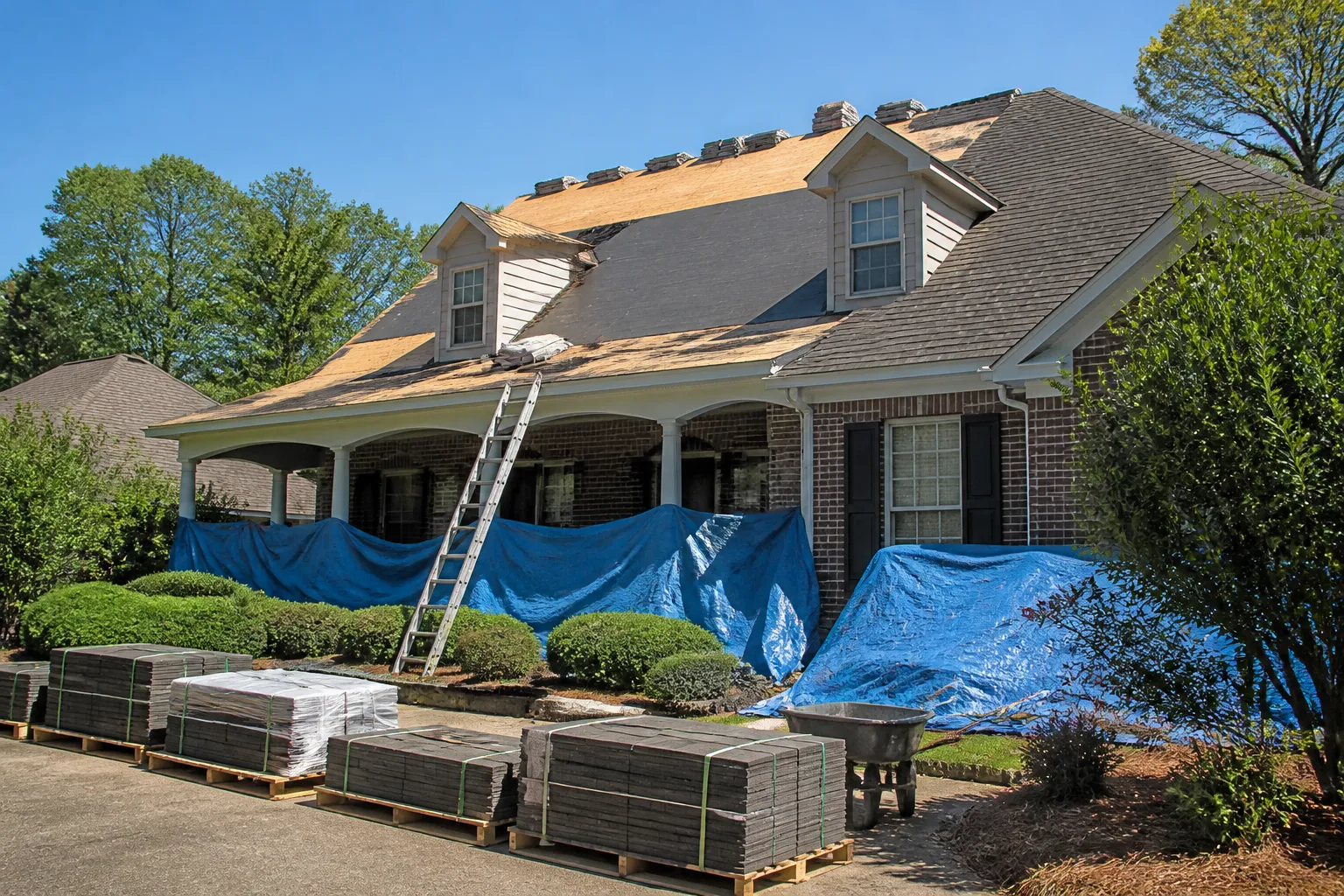
A replacement estimate should explain how existing roofing layers will be removed and how the roof deck will be reviewed after removal. The deck is the surface that supports the new roofing system. If sections are damaged or unsuitable, the proposal should describe how those conditions will be recorded, communicated, and priced or approved before additional work proceeds. Ask what is included in the base scope and how any concealed condition could change the work.
Clarify whether the proposal assumes one or more existing layers, how old materials and debris will be handled, and which components will be removed or retained. Do not assume every roof has the same tear-off requirements. The building’s existing assembly and project scope determine what needs to be addressed.
Ventilation should be considered as part of the roof assembly, alongside the roof covering and underlayment. Ask whether the existing arrangement will be retained, adjusted, or replaced and what observations inform that decision. A proposal should distinguish included ventilation work from items that are not part of the scope.
Before work starts, discuss how the property will be protected. For a residence, that may include communicating about landscaping, outdoor items, windows, driveways, and access. For a commercial building in Wynne, Arkansas, also describe entrances, deliveries, occupied areas, rooftop equipment, and operating needs. Ask how exposed roof areas will be covered if work pauses and how debris, removed materials, and final cleanup are handled. These are project-planning questions, not assumptions about a particular contractor’s methods.
Request proposals that cover the same roof areas and intended outcome. Compare material specifications, tear-off, underlayment, flashing, edges, penetrations, ventilation, decking assumptions, property protection, debris removal, cleanup, and exclusions. Check whether the proposal describes how newly discovered conditions will be documented and approved. A written scope makes it easier to distinguish a genuine difference in materials or preparation from a difference in wording.
Ask for clarification where a proposal uses broad phrases or leaves out a component that another proposal includes. Separate the base scope from optional recommendations and confirm which roof sections each option addresses. The Arkansas roof replacement guide and roofing estimate checklist can support a careful comparison. Confirm requirements for the property address and project scope with the appropriate local office; this page does not assume a roof-specific permit rule.
For location-specific guidance, see roofing in Wynne. The statewide roof replacement overview explains broader project considerations, while local roof repair in Wynne is a related option to review when the observed concern may be limited.
Ask which roof areas and details were reviewed, what conditions were observed, and why repair or replacement is being considered. Leak history is useful context, but it does not alone establish the roof’s full condition.
Compare specified products, installation details, underlayment, flashing, edges, penetrations, ventilation, removal assumptions, and how concealed decking conditions will be handled. Consider how each system fits the building’s roof design.
Ask the proposal to explain how the deck will be reviewed after tear-off, how any unsuitable areas will be documented, and how additional scope will be discussed before it proceeds.
Look for material specifications, included roof areas, tear-off, underlayment, flashing and ventilation details, property protection, debris handling, cleanup, exclusions, and a process for documenting newly observed conditions.
What To Expect
Share your ZIP code, the service you are considering, and what you have noticed about the roof.
Discuss the observed condition, repair or replacement options, and proposed scope with the independent roofer, subject to local availability.
Review materials, work details, cleanup, exclusions, and any additional repairs before deciding how to proceed.
A Few Common Questions
Tell us where the property is and what your roof needs.
Roofing Estimate
Share the property ZIP code and the roofing service you need. The form uses the existing inquiry system.