Arkansas Roofing Guidance
Roof Repair in Wynne, AR
Explore roof leak assessment, localized repairs, recurring concerns, and repair-versus-replacement considerations for properties in Wynne, Arkansas.
Arkansas Roofing Guidance
Explore roof leak assessment, localized repairs, recurring concerns, and repair-versus-replacement considerations for properties in Wynne, Arkansas.
A ceiling stain, damp attic area, or visible shingle change can raise questions about whether a roof needs a focused repair or a broader plan. At a property in Wynne, Arkansas, start by noting where and when the concern appears, whether it changes during or after rain, and whether the issue has happened before. A visible symptom is useful information, but it does not confirm the roof opening or establish the full condition of the roofing system.
All Arkansas Roofing connects property owners with independent roofing contractors for assessment and written estimates. Share the property address, whether it is a home or business, the areas affected, and any access or operating considerations. The assessment should explain what was observed, what repair is proposed, and what remains outside the work scope.
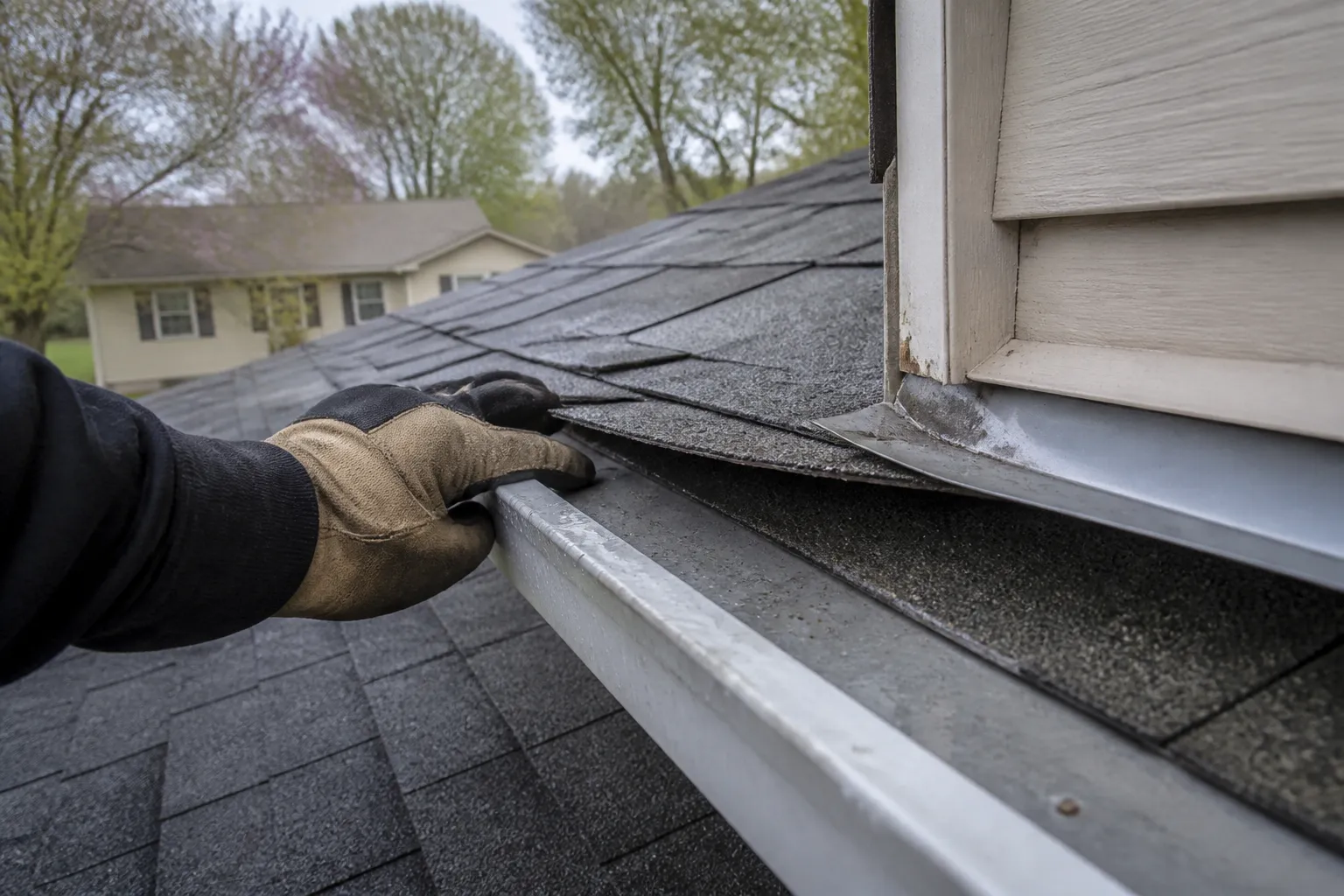
Water can move along roof decking, framing, insulation, or other surfaces before appearing indoors. A ceiling mark may therefore be offset from the entry point. Roof-to-wall transitions, flashing, valleys, vents, plumbing penetrations, edges, and damaged shingles are among the possible places water can enter, but a stain or drip pattern alone cannot diagnose which detail is involved. Identifying the source matters because repairing only the visible interior symptom may leave the actual opening unchanged.
When calling about a leak, report the room or area where water appears, when it occurs, whether it is active or recurring, any prior repairs, and changes you can see from a safe location. Indoor photographs of a stain or a ground-level view of visible roof changes may help document the concern. Do not climb onto the roof or use a ladder to take pictures. If water is near an electrical fixture, a ceiling is sagging, or the area otherwise seems unsafe, keep clear and mention that condition when requesting help.
A limited repair may be worth considering when an assessment finds a defined area of damage and the surrounding roof materials remain suitable for continued use. The written scope should identify the roof section and components involved, such as shingles, flashing, a pipe boot, edge detail, or another specific transition. It should also state what preparation, removal, replacement materials, and related work are included, plus any adjacent conditions that are not part of the repair.
Localized does not mean insignificant. A small opening can allow water to reach materials beneath the roof covering, while a broader patch could be unnecessary if the surrounding system is sound. Ask what evidence supports the repair boundary and how the proposed work addresses the suspected entry route. The goal is to understand the work and its limits, not to choose a repair based only on the size of an indoor stain.
If water returns after earlier work, provide the timing and location of each occurrence and explain what was repaired, if known. A repeat symptom can reflect an unresolved source, water traveling from another roof detail, a separate opening, or a new condition. Those possibilities cannot be sorted out from the ceiling mark alone. A new assessment can compare the reported water path with roof details and explain whether the prior repair area is involved.
Ask whether the scope addresses the source identified during the assessment, whether nearby transitions need attention, and what conditions might remain beyond the repair boundary. If a proposal recommends another patch in the same general area, request a clear explanation of how it differs from previous work and what will be checked before the repair is considered complete.
Repair may be practical when damage is limited and the surrounding roof remains serviceable. Replacement deserves comparison when concerns extend across multiple sections, the roof shows widespread wear, or repeated repairs no longer address the observed condition. Roof age can provide context, but it is not a substitute for examining the actual roof. Ask for the findings behind each option and the work each written scope is intended to accomplish.
For homes in Wynne, Arkansas, compare the affected roof area, condition of nearby materials, water-management details, and any repairs already made. For a commercial property, also describe roof access, equipment, occupied areas, and how the building operates so the proposal reflects practical constraints. The roof repair versus replacement guide offers a framework for comparing the options. A local overview of roofing in Wynne provides related city-level guidance.
Compare proposals for the same roof area and intended result. Check that each identifies the suspected location, work included, materials or components to be addressed, access assumptions, protection and cleanup, and exclusions. Ask which parts of the roof were assessed and whether the proposal includes related flashing, underlayment, or adjoining details where relevant. If a condition cannot be confirmed until work begins, ask how it will be documented and discussed before additional scope is considered.
A clear estimate distinguishes observed conditions from assumptions and explains the boundaries of the proposed repair. If a proposal uses broad phrases such as “repair as needed,” ask for more detail about the work area and method. For general residential concerns, review residential roofing services in Arkansas. The statewide roof repair overview explains common assessment and repair considerations. Confirm requirements for the specific address and project scope with the appropriate local office rather than assuming a roof repair has a particular permit rule.
Not necessarily. Water may travel along framing or roof layers before it becomes visible indoors. The roof and possible water path need assessment; the location of a stain alone does not establish the entry point.
Provide the property address, room or area affected, timing, whether the leak recurs, prior repair details if known, and any visible changes observed safely. Indoor or ground-level photos can document conditions without climbing onto the roof.
A repair may be appropriate when assessment finds a limited concern and nearby materials remain serviceable. Ask for the evidence supporting the repair boundary and compare it with broader options if concerns appear in several areas or continue returning.
It should identify the area and components involved, describe the planned work and materials, list exclusions, and explain how concealed or newly observed conditions will be handled. Comparing proposals with the same scope makes differences easier to evaluate.
What To Expect
Share your ZIP code, the service you are considering, and what you have noticed about the roof.
Discuss the observed condition, repair or replacement options, and proposed scope with the independent roofer, subject to local availability.
Review materials, work details, cleanup, exclusions, and any additional repairs before deciding how to proceed.
A Few Common Questions
Tell us where the property is and what your roof needs.
Roofing Estimate
Share the property ZIP code and the roofing service you need. The form uses the existing inquiry system.