Arkansas Roofing Guidance
Roof Replacement in Trumann, AR
Compare roof replacement in Trumann, Arkansas, including condition assessment, shingle and metal materials, tear-off, decking, ventilation, property protection, and written estimates.
Arkansas Roofing Guidance
Compare roof replacement in Trumann, Arkansas, including condition assessment, shingle and metal materials, tear-off, decking, ventilation, property protection, and written estimates.
A roof replacement is a major property decision, and the visible surface does not tell the whole story. In Trumann, Arkansas, planning should begin with the roof’s observed condition, the building’s use, and the details of the existing system. A written assessment can help distinguish a full replacement from focused repairs and clarify what work is being proposed.
All Arkansas Roofing connects property owners with independent roofing contractors and written estimates. Before comparing proposals, identify the roof areas involved, preferred material questions, access constraints, and any schedules or property features that need protection. These details make it easier to compare complete scopes instead of totals alone.
A useful condition assessment looks beyond one visible defect. It considers the roof surface, slopes or sections, edges, valleys, flashing, penetrations, drainage paths, ventilation components, and signs of moisture inside. The assessment should explain which conditions were observed and which areas remain concealed or uncertain. A roof’s age can be relevant background, but it does not by itself establish that every section needs replacement.
Ask why replacement is being recommended and whether a defined repair remains a practical alternative. If only part of the roof is involved, request an explanation of how that section relates to adjacent materials and details. When there is uncertainty about the decking or layers below the surface, ask how those conditions will be checked and documented after removal.
Asphalt shingles and metal roofing have different system components and installation details. The right comparison considers roof shape, pitch, existing structure, flashing, valleys, edges, ventilation, and how materials connect around openings. A proposal should name the material and explain the accessories and transition details needed for that specific roof.
For a shingle system, review the specified shingle, underlayment, edge treatment, flashing, and ventilation plan. For metal, compare the panel type, fastening approach, trim, flashing, and treatment at penetrations and transitions. The residential roofing overview and asphalt shingle roofing information can help frame questions about a home’s roof system. Material choice should be evaluated as a complete assembly, not just by surface appearance.
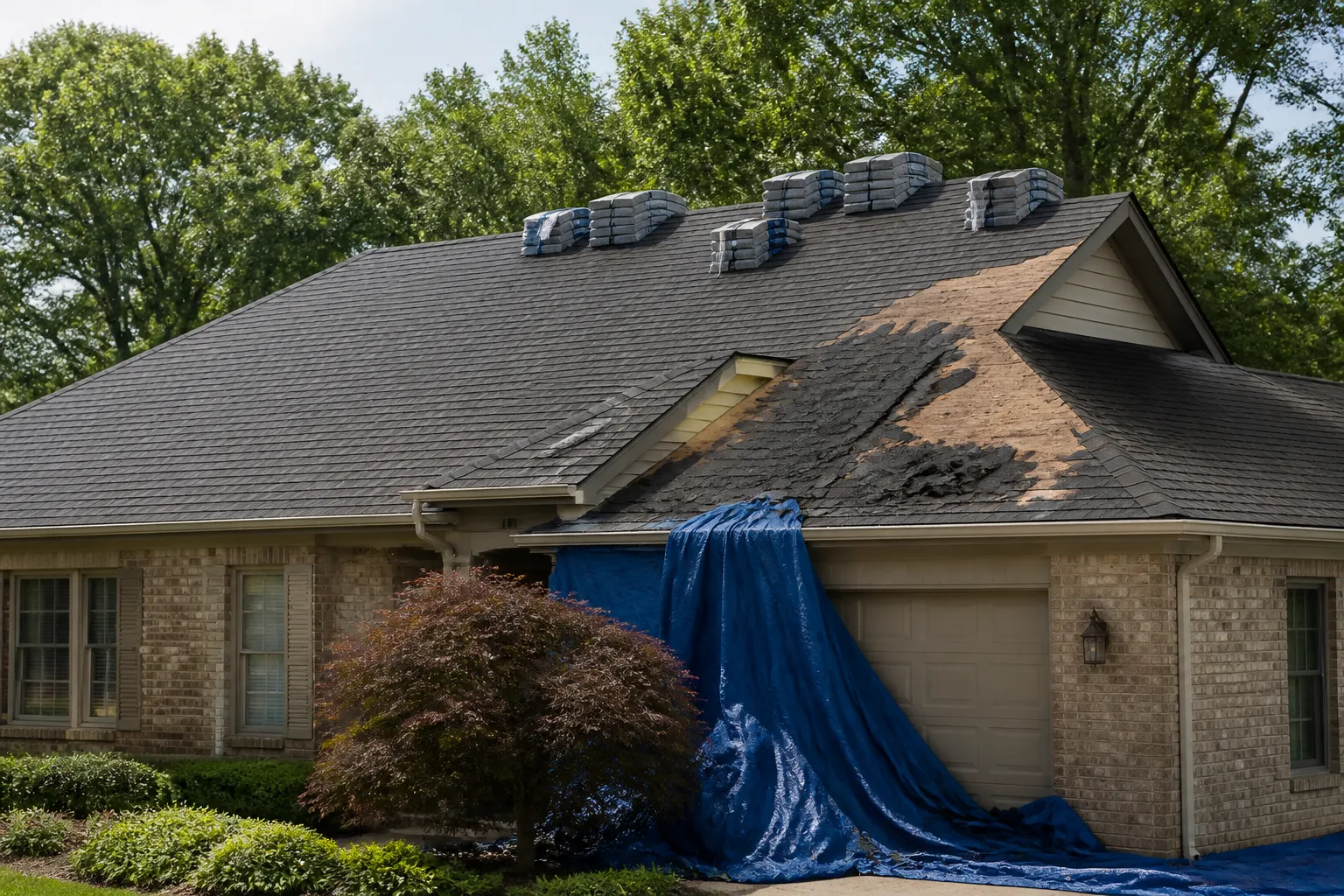
Ask whether the proposal includes removing existing roofing layers and what assumptions apply to the number or type of layers. A tear-off can reveal decking conditions that were not visible during the initial assessment. The written scope should explain how damaged or unsuitable decking will be recorded, communicated, and priced or authorized if additional work is needed. Avoid assuming that concealed repairs are included unless the proposal says so.
Also ask how underlayment, flashing, valleys, roof edges, penetrations, and transitions will be addressed. These items affect how the new roof is completed and should be clear enough to compare between estimates. If a proposal uses a broad phrase such as “complete roof,” request the included components and exclusions in writing.
Ventilation should be considered as part of the roof assembly. Ask what existing intake and exhaust openings were observed, whether any changes are proposed, and how the recommendation relates to the roof design. The proposal should identify included ventilation work rather than suggesting that a new roof automatically changes every attic or roof-space condition.
Discuss property protection before work begins. Note landscaping, outdoor equipment, vehicles, walkways, entrances, nearby structures, and areas that need clear access. For a business or other occupied building, describe customer, employee, delivery, equipment, and operating needs. Ask how work areas will be managed, how debris will be collected, and what cleanup is included. These are planning questions, not promises about a particular crew or schedule.
Ask each proposal to cover the same roof sections and desired result. Compare the material specifications, tear-off assumptions, underlayment, decking allowance, flashing, ventilation, edge details, property protection, debris removal, cleanup, exclusions, and process for documenting concealed conditions. Confirm whether optional items are separate and how changes to scope will be discussed.
A larger scope or different material specification can explain why proposals vary. The guide What Should a Roofing Estimate Include? offers a practical review list, while Roof Repair or Replacement? How to Compare Your Options can help organize the decision between a focused fix and broader work. For local next steps, see roofing information for Trumann and the statewide roof replacement overview.
Confirm any project requirements that may apply to the property address and exact scope with the appropriate local authority. This page does not assume a roofing-specific permit rule. To compare a focused local repair option, see roof repair in Trumann.
Ask for the observed conditions supporting each option, the roof areas each would address, and any limitations or remaining concerns. Age alone is not enough to determine the appropriate scope.
It should state what is assumed before tear-off and how concealed decking conditions will be documented and discussed if they differ from those assumptions.
Compare named materials and the complete roof details, including underlayment, fastening, flashing, ventilation, edges, penetrations, transitions, and removal assumptions.
Match the roof areas and review itemized materials, removal, decking assumptions, ventilation, property protection, cleanup, exclusions, and how scope changes will be handled.
What To Expect
Share your ZIP code, the service you are considering, and what you have noticed about the roof.
Discuss the observed condition, repair or replacement options, and proposed scope with the independent roofer, subject to local availability.
Review materials, work details, cleanup, exclusions, and any additional repairs before deciding how to proceed.
A Few Common Questions
Tell us where the property is and what your roof needs.
Roofing Estimate
Share the property ZIP code and the roofing service you need. The form uses the existing inquiry system.