Arkansas Roofing Guidance
Roof Repair in Trumann, AR
Explore roof repair in Trumann, Arkansas, including leak reporting, source identification, repair scope, replacement considerations, and next steps.
Arkansas Roofing Guidance
Explore roof repair in Trumann, Arkansas, including leak reporting, source identification, repair scope, replacement considerations, and next steps.
A ceiling mark, damp insulation, loose shingle, or damaged roof edge can raise immediate questions: where is water entering, how much of the roof is affected, and can a focused repair address it? In Trumann, Arkansas, a careful assessment starts with the observed condition and the building’s history, not a guess based on one stain or symptom.
All Arkansas Roofing connects property owners with independent roofing contractors and written estimates. When requesting roof repair in Trumann, share the address, building type, what you noticed, when it began, and whether the concern has happened before. This helps frame the inspection without assuming the roof’s condition before it is examined.
Water may travel along roof decking, rafters, insulation, or other surfaces before it becomes visible inside. A stain or drip can appear some distance from the opening where water first gets past the roof system. Possible entry points include damaged shingles or metal panels, flashing around a chimney or wall, roof valleys, vents, skylights, or edges. These are areas to evaluate, not a diagnosis from a symptom.
Source identification matters because repairing the visible interior mark alone does not resolve a roof opening. A useful assessment traces the moisture path, checks likely roof details, and explains the evidence behind the proposed work. If a leak has returned after earlier work, share when it reappeared, what was previously addressed, and whether the location or pattern changed.
When calling, describe the room and exact area where moisture appears, whether it follows rainfall or another pattern, when it was first noticed, and any previous repairs. Mention ceiling discoloration, active dripping, soft finishes, attic access limitations, or other relevant observations. Do not climb onto a roof or ladder to investigate.
Safe indoor photographs can record a ceiling mark, water collection, or nearby wall condition. Ground-level images may document a roof edge or visible exterior change if they can be taken without entering restricted areas or standing beneath an unsafe section. Photos help communicate what is visible, but they cannot confirm the entry point or substitute for an inspection.
A repair can be appropriate when assessment identifies a limited damaged area and surrounding roof materials remain suitable for a compatible repair. A clear written scope should state the roof area, materials or components to be addressed, work included, and any exclusions. It should also explain how the repair is expected to address the identified source and what conditions could change the scope once work begins.
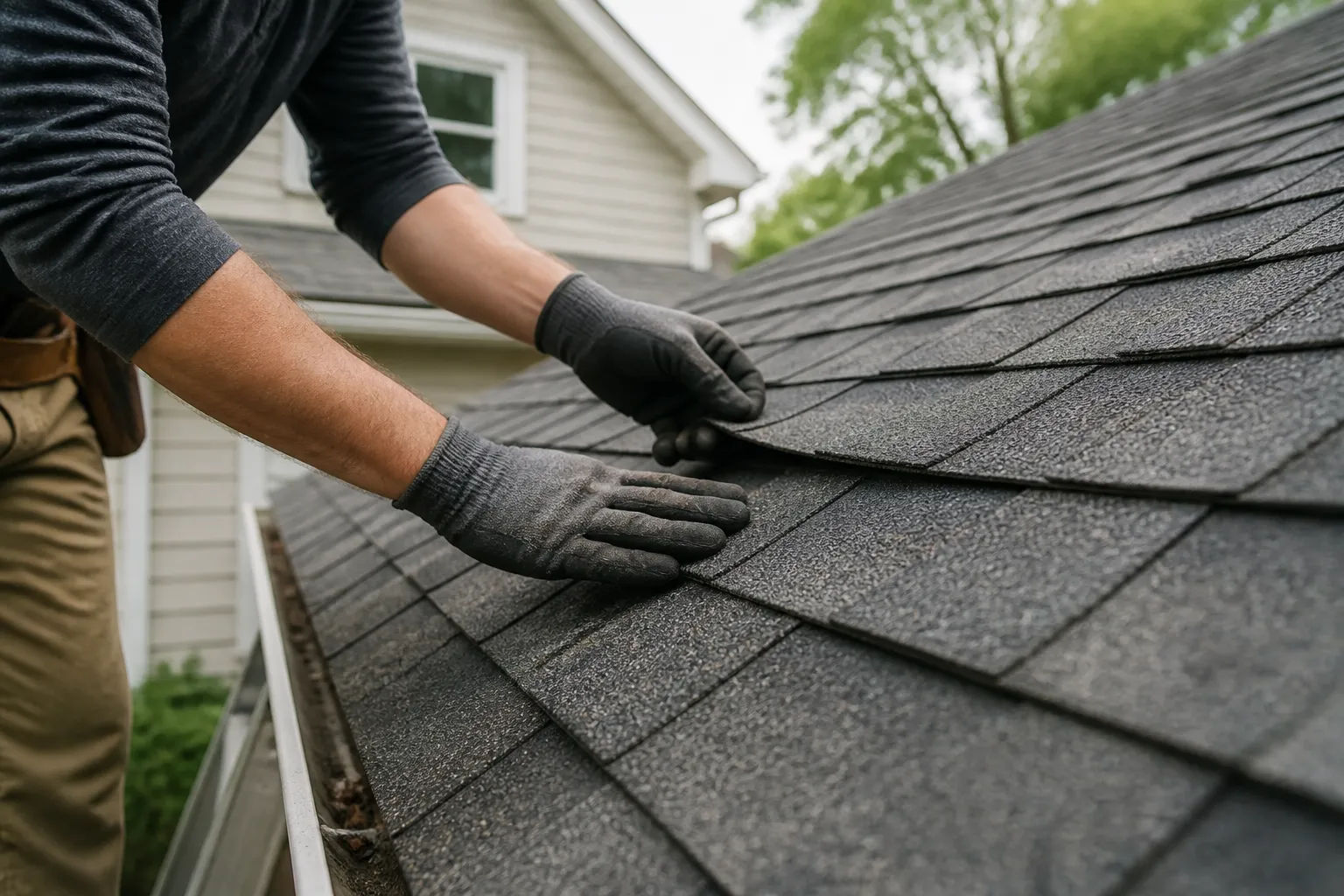
Localized damage may involve a few shingles, a flashing detail, a roof penetration, a seam, or an edge. The visible surface alone may not reveal concealed conditions. Ask what can be confirmed before work and how additional findings will be documented and discussed. For a residence, the residential roofing overview can help organize questions about the roof system and property.
Repeated moisture in the same area deserves a fresh look at the source, not simply another treatment of the interior symptom. A leak that appears in a new location may also have a different path or cause. An assessment should distinguish known observations from possibilities and explain whether the proposed repair covers the relevant roof detail.
Replacement may be worth comparing when deterioration is widespread, several areas require work, repairs have become recurring, or a limited repair would leave significant roof conditions unresolved. Age by itself does not establish that replacement is necessary. Ask what findings support repair, what findings support replacement, and how each option addresses the affected roof area and expected remaining service considerations. For local city-wide options, visit the Trumann roofing hub.
Compare written estimates using the same roof area and intended result. Look for the location and cause addressed, materials, flashing or edge details, access assumptions, cleanup, exclusions, and how concealed damage would be handled. Ask whether temporary protective measures are included or separate rather than assuming they are part of the repair.
For roof replacement details and how a broader project differs from a focused fix, see roof replacement in Trumann. The statewide roof repair overview explains the service category, and what to do when a roof leaks after a storm offers practical guidance for documenting a new concern. A property owner can confirm any project-specific local requirements for the address and scope with the appropriate authority; no roofing permit rule is assumed here.
No. Water can move along roof and framing materials before appearing indoors, so the visible mark may be away from the roof opening. An inspection is needed to evaluate the source.
Note when and where moisture appears, report prior repairs, and take photos only from indoors or a safe ground-level position. Avoid climbing onto the roof or ladder.
If moisture returns or affects multiple areas, ask for the source and roof condition to be reassessed. Compare a defined repair with replacement when findings indicate broader deterioration or repeated unresolved concerns.
It should identify the affected area, intended repair, materials, included details, exclusions, cleanup, and how concealed conditions or scope changes will be communicated.
What To Expect
Share your ZIP code, the service you are considering, and what you have noticed about the roof.
Discuss the observed condition, repair or replacement options, and proposed scope with the independent roofer, subject to local availability.
Review materials, work details, cleanup, exclusions, and any additional repairs before deciding how to proceed.
A Few Common Questions
Tell us where the property is and what your roof needs.
Roofing Estimate
Share the property ZIP code and the roofing service you need. The form uses the existing inquiry system.