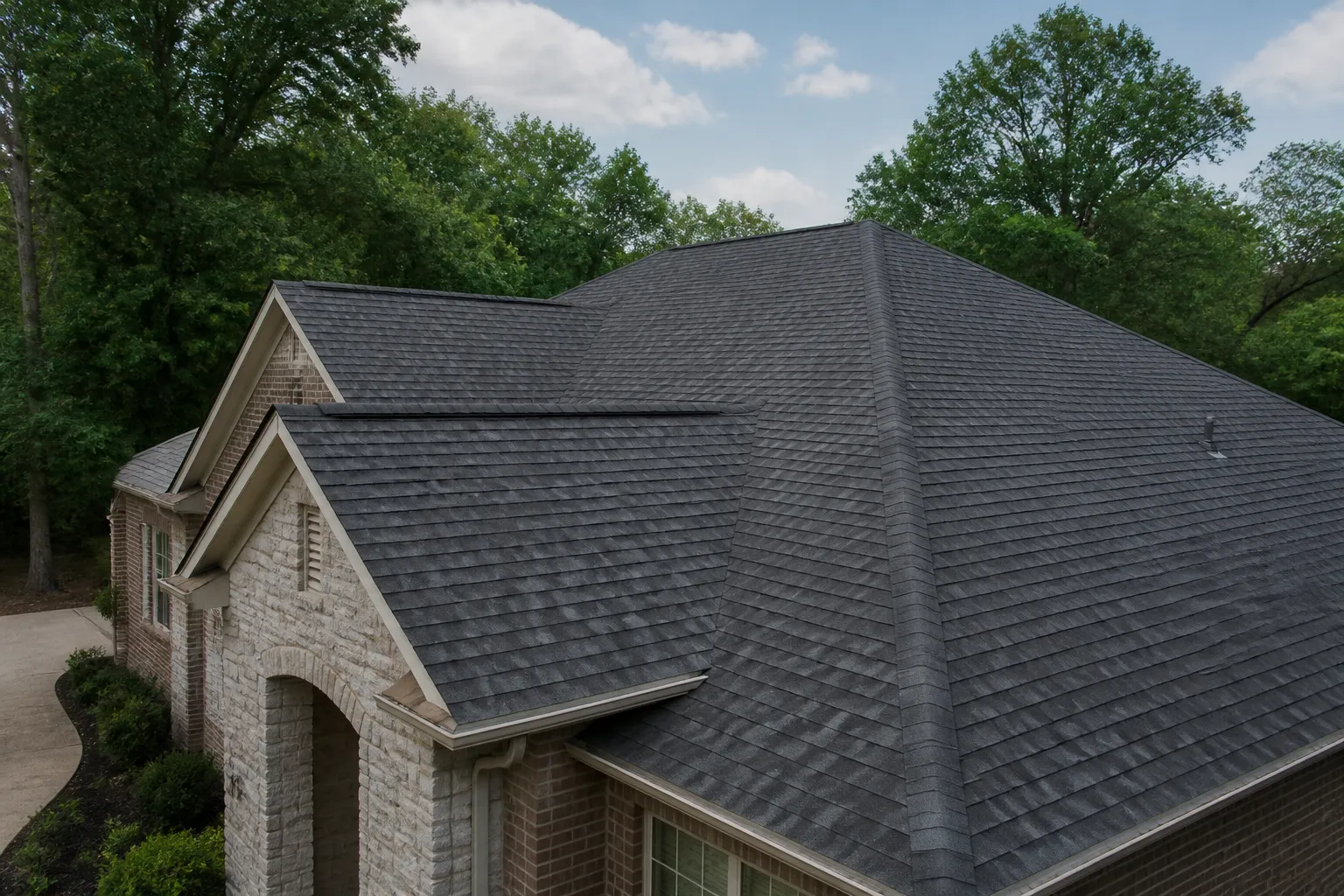
Arkansas Roofing Guidance
Roof Replacement in Pea Ridge, AR
Review roof replacement in Pea Ridge, Arkansas, including condition assessment, material choices, tear-off, decking, ventilation, site protection, cleanup, and written proposals.
Arkansas Roofing Guidance
Review roof replacement in Pea Ridge, Arkansas, including condition assessment, material choices, tear-off, decking, ventilation, site protection, cleanup, and written proposals.
When a Pea Ridge, Arkansas roof shows widespread wear, repeated leaks, or damage across several sections, a replacement assessment can clarify whether repair remains practical. The decision should be tied to observed conditions, not a single stain or a general impression from the ground. A written scope gives property owners a basis for comparing materials and project details.
All Arkansas Roofing connects property owners with independent roofing contractors. Share the building type, known roof concerns, and access or scheduling constraints so a proposed assessment can reflect the property. Start with the Pea Ridge roofing hub for local options and planning information.
A useful replacement assessment considers the roof covering, flashing, valleys, penetrations, edges, drainage, and visible signs of moisture or movement. Interior observations, such as recurring stains or damp areas, can be included, but a ceiling mark alone does not establish the roof’s overall condition. Ask which conditions were observed, which areas were accessible, and what could not be confirmed before removal.
Replacement may be worth comparing with repair when wear spans multiple sections, leaks recur, or the existing assembly has concerns that a localized repair would not address. A limited repair can remain practical when the affected area is isolated and adjacent materials are serviceable. Request a clear explanation of why each option is being considered, which areas it covers, and what assumptions remain.
Asphalt shingles and metal roofing have different appearances, components, and installation details. The right comparison depends on roof slope and shape, the existing structure, transitions and penetrations, and the building’s intended use. A material label by itself does not describe the complete roof assembly.
For a shingle proposal, identify the product line and type, underlayment, flashing details, ventilation work, and edge treatment. For metal, ask about panel profile, fastening or seam approach, trim, compatible underlayment, and how water is managed at transitions. Review asphalt shingle roofing and residential roofing information when comparing systems for a home. Also see the metal roofing and asphalt shingle guide.
A tear-off removes the existing roof covering so the underlying surface can be examined. Ask whether the proposal includes removal of all existing layers or describes another approach, how material will be disposed of, and what conditions might change the scope. Once exposed, roof decking may show soft, damaged, or uneven areas that could not be evaluated from the surface alone.
The proposal should explain how concealed decking concerns will be documented and brought to the property owner’s attention before additional work proceeds. It should identify whether replacement of damaged decking is included, excluded, or handled under a stated process. Do not assume every roof will need the same amount of deck work.
Ventilation details should account for the existing attic and roof design. Ask what intake and exhaust components are present, whether changes are proposed, and how the plan relates to the roof assembly. Ventilation cannot be evaluated by simply counting visible vents; the building configuration and airflow path matter.
Before work begins, clarify how landscaping, walkways, vehicles, outdoor equipment, and building entrances may be affected by material removal and delivery. Identify areas that need to stay accessible and whether the home or business will be occupied. The written scope should describe debris handling, cleanup, and how the site will be checked when the work is complete. These questions help make practical expectations clear without assuming a particular work method.
Review proposals side by side and check that each describes the same roof areas and comparable work. Useful items to compare include:
Ask about vague line items and differences in what is excluded. The roofing estimate checklist provides additional comparison prompts. For project approvals, confirm requirements for the property address and exact work scope with the appropriate local authority; do not assume one rule applies to every roof.
Ask for the observed roof conditions and which areas each option would address. Widespread wear or recurring concerns can justify comparing scopes, but an assessment should explain the recommendation for the specific roof.
After the existing covering is removed, exposed decking can be examined for conditions that were hidden. Ask how findings will be recorded and how any scope changes will be discussed before additional work proceeds.
It should state whether ventilation is being assessed or changed and describe any proposed work. The relevant approach depends on the roof and attic configuration, so ask how the scope fits the building.
Compare product details, removal, decking process, flashing, ventilation, property protection, cleanup, exclusions, and the explanation behind the scope. Check that each proposal addresses the same roof areas.
To compare a replacement plan with a localized repair, review roof repair in Pea Ridge and the Arkansas roof replacement guide. For a property-specific discussion, request an estimate and include the address and known roof concerns.
What To Expect
Share your ZIP code, the service you are considering, and what you have noticed about the roof.
Discuss the observed condition, repair or replacement options, and proposed scope with the independent roofer, subject to local availability.
Review materials, work details, cleanup, exclusions, and any additional repairs before deciding how to proceed.
A Few Common Questions
Tell us where the property is and what your roof needs.
Roofing Estimate
Share the property ZIP code and the roofing service you need. The form uses the existing inquiry system.