Arkansas Roofing Guidance
Roof Replacement in Forrest City, AR
Review roof replacement in Forrest City, Arkansas, from condition assessment and material selection to tear-off, decking, ventilation, property protection, and written proposals.
Arkansas Roofing Guidance
Review roof replacement in Forrest City, Arkansas, from condition assessment and material selection to tear-off, decking, ventilation, property protection, and written proposals.
Roof replacement is a major scope decision, and a new covering should be selected only after the existing roof and the building’s needs have been assessed. For a Forrest City, Arkansas property, useful planning begins with the roof’s observed condition, known repair history, roof shape, and how the building is used.
All Arkansas Roofing connects property owners with independent roofing contractors for estimates and agreed work. A written proposal should explain what is known, what will be checked as materials come off, and how the completed roof system is intended to fit the property. Visit the Forrest City roofing hub for local service information.
Assessment helps distinguish isolated damage from broader wear and identifies details that shape the replacement scope. The review may consider the visible covering, roof edges and transitions, flashing, penetrations, drainage, attic ventilation where relevant, previous repairs, and signs of moisture inside. No single stain or missing shingle establishes that full replacement is necessary; compare the condition and extent of concerns with the work a repair could address.
Ask the estimator to identify the roof sections evaluated, describe observed concerns, and explain the reasoning behind replacement rather than repair. If an area cannot be fully assessed until removal, the proposal should say how concealed conditions such as damaged decking will be documented and presented before additional work is approved.
Material selection involves more than appearance. Asphalt shingles are used on many residential roofs, while metal roofing offers different panel or shingle-style systems and installation details. The roof’s design, slopes, edges, penetrations, structure, existing layers, and the owner’s maintenance preferences can affect which options are suitable. Review the proposed product and assembly rather than comparing broad material labels alone.
For general homeowner context, see residential roofing services. If asphalt shingles are under consideration, the asphalt shingle roofing guide describes system details to discuss. A proposal should identify the material system, underlayment, flashing approach, edge details, and ventilation provisions where included.
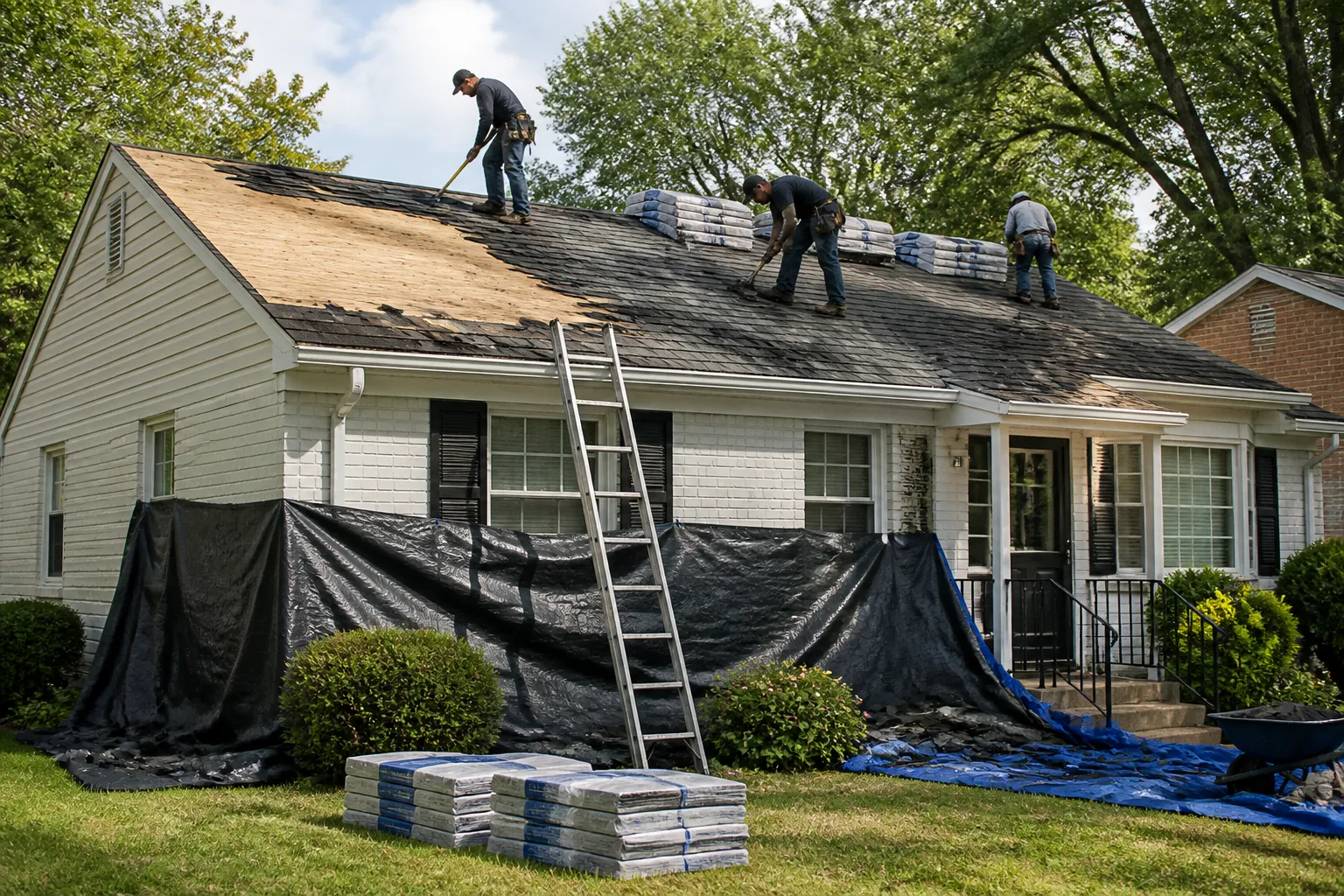
Removing existing roofing exposes areas that are hidden during a surface-level review. Clarify how many existing layers are assumed, what removal includes, how debris will be contained, and how the roof deck will be inspected. If deteriorated or unsuitable decking is uncovered, ask how its location and condition will be recorded, how the owner will review proposed changes, and how those changes affect the scope.
Decking is the base for the roofing assembly, so its condition and preparation matter before new underlayment and covering are installed. A proposal should avoid leaving the owner to guess whether deck inspection is included or how concealed conditions will be addressed.
Replacement is an opportunity to review ventilation as part of the roof assembly, but adding vents without considering the existing attic and airflow paths may not solve a moisture or heat concern. Ask what intake and exhaust conditions were observed, whether ventilation work is included, and how it coordinates with insulation and the roof design. Flashing, valleys, roof-to-wall transitions, and penetrations should also be described because these details direct water around vulnerable areas.
Where the project involves multiple roof sections or a business property, clarify how the proposed system fits each section and whether operating needs, equipment, or restricted access affect planning. Do not assume that one material or detail works the same way on every roof.
Before work begins, discuss how landscaping, windows, exterior equipment, entryways, vehicles, and indoor areas near the work will be protected. Ask how materials and debris will be staged, which routes will be used, and how the work area will be kept orderly. Property-specific needs can include keeping entrances clear, coordinating around occupants, and identifying items that should be moved or covered.
Clarify what cleanup includes, how discarded materials will be removed, and how the completed work area will be reviewed. Ask what precautions are planned if weather interrupts work and how the building will be protected during exposed stages. These are scope and coordination questions, not guarantees about conditions or timing.
Compare proposals for the same roof areas and intended result. An itemized scope can identify removal, deck review, underlayment, selected covering, flashing and penetrations, ventilation work, protection, disposal, cleanup, exclusions, and the handling of concealed conditions. Check that product names and quantities or covered areas are specific enough to understand what is proposed.
Ask each estimator to explain differences in assumptions and what work is not included. A lower-level summary or total alone does not show whether two proposals cover equivalent work. The roofing estimate checklist provides a practical comparison framework, while the Arkansas roof replacement guide explains factors that can affect project scope. To compare a repair option, see roof repair in Forrest City and the statewide roof replacement overview.
Before scheduling roofing work, confirm whether the project requires a permit or inspection with the office responsible for the property’s address. Requirements can depend on the scope of work. Verify the responsible jurisdiction and ask about the described project rather than assuming one rule applies to every roof.
Not necessarily. The deck is inspected as existing materials are removed, and the proposal should explain how concealed damage will be documented and how any additional work will be presented for review.
Compare the specific proposed system, roof design compatibility, installation details, maintenance considerations, and written scope. A general material label is not enough to determine suitability for a particular building.
Ventilation is part of the roof and attic system. Discuss observed conditions and any included work so the proposal explains how airflow details fit the building rather than treating vent quantity as a stand-alone fix.
Ask how nearby property and access areas will be protected, how debris will be contained and removed, what cleanup includes, and how exposed areas will be managed if work is interrupted.
To discuss a roof in Forrest City, share the property address, the concerns already observed, known repair history, and questions about the proposed materials or scope. An independent contractor can assess the roof and provide a written estimate for review.
What To Expect
Share your ZIP code, the service you are considering, and what you have noticed about the roof.
Discuss the observed condition, repair or replacement options, and proposed scope with the independent roofer, subject to local availability.
Review materials, work details, cleanup, exclusions, and any additional repairs before deciding how to proceed.
A Few Common Questions
Tell us where the property is and what your roof needs.
Roofing Estimate
Share the property ZIP code and the roofing service you need. The form uses the existing inquiry system.