Arkansas Roofing Guidance
Roof Repair in Forrest City, AR
Explore roof repair in Forrest City, Arkansas, including leak assessment, repair scope, safe documentation, and when replacement may be worth comparing.
Arkansas Roofing Guidance
Explore roof repair in Forrest City, Arkansas, including leak assessment, repair scope, safe documentation, and when replacement may be worth comparing.
A ceiling stain, damp insulation, or drip can point to a roof concern, but the visible indoor mark may be some distance from where water first entered. In Forrest City, Arkansas, note when the concern appears and what parts of the building are affected, then arrange an assessment rather than trying to identify the source from symptoms alone.
All Arkansas Roofing connects property owners with independent roofing contractors for estimates and agreed work. The roof’s observed condition, the surrounding materials, and any earlier repair history help frame whether a localized repair is practical or broader work deserves comparison. For area information, visit the Forrest City roofing hub.
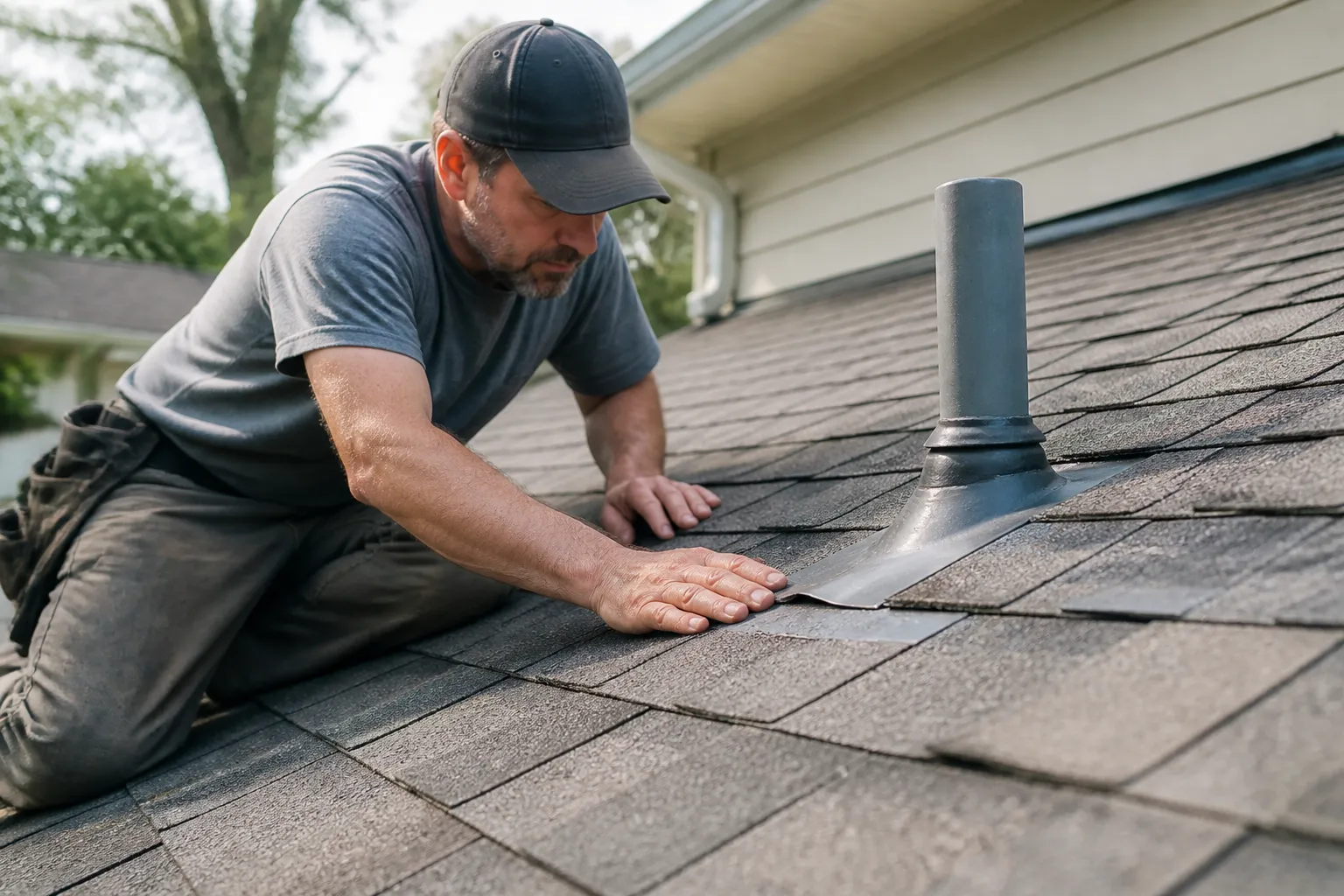
Water can move along roof decking, framing, underlayment, or other surfaces before appearing on a ceiling or wall. Possible entry areas can include flashing at a roof-to-wall transition, valleys, roof penetrations such as vents, panel or shingle transitions, and fasteners, depending on the roofing system. These are possibilities to assess, not a diagnosis: a ceiling mark, drip pattern, or visible roof condition by itself cannot confirm the source.
Finding the entry point matters because a repair needs to address the roof component and water path involved, not only the indoor stain. Covering a visible symptom without understanding nearby flashing, penetrations, joints, or surrounding materials may leave the underlying issue in place. A careful assessment can help define the affected area, related details, and whether the proposed work is limited or should include adjacent components.
When calling, report the property address, where water appears indoors, when it began, whether it seems to follow rain, whether it has recurred, and any repair work you know about. Mention active dripping, rooms or equipment that need protection, and any unsafe conditions. Indoor photos of the stain or a container catching drips, and ground-level photographs of visible roof edges, can help describe the concern if taken safely. Do not climb a ladder, enter a roof space with unsafe conditions, or walk on the roof to collect pictures.
A focused repair may be considered when assessment identifies a defined area of damage and surrounding materials remain suitable to keep in service. The scope could involve a limited section of covering or related flashing and penetration details, depending on what inspection finds. Ask which roof area is included, what components will be addressed, and what remains outside the proposed work.
Visible damage from the ground does not establish how far a defect extends. A written scope is more useful when it explains the observed condition, the intended repair boundary, and any assumptions about concealed materials. If conditions beneath the covering cannot be confirmed until work begins, ask how newly discovered conditions would be documented and brought to the property owner before scope changes.
If water returns after a prior repair, share when the earlier work occurred, what area it addressed if known, and how the present symptoms differ. Recurrence can justify reviewing the previous repair area and nearby transitions, but it does not by itself prove that the whole roof needs replacement. Water may travel, and separate sources can produce similar indoor marks.
Replacement is worth comparing when an assessment finds widespread wear, multiple affected areas, repeated repairs, or roof components that are no longer practical to address as isolated work. Ask for the observed condition supporting each option and the roof areas each scope covers. The repair-versus-replacement guide offers questions for comparing recommendations without deciding from symptoms alone.
A repair proposal should identify the concern and location, materials or components involved, preparation and removal if applicable, related flashing or penetrations, protection of the property, cleanup, exclusions, and how concealed conditions will be handled. Scope should be clear enough to compare with another written proposal covering the same roof area. The roofing estimate checklist can help organize questions.
To discuss repair options across Arkansas, read about roof repair services. If the assessment points toward a larger project, see roof replacement in Forrest City for considerations specific to that scope.
Not necessarily. Water can travel along roof and building materials before becoming visible indoors. The stain is useful information to report, but an assessment is needed to evaluate possible entry areas.
Use photos from indoors or a safe ground-level location, such as a ceiling mark or visible roof edge. Do not climb, use a ladder, or walk on the roof to get a closer view.
No. Recurrence is a reason to explain the history and ask what the assessment found. The appropriate scope depends on the source, affected materials, surrounding roof condition, and whether repair remains practical.
It should describe the area and components included, the repair approach, related details, exclusions, cleanup, and how concealed conditions will be handled. Ask for clarification before comparing scopes or approving work.
Share the Forrest City property location, what has been observed, and any safe photos available through the estimate form below. An independent contractor can assess the roof and explain the options supported by the conditions found.
What To Expect
Share your ZIP code, the service you are considering, and what you have noticed about the roof.
Discuss the observed condition, repair or replacement options, and proposed scope with the independent roofer, subject to local availability.
Review materials, work details, cleanup, exclusions, and any additional repairs before deciding how to proceed.
A Few Common Questions
Tell us where the property is and what your roof needs.
Roofing Estimate
Share the property ZIP code and the roofing service you need. The form uses the existing inquiry system.